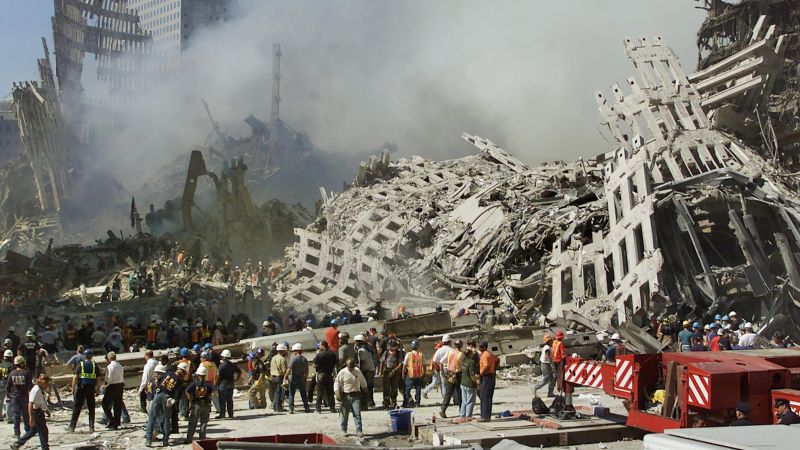
Over 170,000 pages of sealed city documents expose what New York officials knew about toxic air at Ground Zero
Sandego.net – New York City has made public a vast archive of previously hidden records documenting air quality conditions in the weeks and months following the September 11, 2001, attacks. The disclosure, announced by Mayor Zohran Mamdani at a Tuesday press conference, reveals that municipal leaders understood the atmosphere surrounding the World Trade Center site was hazardous to inhale — even as they repeatedly told residents the opposite.
The collection spans more than 170,000 pages and includes internal memoranda, environmental monitoring data, and correspondence between city agencies and outside scientists. Its release ends a prolonged legal battle brought by the advocacy organization 9/11 Health Watch, which had petitioned the city to unseal the materials.
“As the years pass and the human toll grows, we reckon with the cost of September 11th whenever another New Yorker is stolen from us too soon,” Mamdani told reporters. “Now, close to 25 years later, more people have died from 9/11-related illnesses than were killed on the day itself.”
Internal alarms raised within weeks of the attacks
Among the most consequential materials in the archive are internal memos dated between October and November 2001, in which city officials flagged recurring detections of elevated toxin levels at the site. The substances identified included asbestos and other persistent chemicals difficult to measure with standard field equipment. These internal warnings sat in tension with the public messaging that followed in the weeks after the collapse.
The documents also capture the intervention of U.S. Representative Jerry Nadler of New York, who circulated a white paper outlining his alarm over the environmental situation at Ground Zero. In a February 2002 memo directed to the office of then-Mayor Michael Bloomberg, Nadler argued that the Environmental Protection Agency had “neglected its responsibility for monitoring indoor air quality around Ground Zero.” He further noted that shortly after the attacks, then-EPA Administrator Christine Todd Whitman had publicly declared the air “safe to breathe” — a statement made, according to the records, before any formal government testing of indoor air quality at the site had been completed.
Nadler’s correspondence also referenced findings from researchers at the University of California, Davis, who detected what they described as “startling concentrations” of ultra-fine particulate matter small enough to penetrate deep into lung tissue and “lodge deep in the lungs.”
Health fallout: enrollment, diagnosis, and gaps in coverage
The human cost documented in these records is staggering. According to the 9/11 Memorial, at least 140,000 individuals from all 50 states have enrolled in the World Trade Center Health Program, the federal mechanism created to treat illnesses linked to the disaster. Of those enrolled, approximately 49,000 have received certified diagnoses of WTC-related cancers.
Mamdani noted on Tuesday that the program’s reach remains incomplete. Residents who lived near the Lower Manhattan site but never received outreach, as well as individuals now living outside New York, may qualify for assistance without having enrolled. A critical structural gap existed in the program’s original design: when Congress established the health program in 2011, cancer was not included among covered conditions. It was added only in 2012, following sustained advocacy pressure and a study demonstrating elevated cancer rates among New York firefighters who worked at Ground Zero.
Advocacy group welcomes the disclosure
Ben Chevat, executive director of 9/11 Health Watch, addressed Mamdani directly at the Tuesday announcement.
“Mr. Mayor, I want to thank you for being the mayor who, after 25 years, begins to answer the question: What did the city know about the dangers from the toxic cloud at Ground Zero, and when did it know it?”
Chevat said the newly available documents will equip affected individuals with the evidentiary basis needed to pursue federal compensation and will catalyze further independent research into long-term health outcomes among exposed populations.
Former officials respond
A spokesperson for Bloomberg, who assumed the mayorship after Rudy Giuliani’s departure, declined to comment on the release. News coverage from February 2002 — five months after the attacks — records Bloomberg telling reporters: “every test that has been done says the air quality was in acceptable limits. I think some people are just never going to believe that.”
Whitman, who served as EPA administrator from 2001 to 2005, issued a written statement on Tuesday defending her agency’s conduct. She maintained that her remarks about air quality at the Ground Zero site “were based entirely on the analysis done by EPA scientists.” She added that within days of the attacks, the agency had launched a publicly accessible website publishing all available data, which was updated regularly.
“The goal was as much transparency as possible. Everyone at the EPA did the best they could with the information, tools, and knowledge available at the time,” Whitman wrote. She further stated that EPA officials repeatedly distinguished between conditions at the site itself and air quality elsewhere in the city.
Why the disclosure matters now
The release lands at a moment when the long-term health consequences of September 11 continue to outpace the original death toll. Each year, additional diagnoses of respiratory disease, thyroid conditions, and cancers are certified under the federal program, extending the administrative and medical footprint of the disaster well into its third decade. For families still seeking recognition of their illness, the newly accessible internal records may provide the documentary trail needed to substantiate claims that were previously difficult to prove.
The archive also offers researchers a rare window into how a major metropolitan government processed environmental uncertainty in real time — balancing public reassurance against incomplete data, and navigating the competing pressures of reconstruction, commerce, and public health in the aftermath of a national catastrophe. Whether that balance was struck appropriately remains, for many New Yorkers, an open question the documents now allow them to examine for themselves.
Related Reading
Frequently Asked Questions
What is NYC Mayor Mamdani releases 9 11 records?
NYC Mayor Mamdani releases 9 11 records is the main topic of this guide. The article explains the context, practical details, and next steps readers should understand.
Why does NYC Mayor Mamdani releases 9 11 records matter?
NYC Mayor Mamdani releases 9 11 records matters because readers are looking for a useful answer, not just a short summary. Good content should match search intent and help them decide what to do next.