Narges Mohammadi’s Memoir Reveals Iranian Prison Abuse
Sandego.net – Nobel laureate Narges Mohammadi s memoir describes alleged abuse, solitary confinement and medical neglect during her imprisonment in Iran. The Nobel Peace Prize winner says she understands that publishing her account could bring further consequences, but believes documenting prison conditions is essential.
Mohammadi, 54, wrote much of A Woman Never Stops Fighting while held in Tehran’s Evin prison. After receiving temporary medical leave in May, she prepared for the book’s release in parts of Europe this month.
She says handwritten pages were passed to friends and fellow prisoners in an effort to get them outside the prison. On one visiting day, security personnel seized three pages that a friend had attempted to carry out. Mohammadi also says more than 20 notebooks disappeared after she was beaten and transferred to another prison.
“In order to document these things, it is better to speak openly about their methods, to expose and reveal their torture.”
Publishing despite the risks
Nobel laureate Narges Mohammadi s memoir identifies people she says were responsible for her treatment in custody. She acknowledges that publication may result in repercussions, but says such risks are part of life for activists challenging the Iranian government.
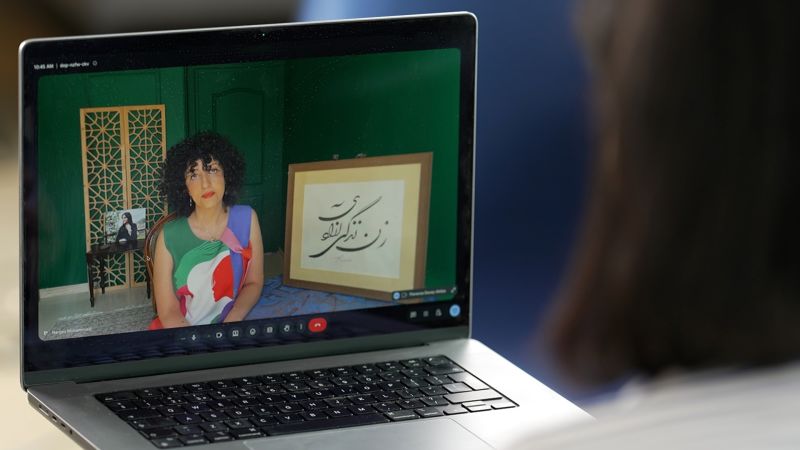
Speaking from her home in front of a portrait of Mahsa Jhina Amini, Mohammadi reflected on the personal cost of her activism. Amini died after being detained by Iran’s morality police, sparking nationwide demonstrations in autumn 2022.
Mohammadi has spent much of the past two decades in prison because of her human rights work and opposition to the Iranian government. Her twins, Ali and Kiana, are now 19, and she has been separated from them for extended periods.
“But when I look at Ali and Kiana, I find myself filled with doubt. Did I really have the right to deprive them of a very ordinary life, of having their mother with them?”
Her foundation says she has received prison sentences totaling more than 44 years, as well as 154 lashes. Although she says she would still choose to begin campaigning for rights, she remains uncertain about the toll that choice has taken on her children.
Allegations of violence and medical neglect
Mohammadi’s most recent period in custody lasted from December until May. In February, the Norwegian Nobel Committee said credible reports indicated that she had faced beatings and treatment that endangered her life.
Accounts described her being struck with wooden sticks and batons during her December arrest and pulled across the ground by her hair. She reportedly sustained open wounds to her head and was repeatedly kicked in the pelvis and genital area, causing severe pain.
Mohammadi says she was then held in solitary confinement for two months, without phone calls, family visits or meetings with her lawyers.
“I was held in solitary confinement for two months in that same condition, without being allowed to make phone calls or see my family or even my lawyers.”
In March, she suffered what was suspected to be a heart attack and lost 20 kilograms, or 44 pounds. By April, her foundation said her life was in imminent danger. She later spent 18 days in hospital for treatment related to heart disease associated with chronic anxiety and stress.
Tasnim, a semi-official Iranian state news agency, rejected claims at the time that her medical condition had deteriorated. Mohammadi was eventually discharged and permitted to return home on temporary leave, though she says treatment is continuing and she could be required to return to prison.
Why the memoir matters
Nobel laureate Narges Mohammadi s memoir is both a personal account and an attempt to preserve testimony from inside Iran’s prison system. By recording her own experiences and those she says other prisoners endured, Mohammadi aims to make conditions that are often hidden visible to a wider audience.
Her account underscores the pressure faced by people who seek to publicize alleged human rights abuses in Iran. For Mohammadi, the prospect of renewed punishment has not outweighed the need to speak openly about what she says occurred behind prison walls.
FAQ: Narges Mohammadi’s memoir
What is Narges Mohammadi’s memoir about? A Woman Never Stops Fighting recounts Mohammadi’s imprisonment, including her allegations of abuse, isolation and inadequate medical care in Iranian custody.
When was Mohammadi released from prison? She was granted temporary medical leave in May after her latest detention, which began in December. Her leave is temporary, meaning she could be ordered to return to prison.
Why does Mohammadi say she published the book? She says she wanted to document and expose methods of torture and mistreatment that she alleges were used against prisoners.