ICE Officer Enters Not Guilty Plea in Minneapolis Shooting Case
Sandego.net – An Immigration and Customs Enforcement officer has pleaded not guilty to federal allegations that he misled FBI investigators after a Venezuelan man was wounded during an immigration operation in Minneapolis earlier this year.
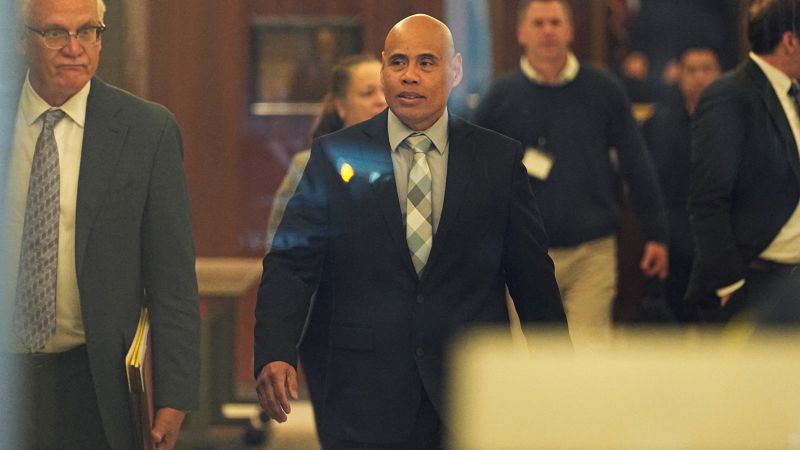
Christian Castro, 52, appeared Friday before a US magistrate judge after a federal grand jury charged him with six counts of making false statements. The indictment concerns the January 14 shooting of Julio Cesar Sosa-Celis, 24, who was shot in the leg at a Minneapolis residence.
The federal case follows Castro’s appearance in Minnesota state court one day earlier, where he faced assault charges connected to the same episode. He was released from custody after that hearing. Castro’s attorney, Daniel Gerdts, did not comment as he left the courthouse Friday.
Dispute Over What Happened at the Home
State and federal prosecutors contend that Castro fired his weapon through the front door of a Minneapolis home, striking Sosa-Celis in the leg. The shooting was nonfatal.
The criminal filings accuse Castro of later giving investigators a false account of the confrontation. Prosecutors say he claimed he had been attacked with a broom handle and a snow shovel before he discharged his firearm. The six federal counts stem from statements he allegedly made to the FBI during the investigation.
The competing descriptions of events are central to both cases. Prosecutors are pursuing allegations related not only to the shooting itself, but also to what they say Castro told law enforcement afterward. A not guilty plea means the allegations will have to be tested through the federal court process rather than resolved at this early stage.
Texas Extradition Fight Delayed Minnesota Case
Castro’s return to Minnesota came after months of legal and political conflict involving officials in Minnesota, Texas and the federal government. Minnesota prosecutors brought charges in May, but efforts to bring him from Texas to face those allegations were delayed.
Authorities arrested Castro in Cameron County, Texas, on May 29 after a Minnesota judge issued a warrant with nationwide reach. Texas law allowed him to be held for up to 90 days while Minnesota pursued extradition.
That effort ultimately stalled when Texas Gov. Greg Abbott, a Republican, declined last month to sign the extradition warrant. Minnesota officials had warned that Castro could potentially cross the US-Mexico border after his release from a Texas jail. Instead, he returned voluntarily after a separate federal indictment was issued in US District Court earlier this month.
The sequence has put the case at the center of a broader argument about accountability when federal officers are accused of crimes while on duty. Minnesota authorities have maintained that they can prosecute Castro under state law, while the Department of Homeland Security has challenged that position.
The Department of Homeland Security has called Minnesota’s prosecution of Castro “unlawful and nothing more than a political stunt,” saying only federal authorities have jurisdiction.
Federal Charges Mark a First for Operation Metro Surge
The case is the first Justice Department prosecution of a federal officer arising from this year’s Operation Metro Surge. The large-scale immigration enforcement action sent thousands of agents to the Twin Cities and prompted widespread protests, arrests and the fatal shootings of two US citizens by federal officers.
Castro has been suspended without pay by the Department of Homeland Security while the criminal cases remain pending. Before returning to Minnesota, he appeared before a federal judge in Texas and was released on a $75,000 bond.
As conditions of that release, Castro was ordered to wear a GPS ankle monitor, surrender his passport and give up any personally owned firearms. Those restrictions are intended to ensure that he remains available for court proceedings while the cases move forward.
The federal prosecution and Minnesota’s state case may proceed on separate tracks because they involve different alleged offenses. The state matter centers on assault charges connected to the shooting, while the federal indictment focuses on alleged false statements to investigators. Neither set of charges establishes guilt, and Castro is entitled to challenge the evidence against him in court.
What Comes Next
Friday’s plea begins the next stage of the federal proceeding, which can include evidence exchanges, pretrial motions and future hearings before any trial is scheduled. The state prosecution is also expected to continue as Minnesota officials pursue their case following Castro’s return.
The proceedings will likely continue to draw attention because they combine questions about the use of force, federal immigration enforcement and the ability of state authorities to bring charges against a federal officer. For Minneapolis residents and others affected by Operation Metro Surge, the case also represents a closely watched test of how competing state and federal authorities handle allegations of misconduct.
For now, the allegations remain unresolved. Castro has denied the federal charges through his not guilty plea, while prosecutors will be required to prove their claims in court.
Related Reading
Frequently Asked Questions
What is ICE officer pleads not guilty to charges?
ICE officer pleads not guilty to charges is the main topic of this guide. The article explains the context, practical details, and next steps readers should understand.
Why does ICE officer pleads not guilty to charges matter?
ICE officer pleads not guilty to charges matters because readers are looking for a useful answer, not just a short summary. Good content should match search intent and help them decide what to do next.