How Russian Ballistic Missiles Exploit Ukraine’s Air Defense Gaps
Sandego.net – How Russian ballistic missiles are exploiting critical vulnerabilities in Ukraine’s air defense network has become a defining challenge of the ongoing conflict. Ukrainian cities now face escalating threats with minimal warning, as Moscow intensifies its aerial campaigns against civilian infrastructure. While Kyiv has achieved notable successes in striking Russian energy facilities, a fundamental weakness in its protective architecture has become increasingly apparent. The shortage of specialized interceptors capable of neutralizing these high-speed weapons has allowed Russia to escalate devastating attacks against urban populations.
The Interceptor Shortage Crisis
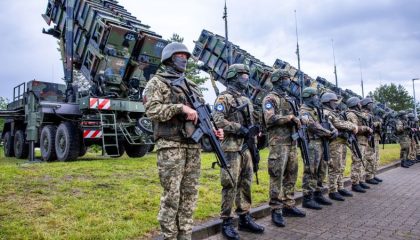
Russia’s strategic advantage stems from deploying high-velocity ballistic weapons that overwhelm Ukraine’s existing defense networks. These missiles travel at extraordinary speeds along steep trajectories, making them difficult to track and intercept. The situation has grown more urgent as Kyiv works to rebuild its stockpile of American-made Patriot systems, among the few platforms capable of engaging these fast-moving threats.
Ukrainian officials categorize the aerial threat into three primary groups, each presenting unique challenges. Ballistic missiles represent the most difficult category to counter. Propelled by rocket engines, they follow high arcs before descending toward targets at extreme velocities. The Russian Iskander system travels at six to seven times the speed of sound and can deliver up to 700 kilograms of explosives to predetermined coordinates.
Recent Attacks and Human Cost
The human toll continues to mount as these sophisticated attacks penetrate Ukrainian defenses. In one devastating evening, more than twenty-four ballistic and anti-ship missiles struck the capital region without being intercepted. The resulting casualties included at least seventeen fatalities and dozens of additional injuries across multiple locations.
A particularly intense operation targeting the Kyiv and Lviv regions demonstrated the multi-layered nature of Moscow’s approach. Ukrainian military officials documented the deployment of four anti-ship missiles, nine ballistic missiles, sixty-one cruise missiles, and approximately three hundred strike drones in a single coordinated operation. Each weapon type serves a distinct purpose in saturating defensive capabilities.
Technical Threat Categories
Cruise missiles like the Kalibr present different difficulties. Launched from surface vessels and submarines, these weapons maintain low altitudes—approximately twenty meters above sea level or fifty meters above ground—to avoid radar detection. Their larger payloads and jet propulsion systems allow them to reach targets with considerable destructive power.
Drones, particularly the Russian Geran-2 variant derived from Iranian Shahed designs, offer relatively inexpensive but effective options for targeting infrastructure. Russia has enhanced these platforms with jet engines and decoy capabilities to increase their survivability.
Political and Diplomatic Dimensions
Ukrainian leadership has emphasized the connection between delayed weapon deliveries and civilian casualties. President Volodymyr Zelensky addressed the international community directly, highlighting how supply chain bottlenecks translate into preventable deaths.
Ballistic missile interceptors could have saved the lives of those killed today. It is very important that our partners understand that delays in supplying them, or an unwillingness to provide anti-ballistic systems, lead directly to such horrific casualties and destruction. Partners who are not yet ready to play a more active role in supplying interceptors can help by implementing new sanctions. A significant share of Russia’s ballistic missile production is still not under sanctions.
The diplomatic dimension extends beyond mere weapon transfers. Sanctions policy plays a crucial role in limiting Russia’s ability to produce and deploy these sophisticated systems. Many ballistic missile components continue to flow through international supply chains despite existing restrictions.
Ukraine’s Adaptive Response
Ukrainian forces have developed innovative countermeasures to address these evolving threats. The concept of ballistic warfare dates back to Nazi Germany’s V-2 rockets during World War II, and the Iran-Iraq conflict of the 1980s witnessed extensive Scud missile exchanges. Modern defense systems have evolved significantly since then.
The Patriot’s PAC-3 interceptor represents a technological leap, using kinetic energy to destroy incoming missiles through direct impact rather than relying on explosive warheads—a method often described as “a bullet hitting a bullet.” Ukrainian operators have refined their tactics to maximize the effectiveness of limited interceptor stocks.
Frequently Asked Questions
What types of missiles are Ukraine facing most frequently?
Ukraine faces three main categories: ballistic missiles (like the Iskander), cruise missiles (such as the Kalibr), and drones (primarily the Geran-2). Ballistic missiles pose the greatest challenge due to their speed and trajectory.
Why are ballistic missiles harder to intercept than other weapons?
Ballistic missiles travel at six to seven times the speed of sound and follow high arcs before descending rapidly. This combination of velocity and trajectory makes them difficult for existing defense systems to track and engage effectively.
What role do sanctions play in Russia’s missile capabilities?
Many ballistic missile components continue flowing through international supply chains despite existing restrictions. Ukrainian officials note that a significant share of Russia’s ballistic missile production remains unsanctioned, allowing continued production and deployment.
How has Ukraine adapted to these threats?
Ukrainian forces have developed innovative countermeasures and refined tactics to maximize limited interceptor stocks. They have also improved coordination between different defense systems to create more comprehensive coverage against multi-layered attacks.