A Mother’s Search for Her Son After Tragedy Struck Upon His Return
Heartbreak Follows Deportation
Sandego.net – Oswadeliz Núñez still recalls the disagreement she had with her son Daniel regarding a tattoo decision when he was twenty-four years old. Nearly four years later, that very same ink became the crucial detail that allowed her to identify his remains. Daniel perished during the devastating twin earthquakes that struck Venezuela recently. His return to his homeland coincided precisely with the disaster, as he had just been sent back from the United States through deportation proceedings.
From the coastal city of La Guaira, Daniel managed to reach his mother via the telephone belonging to an official from Venezuela’s intelligence service, known as SEBIN. He informed her of his presence in the country and explained the circumstances surrounding his arrival.
“He told me, ‘No, Mom, we’re here with SEBIN officers,'” Núñez shared with CNN reporters covering the story.
According to Daniel’s account, he and several other individuals who had been deported shared a meal and underwent medical evaluations. They were scheduled to remain overnight at a hotel located in Macuto, a neighborhood within La Guaira, while officials completed the necessary paperwork for their repatriation. The following morning, Daniel planned to embark on an approximately seven-hour journey to El Tigre, where his mother awaited his arrival. That anticipated reunion ultimately never materialized.
The Earthquake Strikes
Roughly forty minutes after what would become Daniel’s final conversation with his mother, powerful tremors shook the ground. The hotel where he was staying collapsed completely, burying numerous occupants beneath tons of debris. At present, authorities have not confirmed the exact number of Daniel’s fellow deportees who lost their lives alongside him on that fateful day. Unverified accounts indicate that as many as twelve individuals may have perished.
The catastrophic event claimed thousands of lives across Venezuela and forced thousands more to flee their homes. The deportation flight carrying Daniel originated in Miami and touched down at 10:22 a.m. local time at Simón Bolívar International Airport on Wednesday, the same day the earthquakes occurred.
Data published by Venezuelan government officials and ICE Flight Monitor, an initiative operated by Human Rights First that monitors deportation flights, revealed that 146 passengers traveled on the aircraft. This group included 120 men, 19 women, and seven children. On that identical Wednesday, Venezuela’s Vuelta a la Patria program, which translates to “Return to the Homeland,” publicly announced the arrival of Flight 164. The mission stated that passengers had been welcomed at Simón Bolívar International Airport “with dignity” and received “all necessary protocols” to guarantee “a happy reunion in our nation.” Unfortunately, this joyful welcome proved temporary.
A Mother’s Relentless Search
Following the earthquakes, Núñez attempted to reach government authorities but received little useful information. She subsequently traveled to La Guaira, where she organized a team composed of friends and family members to conduct their own search efforts. They visited hospitals, clinics, and morgues in hopes of locating Daniel.
“We slept two or three hours at a time and kept searching. We’d go into hospitals with eight, nine, 10 floors, climb every floor and check room by room,” she explained.
The intensive search continued until Monday, when Núñez returned to the disaster zone convinced that her son had not survived and that his remains remained trapped under the rubble. Government officials eventually guided her to a port facility that had been converted into an emergency morgue following the discovery of numerous bodies in the days after the earthquake.
“When we went to retrieve my son’s body, there was complete chaos,” Núñez described. “Bodies were lying on the floor.”
Núñez eventually located a body matching the identification number she had been provided. It was indeed her son, though his appearance was unrecognizable. “Daniel’s face was completely crushed; you could see his bones,” she recounted. Her nephew proceeded to clean Daniel’s left arm, which remained intact. “We saw his tattoo,” Núñez said. “When he got that tattoo, I argued with him. But now I thank God he got it, because that’s practically how I was able to recognize him.”
Bureaucratic Challenges and Closure
Despite finding Daniel, Núñez faced numerous administrative obstacles while processing her grief. “They told me the cremation and burial would be free, but that we’d have to wait anywhere from 10 to 30 days,” Núñez said. Unable to endure a potential month-long wait, she decided to pay a private crematorium $680 to accelerate the process. “We couldn’t afford to stay there any longer, spending more money and time. We’re not from La Guaira.”
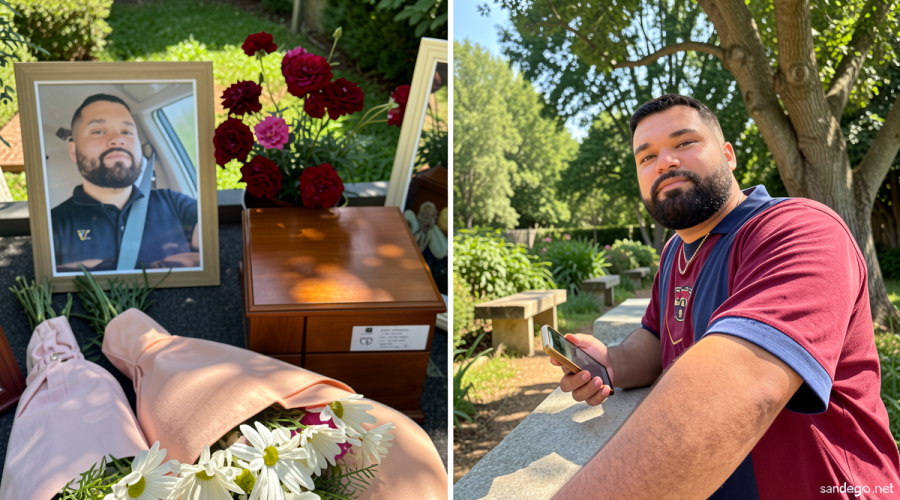
After receiving Daniel’s ashes, Núñez began her journey back to her hometown. “We returned home on Wednesday — not the way I wanted, with my son alive — but at least I have his ashes.” Despite her profound loss, Núñez expressed gratitude for being able to locate Daniel’s remains. “There are people who still haven’t found their loved ones. They’re still searching.”
CNN has reached out to Venezuela’s Ministry of Communication and the Vuelta a la Patria program to request comments regarding Daniel’s case, as well as additional details about the flight passengers and the protocols implemented following the earthquakes. The network is currently awaiting a response.