From Cartels to Street Vendors: The Winners and Losers of Mexico’s World Cup Tourism Boom
Sandego.net – Mexico City is abuzz with anticipation as the capital prepares to host the opening match of the FIFA World Cup on June 11. The vibrant green, white, and red hues of the Mexican flag are already visible in bustling streets, signaling the arrival of a global event that promises to reshape the local economy. For businesses in tourist zones, the tournament represents a golden opportunity to generate revenue, from retail stores offering unofficial merchandise to eateries capitalizing on the influx of visitors. However, the economic benefits are not evenly distributed, with some communities and industries facing both opportunities and risks.
Businesses in the Spotlight: A Wave of Revenue and Innovation
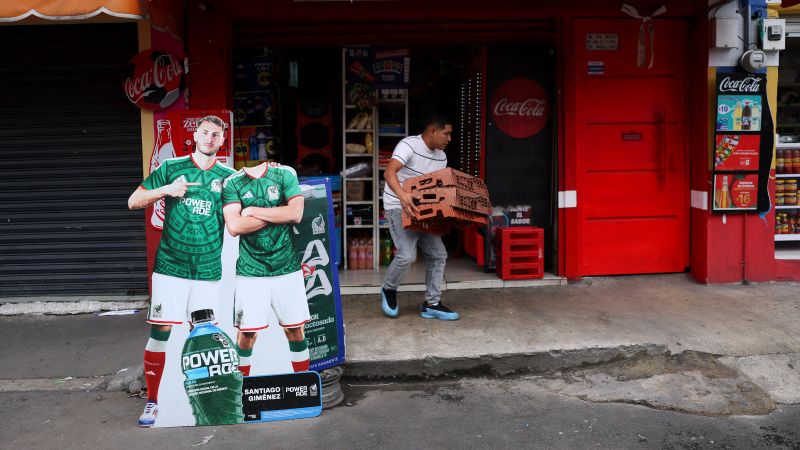
Across the city, merchants are scrambling to meet the demand for World Cup-related products. From colorful key chains shaped like soccer balls to plush toys featuring Mexican presidents in the national team’s jersey, the market is brimming with creativity. Alejandro Gonzalez, owner of Garage Burger in a residential area south of the city center, says his small eatery is already adjusting to the tournament’s impact. “We have to seize that moment,” he remarked, as he decorates his restaurant with football-shaped balloons and ice coolers to attract attention. His hope is that the increased foot traffic will offset the challenges of operating in a less-traditional tourist hub.
El Zocalo, the city’s main plaza, is a microcosm of this economic shift. The iconic space, surrounded by the towering Metropolitano Cathedral and the presidential palace, is now a hub for unofficial vendors. Juan Carlos, a street performer dressed in his signature beige uniform and kepi cap, noted that tourists are flocking to the area for its traditional barrel organs. “This part of the city is a classic,” he said, highlighting the cultural draw that complements the sporting event. Meanwhile, Salon Corona, a popular spot for live match viewing, anticipates a 45-50% surge in customers. Manager Miguel Laguna emphasized the plaza’s role as a central gathering point, with its giant screen and market booths drawing crowds throughout the tournament.
Experts estimate that Mexico could earn up to $3.7 billion (MX$65 billion) from the World Cup, with tourism accounting for nearly half of that total. The figure underscores the tournament’s potential to invigorate the economy, particularly in areas that typically see a spike in activity during international events. For small businesses, the challenge lies in balancing the excitement of increased visitors with the disruptions caused by large-scale events. Nayeli, a kiosk manager at El Zocalo, voiced concerns about the fan fest zone, which may lead to street closures and reduced accessibility. “We’re in a prime location, but the events could push us aside,” she warned, pointing to past instances where such restrictions limited her clientele.
Cartels and Crime: A Hidden Profit Stream
While the tournament brings economic growth, it also creates new avenues for criminal activity. According to security analysts, organized crime groups are eyeing the influx of visitors as a chance to expand their operations. Extortion, scams, and cyberfraud are expected to rise, particularly targeting businesses that cater to fans. In resort towns like Cancun and Puerto Vallarta, where matches are not held but fans still travel for the event, criminals have historically extorted restaurants, nightclubs, and hotels. “Local businesses have become highly profitable, especially for localized organized crime groups,” said Victoria Dittmar, a senior researcher at InSight Crime, adding that the World Cup’s presence could amplify these trends.
Crime networks are also capitalizing on the digital landscape. Officials warn that scammers may exploit the tournament by selling counterfeit tickets, fake hospitality packages, or even creating fraudulent apps and websites to steal users’ data. One such threat involves apps that promise live match coverage but instead install malware to access banking credentials or monitor device activity. “These platforms are not for entertainment—they’re tools to compromise personal and financial information,” the Mexican government stated, urging consumers to avoid unreliable vendors.
Despite the risks, some stakeholders believe the economic benefits outweigh the challenges. The government has launched initiatives to protect both tourists and local businesses, including advisories to purchase from official sources and to be cautious of third-party scams. However, the success of these measures depends on enforcement and public awareness, particularly in areas where crime is already entrenched. For businesses like Nayeli’s kiosk, the question remains whether the tournament’s economic gains will reach the grassroots level or if they’ll be siphoned away by organized groups.
Regional Impact: A Tale of Two Markets
The tournament’s ripple effects extend beyond Mexico City, influencing smaller towns and regional economies. In Cancun, a city known for its beaches and luxury resorts, local businesses are anticipating a boost from day-trippers. Yet, this growth is not without its hurdles. Residents and entrepreneurs in these areas report a mix of optimism and anxiety, as they navigate the complexities of hosting international visitors. The contrast between the capital’s infrastructure and smaller towns highlights the uneven distribution of benefits, with some communities struggling to accommodate the sudden surge in activity.
For businesses in the capital, the tournament offers a chance to enhance visibility and attract a broader customer base. However, the competition is fierce. Alejandro Gonzalez noted that while his restaurant in a residential area is not a traditional tourist spot, the tournament has given him a reason to innovate. “We’re putting up decorations, running promotions—it’s a way to stand out,” he explained. This proactive approach is common among small operators, who are trying to capture a share of the World Cup’s attention amid the city’s crowded spaces.
Meanwhile, the tournament’s cultural and social impact is being felt in neighborhoods that have long relied on tourism. El Zocalo, once a space for traditional vendors, now hosts a mix of licensed and unofficial sellers. While this diversity may enrich the experience for visitors, it also raises concerns about competition and fair practices. Nayeli, whose kiosk has been a staple of the plaza for years, fears that the fan fest zone could displace smaller businesses. “We’ve seen it before—events like these change the dynamics,” she said, stressing the need for policies that protect local entrepreneurs from being overshadowed by larger entities.
The World Cup’s arrival in Mexico also highlights the intersection of sports and culture. The iconic barrel organs in El Zocalo, for instance, are not just a tourist attraction but a symbol of the city’s heritage. Juan Carlos, the street performer, sees his craft as a bridge between the past and present. “Tourists come here for the history, and they stay for the music,” he said. This blend of tradition and modernity may create a unique economic opportunity, but it also requires careful management to ensure that all stakeholders benefit.
As the tournament approaches, the balance between opportunity and challenge becomes increasingly complex. While businesses in tourist hotspots like El Zocalo and the capital’s central areas are poised to see a significant uptick in sales, those in less visible regions must work harder to attract attention. At the same time, the potential for criminal exploitation adds a layer of uncertainty. The Mexican government’s efforts to mitigate these risks, such as promoting official vendors and warning against cyber threats, will be critical in determining whether the World Cup’s economic promise translates into tangible gains for the nation’s residents and enterprises.
In the end, the tournament is more than a sporting event—it’s a test of how well Mexico can leverage its cultural and economic assets to create a positive impact. For some, it’s a chance to thrive; for others, a reminder of the challenges that come with global attention. As the opening match draws near, the true measure of the World Cup’s influence will be evident in the stories of those who live, work, and play in its wake.