Feds Won’t Seek Death Penalty in Minnesota Democrat Killing Case
Minneapolis, Minnesota – June 10, 2026
Sandego.net – The U.S. Department of Justice has decided not to pursue the death penalty as part of a plea agreement with Vance Boelter, the man charged with murdering Melissa Hortman, former Minnesota House Speaker, and her husband, Mark Hortman. This decision includes charges related to the attempted assassinations of state Senator John Hoffman and his wife, Yvette Hoffman. Boelter, 58, is scheduled to appear in court on Thursday for a change-of-plea hearing in Minneapolis. The case has sparked national interest due to its political significance and the dramatic nature of the crime.
“The Attorney General has directed the federal government to proceed without the death penalty in this case,” said Assistant U.S. Attorneys Bradley M. Endicott and Matthew D. Forbes in a court filing. The plea deal encompasses both federal and state charges, though the exact terms have not been fully disclosed. This move marks a shift in the prosecution’s strategy, as the death penalty remains a contentious issue in legal and political circles.
Crime and Investigation Details
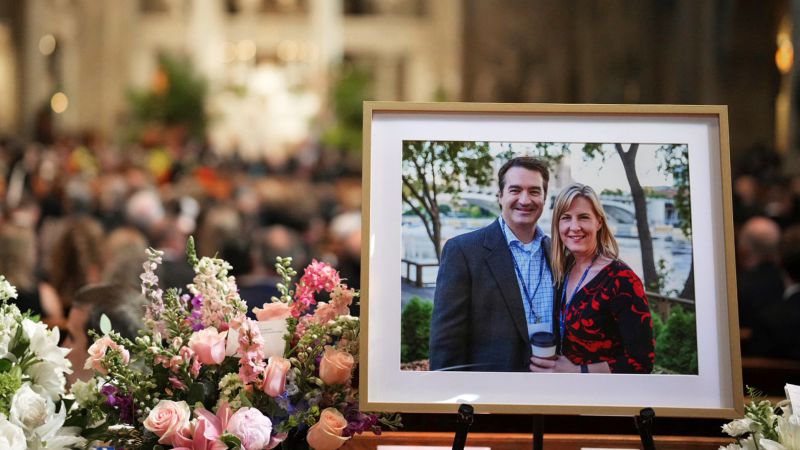
The attack took place on the early morning of June 14, 2025, when Boelter, disguised as a police officer and using a replica squad car, entered the Hortmans’ home. The assailant shot and killed Melissa and Mark Hortman, while their golden retriever sustained critical injuries and was later euthanized. Yvette and Hope Hoffman, the surviving victims, endured severe trauma, with lasting physical and emotional consequences. The incident has left the political community in Minnesota reeling, prompting questions about the safety of public officials.
Boelter was captured near his rural Green Isle home the next day, following a record-breaking manhunt. Federal investigators highlighted the thoroughness of the operation, which spanned multiple states and involved advanced surveillance techniques. The arrest has shifted the focus to the legal proceedings, with prosecutors balancing the severity of the crime against the plea deal’s terms. The case now hinges on whether Boelter will plead guilty to the charges and accept the proposed sentence.
Political Context and Legal Implications
Authorities have classified the attacks as politically motivated, targeting prominent Democrats in Minnesota’s legislature. This designation has fueled discussions about the death penalty’s role in high-profile cases. Despite the Trump administration’s support for capital punishment, the decision to forgo it in this instance may signal a broader trend in federal sentencing policies. Minnesota, which eliminated the death penalty in 1911, has never faced a federal death penalty trial, making this a pivotal moment for the state’s legal history.
The federal indictment, announced in July 2025, included a handwritten letter from Boelter to FBI Director Kash Patel. In the letter, he confessed to the shootings but offered minimal explanation for his actions. His references to a “vague investigation” linked to the COVID-19 vaccine have sparked theories about his motives, though the exact reasons remain unclear. This cryptic narrative has kept the case in the public eye, influencing media coverage and political discourse.
Defendant’s Background and Motives
Vance Boelter, described by friends as a passionate evangelical Christian, had a background in preaching and missionary work. His conservative beliefs were reportedly tied to his political views, which align with right-wing ideologies. However, recent reports indicate he faced challenges in securing stable employment, raising questions about his financial situation and potential stressors. These personal details have shaped public perception, portraying him as both a religious figure and a man driven by ideological convictions.
Testimonies from the surviving victims, including John Hoffman’s account of permanent physical injuries, underscore the brutality of the attack. Hoffman, who suffered damage to his left arm and hand, as well as long-term effects on his digestive and urinary systems, described the event as a life-altering experience. Yvette Hoffman, who survived the shooting, reported ongoing physical weakness, while Hope Hoffman, the daughter who called 911, recounted profound psychological distress. These accounts add human elements to the legal case, emphasizing its personal impact.
Future of the Case and Public Reaction
With the death penalty no longer an option, the plea deal now serves as the primary pathway for resolving the case. Prosecutors will present the agreement to the court, which will determine its final terms. This decision may influence how the case is perceived, potentially reducing its political stakes while addressing concerns about capital punishment. However, the public remains divided, with some arguing that the crime’s severity warrants the death penalty, while others support the plea deal as a pragmatic approach.
As the case moves forward, the focus will likely shift to Boelter’s cooperation and the plea deal’s implications. The feds’ decision to avoid the death penalty could signal a strategic choice to prioritize rehabilitation over execution, especially given the political climate. This approach may also affect how the victims’ families view the justice system, as they seek closure and accountability for the tragedy that unfolded in their home.