Earth’s Wobbly Rotation Could End the Leap Second
Sandego.net – Earth s rotation is notoriously uneven, creating a challenge for the global clocks that organize modern life. International time authorities are expected to vote on whether to stop using leap seconds, the occasional extra second added to Coordinated Universal Time, or UTC, to keep atomic clocks broadly aligned with the planet’s changing spin.
For most people, the proposal would make little difference when checking a phone or wristwatch. But the decision matters to telecommunications, financial systems, power networks and computer services that rely on precisely synchronized clocks.
Why Earth’s Rotation and Atomic Time Differ
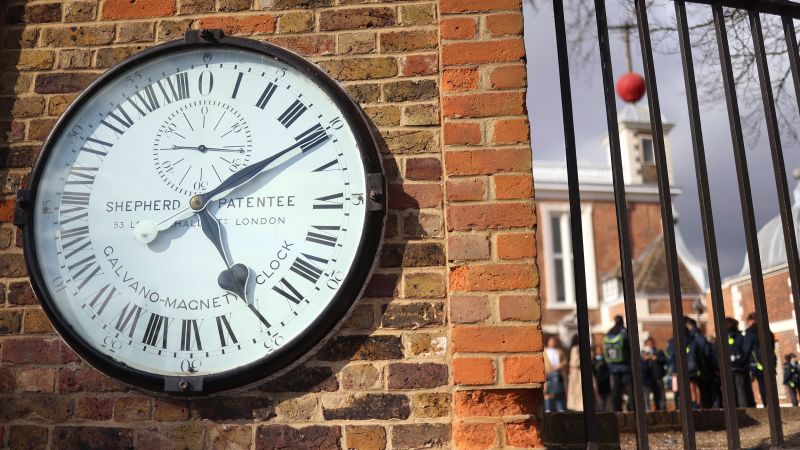
For centuries, timekeeping was rooted in the sky. At the Royal Observatory Greenwich in London, noon Greenwich Mean Time occurs when the sun reaches its highest point above the north-south meridian. Sundials and astronomical observations once provided the practical basis for tracking the passage of a day.
UTC, however, relies on atomic clocks, first developed during the 1950s. These clocks measure highly predictable vibrations of atoms and are far more stable than the planet’s motion. Earth s rotation is notoriously variable because of influences including the moon’s gravity, processes within Earth’s core, and shifting water and ice around the globe.
Loss of polar ice associated with the climate crisis can also affect the distribution of mass on Earth and influence its rotation. The result is that a day measured by the planet does not always match the uniform seconds counted by atomic clocks.
“We have to make a choice on whether or not the most important thing is a sense of time given by objects in the sky directly above, say, the Greenwich longitude,” said Jeff Sherman, a group leader in the Time and Frequency Division at the National Institute of Standards and Technology in Boulder, Colorado.
The leap second was created as a compromise between astronomical time and atomic time. Since 1972, global clocks have received an added second 27 times, allowing UTC to remain close to time based on Earth’s rotation.
Why Technology Companies Want Leap Seconds Retired
Unlike leap years, which add a day to February roughly every four years, leap seconds are irregular. They may be announced only six months before they occur, making them difficult for digital systems designed to process a continuous, predictable sequence of timestamps.
A repeated second can cause systems to place events in the wrong order or fail to interpret timestamps correctly. The leap second in 2012 affected Reddit, LinkedIn and Qantas’ booking system. In 2016, Cloudflare customers briefly experienced delays or outages after servers struggled with the additional second.
Meta has called the leap second a “major source of pain.” The concern is less about whether people understand an extra second than about the risks created when rare, unevenly scheduled adjustments affect interconnected digital infrastructure.
One proposed alternative is Continuous Coordinated Universal Time. Under that approach, UTC would continue without leap-second insertions, while astronomical time would remain available as a separate measurement. Civil time would no longer be repeatedly adjusted to keep close pace with Earth’s changing rotation.
What the International Vote Could Mean
The International Bureau of Weights and Measures, or BIPM, brings together 69 member states to establish international measurement standards. Its decision could move global civil time further away from the astronomical systems that shaped clocks, calendars and time zones for generations.
Earth s rotation is notoriously difficult to predict over long periods, which means timekeepers must balance an ancient connection to the sky with the needs of increasingly precise technology. Ending leap seconds would favor the consistency of atomic time, while preserving astronomical time as its own reference.
FAQ: Leap Seconds and Everyday Timekeeping
Will phones and watches show a different time? Most people would notice little or no immediate change. Devices already use UTC and other time standards designed to keep everyday clocks synchronized.
Why can’t computers simply add one second? Many systems assume that every timestamp occurs only once. A repeated second can create errors when software sorts transactions, records events or coordinates data across networks.
Would ending leap seconds mean Earth time is abandoned? No. Astronomical time based on Earth’s rotation would still be measured. The proposed change would separate it from the continuous atomic time used for UTC.