Deadly Russian Strikes Target Kyiv as Trump Arrives for NATO Summit
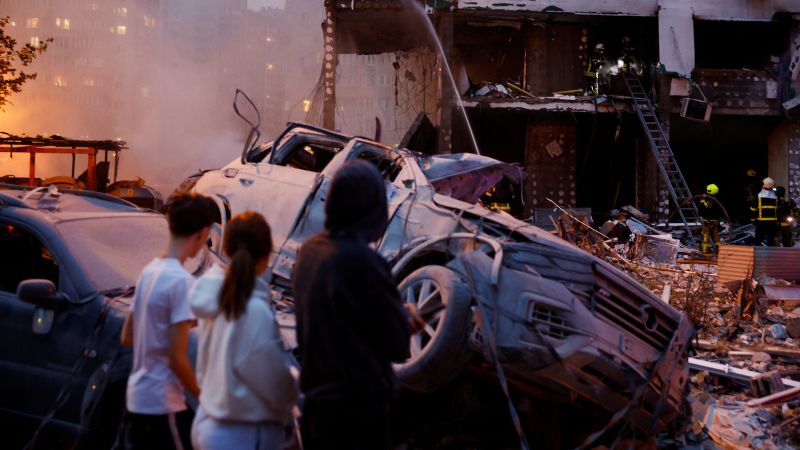
Sandego.net – On the morning of July 6, 2026, Kyiv, Ukraine’s capital, endured a devastating Russian missile assault that left the city reeling. The attack, occurring just days before a pivotal NATO summit in Turkey, intensified fears of escalating conflict. Ukrainian officials reported at least 12 fatalities in the city and six additional casualties in nearby areas, with over 100 individuals injured. The bombardment, which targeted residential zones, caused widespread destruction, trapping residents in multi-story buildings and reducing entire neighborhoods to rubble.
Russian Precision and Casualty Toll
The assault unleashed a combination of ballistic missiles and drones, which struck multiple locations across the nation. According to data from Ukraine’s air force, none of the 29 ballistic missiles launched on Monday were intercepted. Meanwhile, 18 attack drones contributed to the chaos, hitting 34 sites in total. The Podilsky district emerged as the hardest-hit area, with officials confirming severe damage to infrastructure. Rescuers evacuated dozens of people, including children, from the upper floors of collapsed structures early Monday, while others braved hours in underground shelters to avoid the blasts.
“Moscow is preparing a new massive strike,” Ukrainian President Volodymyr Zelensky warned hours prior to the attack. His warning proved prescient, as the assault unfolded with brutal efficiency, targeting both civilian and strategic sites. The toll of Monday’s strikes marked a grim milestone, with casualties surpassing those of a similarly severe attack from the previous week.
Context of Escalating Threats
As the war in Ukraine enters its fifth year, the frequency and lethality of Russian attacks have grown. The July 4 call between U.S. President Donald Trump and Russian President Vladimir Putin, described by Moscow as “businesslike” and lasting 90 minutes, preceded Monday’s assault. Analysts suggest the summit in Ankara will serve as a battleground for diplomatic maneuvering, with Kyiv’s recent bombardment heightening the stakes. The attack’s timing—right after America’s Independence Day—underscored Russia’s strategic intent to pressure NATO allies before key negotiations.
Ukraine’s military reported that the barrage of 350 drones and 66 missiles aimed to overwhelm defenses. Kyiv, a critical hub for government operations and logistics, became the primary target, with its southeastern Darnytskyi district suffering extensive damage. This area had already been hit by a major strike last Thursday, which claimed 30 lives and is now regarded as the third-deadliest attack on the city since hostilities began. The UN Human Rights Monitoring Mission in Ukraine noted that civilian deaths this year have surged compared to the same period in 2025, highlighting a troubling trend in the conflict’s impact.
Impact on Civilian Life and Infrastructure
The attacks left a trail of devastation, with entire families lost in the rubble and vehicles engulfed in flames across the capital. Power outages swept through several regions, including Kyiv, Sumy, Kharkiv, and Dnipropetrovsk, disrupting daily life and emergency services. The Ukrainian electricity transmission agency confirmed the widespread blackouts, which compounded the challenges faced by residents already in shelters. The assault also revealed vulnerabilities in the city’s defenses, as the lack of intercepted missiles raised questions about the adequacy of Ukraine’s air defense systems.
“It is critically important that the world—first and foremost the United States and our European partners—come out of the NATO Summit in Ankara with strong decisions in support of our air defense,” Zelensky emphasized in a statement. He linked the absence of intercepted missiles to the “insufficient supply of interceptor missiles” in Ukraine’s stockpiles, arguing that without sufficient Patriot systems, Russian forces would continue targeting residential areas with impunity.
Putin’s Response and Strategic Objectives
Russia’s defense ministry framed the attack as a justified response to Ukrainian strikes on civilian infrastructure in Russian territory. It highlighted the use of “high-precision, long-range weapons” to target military-industrial facilities and fuel depots, aiming to cripple Ukraine’s war effort. The timing of the assault, however, suggested a broader psychological strategy: to demonstrate Russia’s capacity to strike deep into Ukrainian territory while testing NATO’s resolve ahead of the summit. Zelensky, who had previously urged allies for more missile support, used the attack to reiterate his plea for immediate assistance, emphasizing the urgency of the situation.
Political Dynamics and Peace Efforts
Trump’s promise to resolve the war within 24 hours of his re-election has faced scrutiny as the conflict drags on. Over 500 days into his second term, the U.S. administration has yet to achieve a breakthrough in peace talks with Moscow, despite repeated diplomatic overtures. The July 4 call with Putin, during which Trump reaffirmed his commitment to ending the war, now appears overshadowed by the escalating violence in Kyiv. Zelensky’s plea for Patriot missiles at the NATO summit underscores the precarious balance between military necessity and diplomatic pressure.
“Urgently needs more air defence,” said European Commission President Ursula von der Leyen, echoing Zelensky’s call for global support. “We will discuss it this week in Ankara at the @NATO Summit.” Her statement reflected the shared concern among NATO members about Ukraine’s ability to defend itself against increasingly sophisticated Russian weaponry.
Technological Shift and Defense Challenges
The assault showcased Russia’s evolution in military tactics, employing advanced systems like the Geran-4 jet-powered drones, which outpace traditional mobile fire units. These drones, capable of rapid strikes, posed a new challenge to Ukrainian defenses, which struggled to neutralize them. The lack of intercepts in Monday’s attacks highlighted a critical gap in Ukraine’s capabilities, particularly in countering such high-speed threats. Analysts warn that if the supply of Patriot missiles remains inadequate, Kyiv’s residential areas could become frequent targets, deepening the humanitarian crisis.
Broader Implications for the NATO Summit
The Russian strikes on Kyiv have set the stage for the NATO summit, where Trump and Zelensky will seek to align on strategy. The meeting, held in a politically charged environment, aims to address the war’s trajectory and Ukraine’s future. For Zelensky, the assault serves as both a call to arms and a reminder of the stakes involved. The summit’s success could determine the level of support Ukraine receives, influencing its ability to repel further attacks. Meanwhile, Russia’s use of precision strikes signals its determination to maintain pressure, even as it prepares for potential negotiations.
As the world watches Kyiv’s recovery efforts, the assault underscores the persistent threat to the city and its residents. The combination of ballistic missiles, drones, and advanced weaponry has forced Ukraine to rethink its defense strategy. With the NATO summit looming, the question remains whether international allies will rise to the occasion and provide the necessary resources to protect Kyiv from such devastating strikes. The outcome of these discussions will shape the next phase of the conflict, as both sides prepare for the battle ahead.