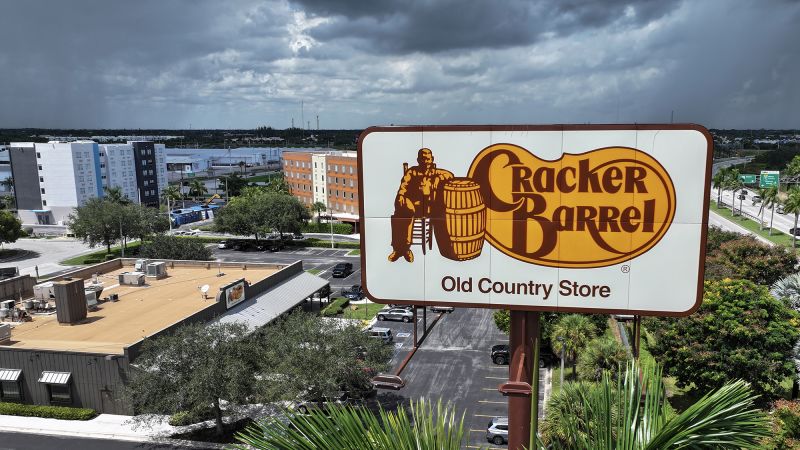
How Cracker Barrel Reclaimed Its Identity
Sandego.net – In the wake of a controversial redesign, Cracker Barrel’s CEO, Julie Felss Masino, has charted a course toward recovery. Six months ago, she admitted feeling “disconnected from the American public” after a poorly executed transformation. Today, the company’s efforts to reconnect with its core values and heritage appear to be yielding results, as recent financial reports and stock performance signal a reversal of fortune.
A Bold Revamp That Sparked Backlash
The chain’s modernization push, launched last summer, included a revamped logo and redesigned interiors that replaced its traditional dark-wood aesthetic with a brighter, more contemporary look. Alongside these changes, souvenir-filled walls were removed, marking a $700 million overhaul aimed at attracting younger patrons and reviving declining sales. However, the shift alienated longtime customers and ignited a public debate over the brand’s authenticity.
“It’s really difficult to be at the helm of a brand that has the kind of legacy and reputation that Cracker Barrel does, because that’s powerful,” said Robert Byrne, senior director of consumer research at Technomic. “When you try to effect changes – in attempts to modernize the brand in one way or another – that’s a thorny issue for a lot of consumers.”
The backlash was immediate. Shares plummeted by 12%, and foot traffic and revenue declined sharply. President Donald Trump weighed in, criticizing the redesign as a betrayal of American traditions. Masino, who had previously emphasized innovation, found herself at the center of a cultural storm. Critics argued that the removal of the iconic “old timer” mascot, a symbol since 1977, signaled a loss of the brand’s down-home charm and a shift toward progressive values.
Reassessing the Strategy
Faced with mounting pressure, Masino pivoted. She acknowledged the disconnect during a November interview with conservative radio host Glenn Beck, explaining that the redesign had stripped away elements customers deeply identified with. “What we didn’t see in the data was the way that people see themselves in the logo,” she told Beck. “When the ‘old timer’ and when the barrel were gone, it was like we had taken them out of it and that we weren’t valuing what they valued.”
Instead of doubling down on aesthetics, the company refocused its efforts on menu offerings and customer loyalty. Masino eliminated the marketing agency responsible for the logo change and brought back a former executive who had previously managed menu strategy. This move reflected a broader commitment to simplicity and tradition, with the CEO prioritizing dishes like country ham, fried catfish, and carrot cake—items that resonated with the brand’s Southern roots.
Complementary to these menu adjustments were efforts to enhance the customer experience. The loyalty program, which now boasts nearly 12 million members, became a key tool for engagement. Masino emphasized its role in fostering a sense of community, offering personalized discounts and a platform for feedback. “This program has grown to nearly 12 million members, who now account for more than 40% of sales,” she stated, highlighting its importance in rebuilding trust.
A New Chapter for Cracker Barrel
As the chain celebrated the nation’s 250th anniversary, gift shops received a fresh update with American-themed merchandise. Masino described the initiative as a way to “proudly celebrate America and patriotism,” aligning the brand with broader cultural sentiments. These adjustments, combined with the introduction of limited-time value meals priced under $10, have helped rekindle interest among both returning and new customers.
While the company has made strides, challenges remain. Cracker Barrel reported a 6.7% drop in traffic during the most recent quarter, though this decline is seen as a gradual improvement compared to previous months. CFO Craig Pommells noted on the earnings call that the trend was “encouraging,” suggesting the company is on the right path. “The limited-time offerings and value-focused pricing align with what restaurant consumers want in today’s macroeconomic environment,” said R.J. Hottovy, head of analytical research at Placer.ai. “The returning favorites help rekindle customers’ nostalgia for the brand.”
Technomic’s data reveals that Cracker Barrel is experiencing notable gains in customer satisfaction. Metrics such as service quality, food preparation, and cleanliness have improved significantly, with “higher scores for value and order accuracy” reported by Byrne. These results signal that the brand’s renewed emphasis on fundamentals—its heritage, authenticity, and customer-centric approach—is beginning to pay off.
From Crisis to Confidence
Masino’s turnaround strategy has not only stabilized the business but also reinvigorated its identity. By shedding the more radical aspects of the redesign and embracing a balance between tradition and innovation, the CEO has positioned Cracker Barrel as a brand that honors its past while adapting to modern tastes. This dual focus has allowed the chain to avoid the fate of competitors like Red Lobster and Hooters, which have struggled with similar challenges.
Despite the lingering impact of the initial changes, the company’s current trajectory suggests a successful rebirth. “With the recent focus on fundamentals and a renewed commitment to the brand’s unique and authentic history, there is a lot for loyal guests to be excited about and for new guests to enjoy,” Byrne added, underscoring the optimism surrounding the chain’s revival.
As Masino continues to navigate the complexities of balancing nostalgia with contemporary appeal, her decisions have proven crucial in restoring Cracker Barrel’s standing. The CEO’s willingness to adapt—whether by revisiting classic menu items or aligning with patriotic themes—has demonstrated a deep understanding of what resonates with its customer base. While the road to recovery remains ongoing, the signs are promising, and the brand’s resilience is evident in its financial and reputational rebound.
Cracker Barrel’s journey reflects the broader challenges of rebranding in a polarized market. The initial push for modernization, though well-intentioned, had unintended consequences, as it sparked debates over cultural identity and brand integrity. Yet, by listening to customer feedback and recalibrating its approach, the company has managed to reclaim its narrative. The result is a brand that feels both familiar and forward-thinking, one that can appeal to a diverse audience without sacrificing its core values.
For Masino, the turnaround represents more than just financial success—it’s a testament to her leadership and ability to pivot when necessary. Her efforts have not only restored Cracker Barrel’s profitability but also reinforced its place as a beloved American institution. As the chain moves forward, it serves as a case study in how a brand can reconcile its legacy with evolving consumer expectations, ensuring its relevance for generations to come.