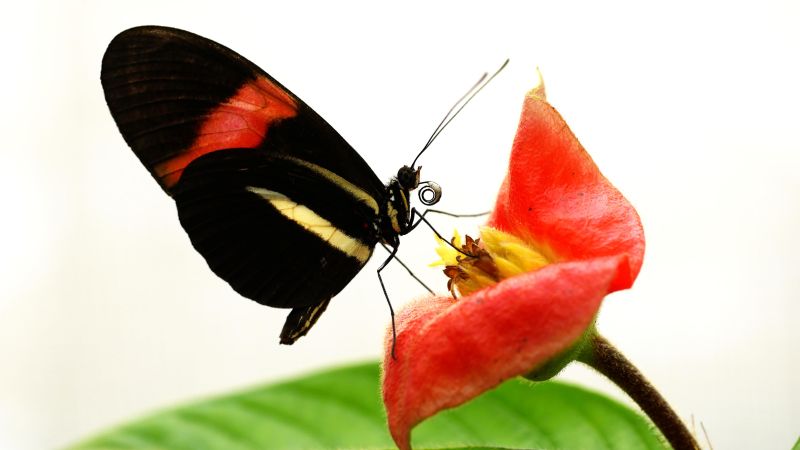
An Uncommon Dietary Habit Extends Lifespan in Tropical Butterflies
Sandego.net – For decades, scientists have puzzled over why certain butterfly species defy the typical short lifespan seen in most of their kin. While most butterflies live only weeks, some tropical varieties exhibit a strikingly different pattern, surviving for years. A recent study published in Nature Communications has uncovered key clues about this phenomenon, focusing on the Heliconius genus, which thrives in the dense ecosystems of South and Central American rainforests. Researchers discovered that these butterflies employ a unique strategy, allowing them to live up to 25 times longer than their shorter-lived relatives. This revelation challenges conventional assumptions about insect longevity and opens new avenues for understanding aging in both animals and humans.
The Lifespan Divide Within the Heliconius Genus
Within the same genus, Heliconius species display a dramatic range in lifespan. For instance, the Dione juno butterfly, commonly found in tropical regions, has a lifespan of just 14 days after reaching adulthood. In stark contrast, Heliconius hewitsoni can survive for 348 days, nearly a quarter-century longer. Other members of the genus, such as Heliconius species like the Heliconius erato and Heliconius melpomene, also show extended lifespans, living between 106 to 277 days. These variations sparked curiosity about the evolutionary mechanisms behind such differences.
Dr. Jessica Foley, a postdoctoral scholar at Tufts University’s Jean Mayer USDA Human Nutrition Research Center on Aging, led the study. Her interest in the topic began with a simple question: why do some butterflies live so much longer than others? “We see vast differences in lifespan across the animal kingdom — adult mayflies famously live only for a day, whereas some whales and sharks can live for hundreds of years,” Foley explained in an email. “I’m interested in the evolutionary basis of these kinds of lifespan differences because they might hold insights relevant for healthy ageing in humans.”
Pollination as a Key to Longevity
Previous theories suggested that nutrition might be the driving force behind the Heliconius’ extended lifespans. Unlike most butterflies, which rely solely on flower nectar for energy, these species consume pollen as adults. This diet includes not only carbohydrates but also lipids and amino acids, nutrients essential for reproductive processes. Researchers hypothesized that this dual-source nutrition could delay aging by providing additional energy and metabolic support.
To test this, Foley and her team examined the Heliconius’ diet and its impact on longevity. They observed that while most butterflies feed exclusively on nectar, Heliconius species have evolved to incorporate pollen into their adult diet. “The general evolutionary strategy is to reproduce as much as they can until those resources are spent, which doesn’t take very long for these small insects,” Foley noted. “They usually die soon after this finite resource is used up.” However, Heliconius butterflies appear to retain the nutrients from their larval stage, enabling them to sustain longer lifespans.
Expanding the Scope of the Study
The research team combined data from multiple sources, including commercial butterfly farms, mark-release-recapture studies, and controlled lab experiments, to analyze aging patterns across the genus. This expansive dataset allowed them to compare species with and without pollen in their diets. Of the 28 Heliconius species studied, only six did not consume pollen as adults, and their lifespans ranged from 14 to 98 days. The remaining 22 species, which included pollen in their adult diets, lived significantly longer, up to 348 days in some cases.
One of the most intriguing findings was that even when pollen was removed from their diets, Heliconius butterflies still outlived their non-pollen-feeding relatives. This suggests that the extended lifespan is not solely due to dietary changes but may involve other physiological adaptations. Foley emphasized that the study aimed to determine whether these butterflies’ longevity stemmed from evolved mechanisms, such as genetic or metabolic traits, rather than just diet.
Measuring Aging with Innovation
To quantify the effects of aging, the team developed a novel tool called “The Pullinator.” This device consisted of a perch lined with sandpaper connected to a light source, designed to measure grip strength in older butterflies. By assessing how much force the insects could exert, researchers could evaluate age-related decline in their physical abilities. The results showed that Heliconius butterflies maintained higher grip strength compared to shorter-lived species, even as they aged.
Foley described the process as both challenging and rewarding. “Studying the ‘extreme agers’ of the animal kingdom is an uphill task for scientists, especially if they have to wait centuries for a species to reach what is considered old,” she said. “But the Heliconius genus offered a unique opportunity since their entire life cycle can be observed within a year.” This timeframe allowed the team to track aging patterns without waiting for decades, making the research more feasible and impactful.
Implications for Human Longevity
The study’s findings may have broader implications beyond entomology. By identifying how Heliconius butterflies extend their lives, scientists could gain insights into human aging. “If we can understand the factors that contribute to prolonged lifespan in these insects, we might uncover similar mechanisms in humans,” Foley speculated. The research highlights the potential of studying insects as models for longevity, given their rapid life cycles and adaptability.
Additionally, the study underscores the importance of diet in aging processes. While most butterflies use their larval-stage nutrients for reproduction, Heliconius species appear to conserve these resources, allowing them to live longer. This could explain why some Heliconius individuals survive for nearly a year, far exceeding the lifespan of their kin. The team’s work also raises questions about the role of other environmental factors, such as temperature, humidity, and predation, in shaping these differences.
A New Perspective on Evolutionary Adaptations
Foley’s research adds to a growing body of work exploring how organisms adapt to maximize survival. While the Heliconius’ diet is one factor, the study suggests there may be deeper evolutionary strategies at play. “The Heliconius genus is a fascinating case study because it demonstrates how species can evolve distinct ways to prolong life,” Foley said. “This could serve as a model for understanding the biological processes that slow aging in other organisms, including humans.”
Looking ahead, Foley hopes the study will inspire further research into the genetics and biochemistry of longevity. “There is still much to learn about how these butterflies manage to live so long, and I’m excited to explore what other secrets they might hold,” she added. The findings could also influence fields such as nutrition, ecology, and even medicine, offering practical applications for extending lifespan in various species.
As scientists continue to unravel the mysteries of longevity, the Heliconius genus stands out as a remarkable example of nature’s ingenuity. Their ability to thrive for years, despite their small size, challenges traditional views of insect biology. By studying these butterflies, researchers may uncover new strategies to combat aging, ultimately bridging the gap between animal and human longevity research.