Air Canada Pilot Faced with Criminal Charges for Using Fake License
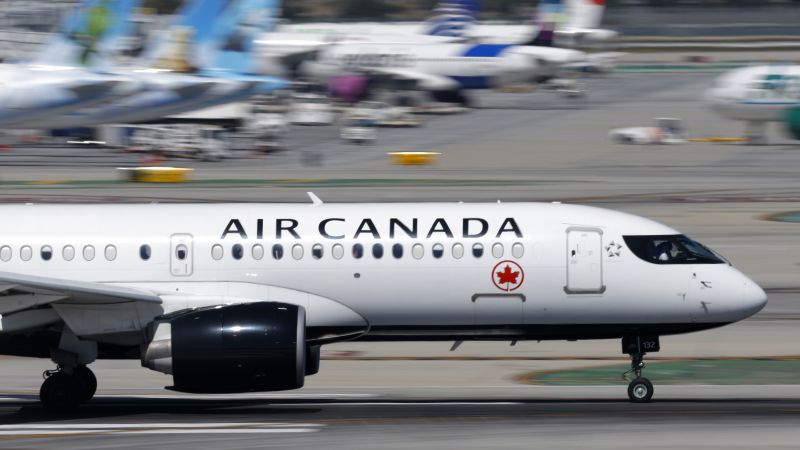
Sandego.net – Canadian authorities have charged a former Air Canada pilot with multiple criminal offenses after uncovering evidence that he operated hundreds of flights over nearly 17 years without the proper certification. Geoffrey Wall, a pilot who spent 27 years with the airline, was arrested on June 1, 2026, by Peel Regional Police following an investigation that has drawn comparisons to the 2002 film Catch Me If You Can. The case, referred to as “Project Icarus,” highlights a breach of trust in the aviation industry, where Wall allegedly misled both his employer and regulatory bodies about his qualifications.
Years of Unchecked Flight
According to investigators, Wall served as a captain for over 900 domestic and international flights between 2009 and 2025. During this time, he piloted Boeing 767s, 777s, and 787s, aircraft that require specialized training and certification to operate. Despite this, police claim he never obtained an Airline Transport Pilot License for Aeroplanes (ATPL-A), the official designation needed to hold the rank of pilot in command. This license is considered the gold standard in aviation, ensuring pilots meet rigorous standards for experience, knowledge, and skill.
“
This investigation and the details surrounding it read like a movie script,” said Peel Regional Police Deputy Chief Milinovich during a news conference in Ontario. “Wall rose to the position of pilot in command, where for almost 17 years they flew Boeing 767s, 777s, and 787s, while earning nearly $3 million Canadian dollars (more than $2 million US dollars) in salary.”
Milinovich emphasized the gravity of the situation, drawing a parallel to the 2002 film Catch Me If You Can, where a young con artist deceives airlines by posing as a qualified pilot. In Wall’s case, the deception spanned decades, with investigators suggesting he maintained a facade of legitimacy for years. “It’s like a doctor who is licensed to practice family medicine but is performing brain surgery in their office,” Milinovich added. “There are additional requirements and regulations for professional designations that exist for a reason.”
How the Fraud Was Discovered
The breach was uncovered in 2025 during a routine review of Wall’s credentials. Police revealed anomalies in the pilot license documentation, including discrepancies in the training records and certifications. Air Canada, upon noticing these inconsistencies, alerted regulatory authorities, prompting a formal investigation. Wall had already retired by that time, but the discovery of the forged documents and counterfeit mark led to his arrest just days later.
Although Wall was a licensed commercial pilot and demonstrated competence in operating large aircraft, the absence of an ATPL-A raised significant concerns. The airline stated in a Monday statement that he had consistently shown the ability to safely pilot planes, citing its mandatory recurrent training program. Pilots at Air Canada are required to undergo evaluations every six months and pass a flight check with a certified Transport Canada check-pilot annually. However, the investigation suggests that these checks were not sufficient to detect the missing licensing requirement during his promotion to captain in 2009.
Legal Proceedings and Potential Consequences
Wall faces seven criminal charges, including fraud exceeding $5,000, two counts of forging documents, and three counts of possessing counterfeit marks. These allegations indicate that he not only operated without the necessary license but also actively misrepresented his credentials to secure his position. The charges were announced following his arrest, and he is set to appear in court on June 29, 2026, to face the accusations.
“
We believe the accused misrepresented his qualifications to both his employer and the regulator,” Milinovich said. “This is a clear case of someone exploiting the system for personal gain, all while putting thousands of passengers at risk.”
The case has sparked discussions about the safeguards in place for aviation professionals. While Air Canada maintains that its training protocols ensure safety, the absence of an ATPL-A during critical phases of Wall’s career raises questions about the oversight process. The airline has reiterated its commitment to safety, stating that appropriate licensing is an essential layer of its multi-pronged safety strategy. “Safety was not compromised by this incident because all pilots at Air Canada undergo mandatory recurrent training every six months to validate their flying competency,” the airline added in its statement.
Wall’s career with Air Canada spanned from the early 1990s until his retirement in 2025. His promotion to captain in 2009 was based on the assumption that he had the required qualifications, which were later found to be fraudulent. Investigators are now examining whether his deception began early in his career or escalated over time. The case also underscores the importance of verifying credentials, especially for roles that involve significant responsibility.
Industry Implications and Public Reaction
Industry experts have called the case a wake-up call for airlines and regulatory agencies. While pilots are regularly assessed for competency, the licensing process for promotions to captain may not be as thorough as it could be. “This is a rare but serious breach that could have been prevented with more rigorous verification,” said one aviation analyst. The incident has also raised public concerns about the safety of air travel and the trust placed in flight crews.
As of now, CNN has not been able to locate an attorney representing Wall. This absence adds to the intrigue of the case, as it leaves questions about his potential defense strategy. The police investigation into Wall’s actions is ongoing, with authorities exploring whether other pilots were similarly affected. “Project Icarus is a comprehensive probe into the airline’s internal processes and the broader regulatory framework,” Milinovich noted, hinting at the possibility of wider implications for the aviation industry.
The story of Geoffrey Wall serves as a cautionary tale about the dangers of credential fraud. While his actions may have gone unnoticed for years, the consequences of his deception could have been catastrophic. As the legal proceedings begin, the case will likely be closely watched by both aviation professionals and the general public, who are eager to understand how such a lapse occurred in a sector that prides itself on precision and safety.
With the trial approaching, the focus will shift to Wall’s defense and the evidence presented by investigators. The outcome of this case may influence future policies for pilot licensing and credential verification, ensuring that such a fraud is not repeated in the years to come. For now, the aviation community remains on edge, reflecting on the balance between human error and the systems designed to prevent it.