
What we know about the latest Ebola outbreak after WHO declares global health emergency
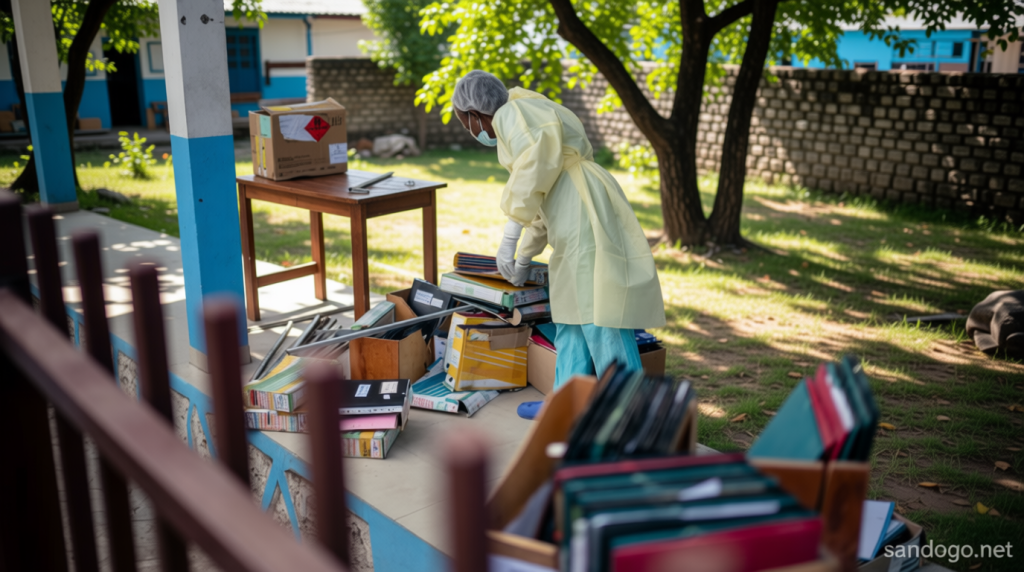
What we know about the latest Ebola outbreak after WHO declares global health emergency
What we know about the latest – On Sunday, the World Health Organization (WHO) escalated the alert for the ongoing Ebola crisis in the Democratic Republic of Congo (DRC) and Uganda, classifying it as a “public health emergency of international concern.” This designation marks a significant step in the response to the outbreak, which is currently driven by the Bundibugyo virus. The virus, part of the Orthoebolaviruses family, has been identified as the cause of the latest surge in cases, though the situation has not yet reached the threshold of a “pandemic emergency.” Despite this, the growing number of infections and fatalities has raised concerns about the outbreak’s potential to spread further.
Understanding the Spread of Ebola
According to the Africa Centres for Disease Control and Prevention (Africa CDC), Ebola is a severe illness that spreads through direct contact with bodily fluids from an infected individual or contaminated surfaces. The disease can also transmit via contact with the body of someone who has died from it. Initial symptoms often include high fever, exhaustion, muscle aches, and a dry cough, progressing to more severe complications such as vomiting, diarrhea, and internal bleeding in later stages. The virus’s ability to cause hemorrhagic fever—where blood vessels leak—adds to its lethality.
While there are six known species of the Ebola virus, only three are responsible for most large outbreaks: the Zaire strain (which causes the most severe disease), the Sudan strain, and the Bundibugyo variant. The current outbreak is attributed to the latter, which has previously triggered smaller-scale epidemics. The World Health Organization highlighted that the Bundibugyo strain typically has a lower fatality rate compared to other strains, though its impact remains severe.
Response Efforts on the Ground
The latest outbreak has been concentrated in the remote northeastern region of the DRC’s Ituri province, a border area with Uganda. As of Saturday, health authorities reported at least 80 suspected deaths, eight confirmed cases, and 246 potential infections. This figure, however, may be undercounted due to limited access to healthcare in the region. The WHO initially announced a confirmed case in Kinshasa, the DRC’s capital, but later clarified that the individual had tested negative for the Bundibugyo virus after further analysis.
Meanwhile, in Goma, a city in the eastern DRC, a representative from the Rwanda-backed AFC/M23 rebel coalition confirmed at least one Ebola case. The group, which took control of the city last year, noted that the affected individual had been identified through local health efforts. In Uganda, two confirmed cases were reported in Kampala, with one resulting in a fatality. The patients had no clear connection to each other but had traveled from the DRC. A Congolese man who died in Kampala had his body repatriated to the DRC on Saturday, according to Ugandan media.
“The number of cases and deaths we are seeing in such a short timeframe, combined with the spread across several health zones and now across the border, is extremely concerning,” said Trish Newport, emergency program manager for Doctors Without Borders (MSF), in a statement. “In Ituri, many people already struggle to access health care and live with ongoing insecurity, making rapid action critical to prevent the outbreak from escalating further.”
MSF emphasized the urgency of the situation, stating that the Bundibugyo strain’s current activity represents the third known outbreak involving this virus. Previous occurrences were recorded in Uganda between 2007 and 2008, as well as in the DRC in 2012. This marks the 17th Ebola outbreak in the DRC since the first case was identified in 1976. While the situation is alarming, health officials stress that the virus is not airborne, which limits its transmission potential compared to other diseases.
Although the Bundibugyo outbreak has not yet reached pandemic status, its rapid spread has triggered international attention. The WHO outlined several factors contributing to the emergency classification, including the increasing number of suspected deaths, confirmed cases, and the virus’s movement beyond the initial containment area. These developments suggest a broader threat that requires coordinated global action. The organization also noted the absence of a specific vaccine for the Bundibugyo strain, which complicates containment efforts. While vaccines exist for other Ebola strains, their efficacy against this variant remains uncertain.
Historical Context and Current Challenges
Health experts have underscored the importance of a vaccine in curbing Ebola outbreaks. The US Centers for Disease Control and Prevention (CDC) previously documented an Ebola outbreak in the DRC’s Kasai province that claimed 45 lives last year. This case, like the current one, highlights the virus’s ability to emerge in isolated regions and then threaten larger populations. The Bundibugyo strain, though less deadly than the Zaire strain, still poses a serious risk due to its potential for rapid transmission in vulnerable communities.
According to the WHO, the fatality rate for Ebola outbreaks has ranged from 25% to 90% historically, with an average of approximately 50%. For the Bundibugyo virus, the estimated death rate is between 25% and 40%, according to MSF. This lower rate, however, does not diminish the need for immediate intervention, as the virus can spread quickly in areas with weak healthcare systems and high population density. The lack of approved treatments or vaccines for the Bundibugyo strain means that containment strategies must rely heavily on quarantine measures and public health education.
MSF has announced plans to expand its operations in Ituri province to address the growing number of cases. The organization’s spokesperson highlighted the critical role of rapid response in preventing the outbreak from spreading further. “Without swift action, the situation could worsen, especially in regions where access to medical care is limited,” they added. The current outbreak has also drawn attention to the challenges of cross-border health cooperation, as cases have been confirmed in both the DRC and Uganda, necessitating joint efforts to monitor and control the virus’s movement.
Despite the WHO’s warning, some officials remain cautious, emphasizing that the outbreak is still within manageable parameters. A Ugandan media office tweeted, “There is no cause for alarm,” as they noted the repatriation of the Congolese man’s body and the treatment of the other infected individual. However, the potential for the virus to spread into new regions and the absence of a vaccine for the Bundibugyo strain continue to fuel concerns among health professionals and policymakers.
With the global health emergency declaration, international aid organizations and governments are now mobilizing resources to support local efforts. The situation underscores the importance of early detection, community engagement, and infrastructure readiness in combating viral outbreaks. As the DRC and Uganda work to contain the spread, the world watches closely for signs of the disease’s next move.
