
UK leader Starmer fights to save premiership as scores of Labour lawmakers urge him to resign
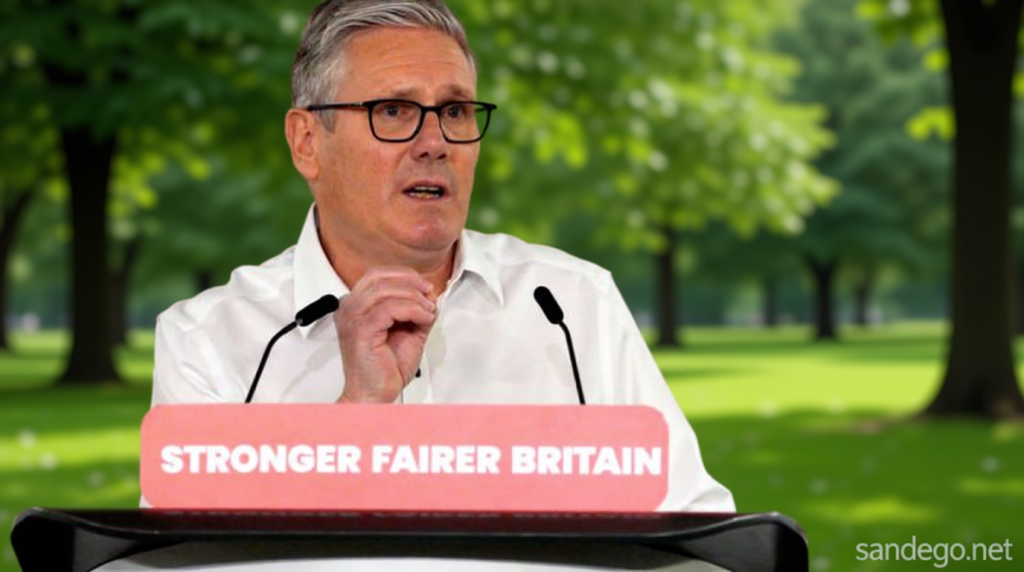
UK Leader Starmer Fights to Save Premiership Amid Resignation Calls
UK leader Starmer fights to save – Keir Starmer, the UK’s Prime Minister, is under increasing pressure to reconsider his leadership as over 70 Labour MPs demand his resignation following a poor showing in recent local elections. The party’s losses of 1,400 seats in English councils and the Welsh parliament have ignited a wave of discontent, with some lawmakers questioning whether Starmer’s approach is effective in securing the party’s future. While Starmer has vowed to stay in power, his ability to retain control may hinge on his capacity to address internal and external challenges threatening Labour’s political stability.
Starmer’s Leadership Defense
Speaking to Labour members in London, Starmer highlighted his commitment to leadership continuity, drawing a comparison to the Conservative Party’s history of frequent leadership changes. “The last government’s instability cost the country dearly,” he argued, framing his tenure as a necessary counterbalance to the chaos of past administrations. His speech emphasized the importance of maintaining focus amid the current crisis, though critics remain unconvinced by his assurances.
“We must avoid repeating the mistakes of previous leaders who left the country in disarray,” Starmer said, appealing to party loyalty. “A Labour government under my leadership will bring stability, not uncertainty.”
Internal Struggles and Electoral Consequences
Labour’s internal divisions have deepened as the party’s electoral performance continues to falter. With over 1,000 seats lost in English local elections, the pressure on Starmer to deliver results has intensified. His opponents argue that his leadership style lacks the dynamic vision needed to revive the party’s fortunes, while supporters insist his focus on unity is crucial in a time of political fragmentation.
Starmer’s recent speeches have underscored his determination to remain in the premiership, despite the growing number of MPs who believe he should step aside. His insistence on incremental change has drawn sharp criticism from both factions within Labour, with some accusing him of hesitating to take bold action in a rapidly evolving political landscape.
Historical Parallels and Policy Shifts
The current crisis mirrors past challenges faced by Labour leaders, including Margaret Thatcher and Tony Blair, who both endured electoral setbacks before eventual success. However, Starmer’s strategy of incremental reforms has been met with skepticism, as opponents claim it fails to address the urgent need for transformation in the party’s approach. “Our country requires decisive action, not cautious steps,” one critic stated, reflecting the growing divide within the ranks.
Starmer’s vision for the future includes policies aimed at softening the Brexit narrative, a move that has sparked debate within the party. While some MPs support his efforts to bridge the gap between pro-EU and hard Brexit factions, others see it as a departure from the party’s core values. This internal conflict has further complicated his ability to consolidate support ahead of the 2029 general election.
Rise of Reform UK and Political Realignment
The emergence of Reform UK, led by Nigel Farage, has added pressure on Starmer to rethink Labour’s strategy. The party’s gains in local elections have disrupted the traditional two-party system, forcing Labour to compete with a third force that has captured significant public attention. Farage’s emphasis on Brexit has resonated with voters, challenging Starmer’s moderate stance and highlighting the need for a more unified message within Labour.
Starmer’s leadership now faces a critical test as he navigates the fallout from Reform UK’s success. With the party’s traditional base in question, he must balance appeals to centrist voters with the demands of Labour’s left and right wings. His ability to adapt to this new political reality will determine whether he can retain the premiership or become the next casualty of the party’s internal strife.
