
These Alaska villages were swept away by a typhoon. They’re fighting with FEMA to not rebuild in the flood zone
Alaska Villages Destroyed by Typhoon Face Relocation Struggle with FEMA
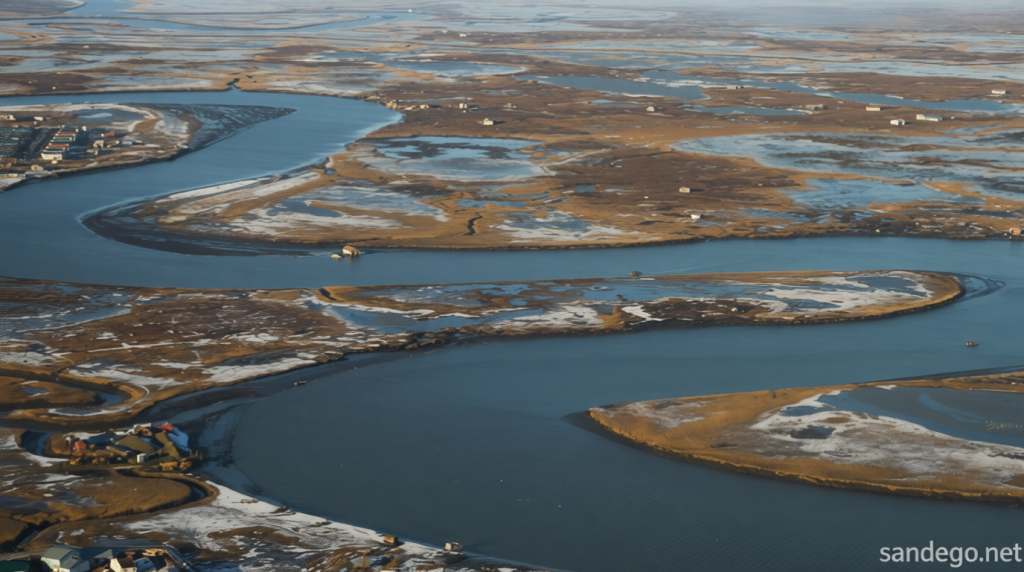
These Alaska villages were swept away – In October 2023, the aftermath of Typhoon Halong’s floodwaters left entire villages in western Alaska in ruins. Two remote Native communities, Kipnuk and Kwigillingok, along the Bering Sea coast, were devastated by the storm’s relentless flooding. Entire homes were lifted from their foundations and swept downstream, carrying people and belongings into the river. The destruction unearthed caskets from gravesites, leaving a trail of sorrow and loss. When the crisis subsided, one life was claimed, and two others remained missing. The remaining floodwaters carried a toxic blend of sewage and fuel oil, which had been used for heating, cooking, and powering snowmobiles and ATVs. The acrid smell lingered in the air and clung to residents’ clothing, marking the end of a harrowing ordeal.
Flood Zones and Environmental Challenges
These villages, home to over 1,000 people, were constructed on land vulnerable to flooding. The area sits atop permafrost that has been thawing for decades due to rising global temperatures. As the ground eroded, the stability of homes, schools, and infrastructure such as wastewater systems was further compromised. The combination of intense rainfall and thawing permafrost created a perfect storm of destruction, proving the region’s susceptibility to extreme weather events. Alaska, known for its harsh climate, has become the fastest-warming state in the United States, intensifying the frequency and severity of such disasters.
Over the past three years, the western coast of Alaska has experienced three federally declared disasters, highlighting the growing threat to coastal communities. Despite these challenges, the Trump administration halted key funding programs aimed at disaster preparedness and recovery. Two Biden-era grants, intended to support the rebuilding efforts of Kipnuk and Kwigillingok, were rescinded. This decision left the villages stranded, forced to navigate a precarious situation where relocation was not guaranteed. Today, both communities are marred by contamination from oil and debris, turning them into ghost towns.
A Battle for Safer Futures
After voting to relocate, Kipnuk and Kwigillingok now face a protracted dispute with FEMA. Tribal leaders argue that the agency is insistent on rebuilding the villages in their original locations, despite the risks posed by the flood zone. “Our people know that’s no longer safe,” said Kipnuk tribal administrator Rayna Paul. “We don’t want to go back to the current village that the state and FEMA are pushing us to rebuild, rebuild, rebuild in place.”
FEMA officials have cited federal laws as justification for their stance. In documents and correspondence with the tribes, they claimed the law prohibits the use of public assistance funds for rebuilding in a different location. The agency also emphasized that the villages’ reliance on subsistence living—where hunting and fishing are essential for survival—requires proximity to the ocean. One internal proposal suggested constructing elevated homes in the original sites, equipped with skis for winter mobility. This idea, however, remains speculative as the plan is still awaiting approval.
The dilemma underscores a broader issue in disaster management. A disaster-prone nation often finds itself in a cycle of rebuilding in areas repeatedly hit by extreme weather. Biden-era legislation aimed to break this pattern by allocating billions for resilient infrastructure, elevating flood-prone homes, and purchasing properties in high-risk zones for relocation. FEMA Administrator Deanne Criswell once noted that for every dollar invested in resilience, the federal government could save $6 in future recovery costs. Yet, the Trump administration’s policies disrupted these efforts, freezing programs that would have supported such initiatives.
Political and Practical Implications
Alaska’s state government recently requested FEMA to build permanent housing for the villages, but the proposal is still pending approval. This delay leaves the communities in limbo, torn between the desire to move forward and the fear of being trapped in the same dangerous location. Republican Senator Lisa Murkowski, who chairs the Senate Committee on Indian Affairs, has called for the federal government to provide “flexibilities” for displaced Alaska Native tribes. “As these communities look to rebuild in safer locations, they need more support,” said Hannah Ray, the committee’s communications director.
Experts like Sheryl Musgrove, director of the Alaska Climate Justice Program, have criticized the current approach. “Spending federal dollars to rebuild a community in the same place they were wiped out sounds crazy,” Musgrove remarked. She acknowledged the limitations of existing statutes but emphasized the need for a shift in policy to prioritize long-term safety over short-term fixes. Another FEMA grant program, the Hazard Mitigation Grant Program, recently showed signs of revival, but its effectiveness remains uncertain in the face of ongoing political and logistical hurdles.
The fight over Kipnuk and Kwigillingok’s future is emblematic of a larger debate about disaster response in an era of climate change. While some see relocation as a necessary step toward survival, others question whether the federal government can provide the flexibility and funding required. The communities’ struggle reflects the tension between immediate recovery and sustainable planning, as well as the impact of shifting administrative priorities on local resilience. Without decisive action, the risk of repeated devastation looms large, threatening not only physical infrastructure but also the cultural and social fabric of these villages.
