
New York Times: ‘Alligator Alcatraz,’ the controversial Florida migrant detention facility, will close
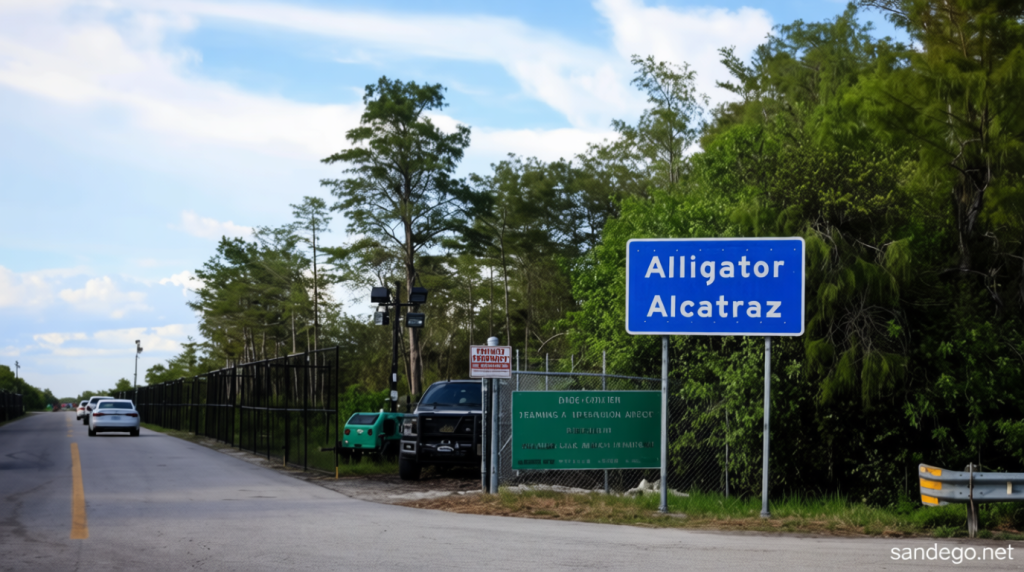
New York Times: ‘Alligator Alcatraz,’ the Controversial Florida Migrant Detention Facility, Will Close
New York Times – Florida is set to dismantle its contentious migrant detention center, dubbed “Alligator Alcatraz,” by early June, according to reports from The New York Times and CNN affiliate WFOR. The decision comes after months of legal disputes, escalating operational expenses, and growing scrutiny over the facility’s treatment of detainees. State officials have informed contractors managing the site that the remaining inmates will be relocated by the start of June, with the center’s physical structure to be dismantled in the coming weeks, as revealed by three individuals close to the facility’s operations.
Facility’s Location and Purpose
“Alligator Alcatraz” is situated within the Florida Everglades, a region known for its dense wildlife and natural beauty. The facility, which opened last summer, was constructed hastily on the runway of the Dade-Collier Training and Transition Airport, located just under 50 miles west of President Donald Trump’s Miami beach resort. While it was initially framed as a strategic asset in the administration’s immigration enforcement strategy, the center has drawn sharp criticism from various stakeholders, including Democratic lawmakers, immigrant advocacy organizations, environmentalists, and tribal communities near the site.
The state’s decision to phase out the facility follows nearly a year of legal and logistical challenges. The center’s location, while strategically chosen for its remote setting, has raised concerns about accessibility for legal representation and the well-being of detainees. Despite these issues, the facility has remained operational, with nearly 1,400 individuals held there as of early April, according to data from Immigration and Customs Enforcement (ICE).
Political Backing and Criticism
Although the facility has been hailed by Republicans as a critical component of President Donald Trump’s immigration policies, its presence has sparked significant debate. Governor Ron DeSantis, who has publicly supported the center, acknowledged ongoing discussions about its closure during remarks last week. “If we shut the lights out tomorrow, we will be able to say it served its purpose,” he stated, emphasizing its role as a temporary measure in the state’s broader immigration strategy.
“If we shut the lights out tomorrow, we will be able to say it served its purpose.” – Governor Ron DeSantis
DeSantis’ remarks align with the state’s efforts to balance political objectives with public pressure. However, critics argue that the facility’s conditions have not met the standards promised. During visits last summer, Democratic officials described overcrowded spaces, sweltering temperatures, and inadequate meals, which contributed to a growing sense of unease among advocacy groups. Meanwhile, immigrant families have expressed fears about the long-term impact of the center’s operation, citing limited access to legal counsel and harsh living conditions.
DHS Denies Pressure on Florida
The Department of Homeland Security (DHS) has denied allegations that it is pressuring Florida to end operations at the facility. In a statement to CNN on Tuesday, the agency clarified that “any reports that DHS is pressuring the state to cease operations at Alligator Alcatraz are false.” It reiterated its support for Florida’s role in advancing the Trump administration’s immigration agenda, adding that the decision to close the center reflects a broader evaluation of detention needs and resource allocation.
“Any reports that DHS is pressuring the state to cease operations at Alligator Alcatraz are false.” – Department of Homeland Security
The closure announcement has sparked questions about the future of detainees. While the state has not yet specified where they will be moved, DeSantis hinted that they may be transferred to federal facilities managed by the Department of Homeland Security. The small airport that once housed the center could also return to its original purpose as a training hub, according to recent discussions.
Legal Challenges and Operational Costs
Despite its political significance, “Alligator Alcatraz” has faced multiple legal hurdles. Last month, an appellate court overturned a lower court’s order to shut down and dismantle the facility, providing a temporary reprieve. However, the facility’s survival has not been without controversy. A recent lawsuit highlighted complaints from detainees and their families about restricted access to attorneys, leading to a ruling that mandates improved legal services and confidential, unmonitored phone calls.
The financial burden of maintaining the facility has also mounted. Florida has spent millions of dollars to operate the center, a cost that has intensified as the state grapples with economic pressures and public backlash. The facility’s rapid construction and temporary nature were initially framed as cost-effective solutions, but its prolonged operation has drawn criticism over efficiency and transparency.
Environmental and Social Concerns
Environmentalists have raised alarms about the facility’s impact on the Everglades, a unique ecosystem that has faced decades of conservation challenges. The use of the airport runway as a detention site has disrupted local wildlife and raised questions about the long-term ecological consequences. Tribal groups, whose ancestral lands border the facility, have also voiced concerns, emphasizing the cultural and historical significance of the area.
Immigrant rights advocates argue that the center exemplifies the harsh conditions faced by migrants under the current system. While ICE officials defend the facility as offering stricter detention standards than many U.S. prisons, the combination of heat, insect infestations, and cramped quarters has left detainees in a state of distress. These criticisms have amplified calls for reform, with some lawmakers suggesting that the facility’s closure is a necessary step toward more humane immigration policies.
Future Uncertainty and Public Reaction
As the closure date approaches, uncertainty looms over the fate of detainees. While Florida officials have not yet disclosed final plans for relocation, the state’s decision to end the facility’s operations signals a shift in priorities. The center’s temporary designation has been a key justification for its continued use, but its closure by early June suggests that the state believes its purpose has been fulfilled.
The closure also reflects broader trends in the U.S. immigration landscape. With legal challenges persisting and public opinion divided, the facility’s fate has become a microcosm of the national debate over immigration enforcement. While the Trump administration has emphasized the importance of secure detention, critics argue that the facility’s harsh conditions and high costs underscore the need for a more balanced approach.
As the dismantling process begins, the focus will turn to the next steps for the detained individuals. The small airport that once served as the center’s base will likely reclaim its original function, but the lingering questions about the detainees’ rights and the facility’s legacy will remain. The New York Times and CNN have reported on the closure, highlighting its political, legal, and humanitarian implications. With the facility’s doors closing, the story of “Alligator Alcatraz” is set to fade, leaving behind a mix of achievements and controversies that will shape future discussions on immigration policy.
CNN’s Michael Williams contributed to this report.
