
Clash of perception: Why talks between Iran and the US are deadlocked
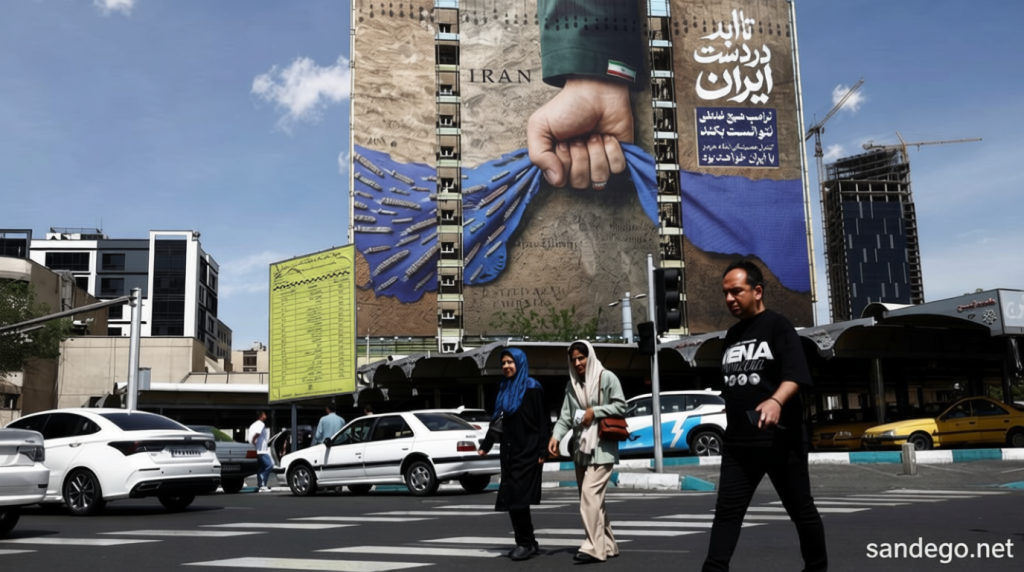
Clash of Perception: Why Talks Between Iran and the US Are Deadlocked
Clash of perception – After a 10-day wait, the U.S. received Iran’s response to its war-ending framework, signaling that the Islamic Republic remains committed to securing a strategic win even as President Donald Trump presses for regime collapse. The exact terms of the ongoing negotiations have not been disclosed publicly, but Iranian state media outlined Tehran’s key demands: an end to the war, recognition of its control over the Strait of Hormuz, and full relief from economic sanctions. These requirements, framed as a counteroffer, were swiftly dismissed by Trump, who called them “totally unacceptable” and dismissed them as “a piece of garbage.” Despite the ambiguity surrounding the specifics of the proposal, the impasse continues to deepen, with neither side willing to budge on core issues.
The Struggle for Narrative
Iranian state media has consistently positioned the country’s stance as one of strength, reinforcing a narrative of resilience for domestic consumption. This approach aligns with the government’s broader effort to portray itself as the victor of the conflict, even as the U.S. and its allies escalate military pressure. The Islamic Republic’s refusal to concede early signals a calculated strategy to maintain leverage, ensuring that any agreement favors its long-term interests. Meanwhile, Trump’s insistence on a decisive outcome reflects his belief in a swift, decisive victory that would dismantle Iran’s regional influence and weaken its political position.
“They think I’ll get tired, or get bored, or I’ll have some pressure,” Trump stated in a Monday press briefing at the White House, dismissing any notion of compromise. “There’s no pressure at all. We’re going to have a complete victory.” His comments underscore a mindset that prioritizes immediate results over incremental progress, a contrast to Iran’s phased approach. The Iranian leadership, however, appears unyielding, insisting that concessions must be earned rather than given freely. “They will not give him concessions at the start of the agreement because they don’t trust him,” said Sanam Vakil, director of the Middle East and North Africa Program at Chatham House. “These guys have been personally burnt by him.”
Strategic Divergence
The deadlock stems from a fundamental clash in priorities. Trump seeks rapid, tangible outcomes, particularly regarding Iran’s nuclear program, which he views as a critical vulnerability. His team aims for immediate sanctions relief and a definitive halt to Iran’s nuclear activities, with a preference for a 10-year freeze on its enrichment capabilities. In contrast, Iran proposes a step-by-step negotiation process, first addressing the end of hostilities and lifting economic restrictions before tackling nuclear matters. This phased strategy allows Tehran to secure major concessions early, reinforcing its narrative of strength and demonstrating that it can prolong the conflict if needed.
Iran’s demands are rooted in its desire to avoid any perception of weakness. The country’s leaders argue that Washington has imposed disproportionate pressure, forcing them into a defensive posture. “The disagreement is between a party that is solely seeking its fundamental rights and a party that insists on violating the rights of the other side,” stated Esmaeil Baghaei, a spokesperson for Iran’s Foreign Ministry. “Our demands are reasonable and responsible.” This assertion highlights the belief that Iran’s position is both justified and necessary to protect its sovereignty and economic stability.
Guarantees and Uncertainty
One of the key sticking points in the negotiations is the question of guarantees. Iran insists that any agreement must include assurances that the U.S. will not resume hostilities in the future, a demand that reflects its war-weariness and desire for a lasting peace. Trump, however, remains focused on immediate gains, including the seizure of Iran’s existing stockpile of highly enriched uranium, estimated at 440 kilograms. The U.S. also wants Iran to formally commit to a temporary halt in its nuclear program, a move that would curb its long-term ambitions.
“There’s a clash of perception,” Vakil explained, emphasizing that the impasse arises from Trump’s inability to grasp why Iran is not capitulating. “He doesn’t understand why these guys are not making a deal to save themselves,” she noted. The Iranian perspective, meanwhile, is shaped by historical grievances and a skepticism of U.S. intentions. “The Iranian regime’s reply reflects the mindset of a leadership that believes it survived the war and won, not that it lost it,” said Danny Citrinowicz, a senior researcher at the Institute for National Security Studies. This attitude has limited Tehran’s willingness to compromise, as it views any concession as a potential loss of power.
China’s Role in the Mediation
As negotiations stall, Iran has turned its attention to international allies, with China emerging as a potential mediator. Ahead of Trump’s trip to Beijing, Iranian officials proposed that the Asian superpower act as a guarantor for any future agreement, citing its influence in the region. “Given the position that China holds for Iran and other countries in the Persian Gulf region, Beijing can serve as the guarantor for any agreement,” remarked Abdolreza Rahman Fazli, the Iranian ambassador to China. “Any potential agreement must necessarily be accompanied by guarantees from the great powers and raised in the United Nations Security Council as well.”
This move suggests that Iran is leveraging China’s geopolitical neutrality to create a more favorable environment for dialogue. By framing the U.S. as an unpredictable adversary, Tehran aims to secure multilateral support, ensuring that any deal includes robust safeguards. The inclusion of China in the process also highlights the growing importance of the Asia-Pacific bloc in shaping Middle Eastern dynamics, a development that could shift the balance of power in future negotiations.
Domestic and International Implications
The stalemate has significant domestic implications for both nations. In Iran, the government is under pressure to maintain its image as a resilient force, even as the war strains its economy and military resources. For the U.S., the prolonged conflict risks damaging its reputation as a reliable partner, particularly among allies in the region. Meanwhile, the international community watches closely, with some observers questioning whether the U.S. can achieve its goals without a broader consensus.
Iran’s strategy of delay appears to be paying off, as it continues to project confidence in its ability to outlast Washington’s efforts. “They don’t want to give up their leverage too early,” said Citrinowicz. “They know that time is on their side.” The U.S., however, remains determined to secure a decisive outcome, even if it means toughening its stance in the coming weeks. As the talks continue, the focus will shift to whether Trump’s demands can be met or if Iran will hold firm in its pursuit of a more favorable resolution.
With the deadlock persisting, the path forward remains uncertain. Both sides are locked in a battle of narratives, with Iran emphasizing its strategic depth and the U.S. highlighting its overwhelming advantage. The role of external actors, such as China, will be crucial in determining whether a breakthrough is possible. For now, the conflict continues to unfold, with each nation’s vision for the outcome shaping the trajectory of the talks.
