
‘It’s literally going to break me.’ Commuting is now unaffordable for some American workers
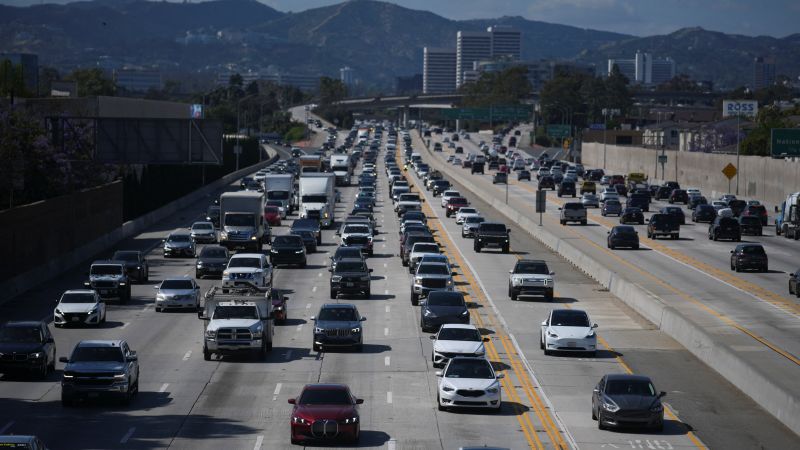
‘It’s literally going to break me.’ Commuting is now unaffordable for some American workers
It s literally going to break – For Stephen Kaledecker, a regional manager at a hotel chain, the thrill of a promotion in December has turned into a financial burden as gas prices have surged. The new role requires extensive travel across Ohio, Indiana, and Illinois, but with fuel costs climbing to over $5 a gallon, the additional expenses are straining his budget. Kaledecker, who now spends more than $1,000 monthly on fuel, is facing a dilemma: his raise isn’t enough to offset the rising costs, and his employer won’t cover mileage once he fully transitions into the position next month. The situation has left him anxious, even to the point of shedding tears in his hotel rooms while on the road.
Gas prices and the cost of mobility
As the US-Israeli conflict with Iran intensified earlier this year, the national average for gas prices climbed to $4.52 per gallon, according to the American Automobile Association. This is a stark increase from the $2.98 per gallon recorded in late February, when the conflict first began. For workers reliant on long commutes, the impact is significant. Kaledecker’s case is emblematic of a growing trend, where the financial strain of fuel costs forces employees to reconsider their career choices.
The 46-year-old from Gahanna, Ohio, had hoped his promotion would bring greater stability, but the reality is far more complicated. His new job involves driving thousands of miles monthly to manage properties, and with his vehicle—a 2018 Chevy Silverado—logging over 20,000 miles this year, the cost of gas has become a major factor in his decision-making. “I look at my bank account and think, ‘If I take this role, I might not be able to afford my prescriptions or the electric bill,’” Kaledecker said, highlighting the personal toll of the economic pressures.
The ripple effect on job markets
According to data from Indeed, a significant number of job seekers are now prioritizing roles within a 30-mile radius of their homes. This figure rose to 59.2% in April, up from 57.8% in February. While this shift represents a small increase, it signals a growing trend of employees seeking shorter commutes to alleviate financial stress. Priya Rathod, workplace trends editor at Indeed, noted that this change is subtle but meaningful, especially as the job market has begun to slow.
For many, the decision to stay in their current positions or look for alternatives is becoming increasingly difficult. Some workers are negotiating for remote work options, while others are focusing on roles that require less travel. The situation underscores how gas prices can disrupt even the most stable careers. “It’s not just about convenience anymore,” Rathod explained. “It’s about survival in the workplace.”
Work-from-home trends and employer flexibility
Stanford University economics professor Nick Bloom and his research team have observed a notable shift in work arrangements. Their survey revealed that the percentage of days worked remotely or hybridly increased to 26.2% in March and April, compared to 24.6% in the previous two months. This trend suggests that employees are finding ways to reduce their commuting time, even if it’s just an extra day per week. Bloom emphasized that the flexibility in work policies is a response to employees’ demands, as higher fuel costs make traditional commutes less feasible.
While many employers have not made sweeping changes to remote work policies, some are showing more willingness to adapt. “Managers are starting to allow employees to work from home on occasion,” Bloom said. This flexibility is driven by employees’ concerns about the affordability of their commutes. For example, a retail pharmacy shift manager, Paul Banze, agreed to relocate to a store 44 miles from his home in January. Though he had semi-retired the month before, the decision to commute twice as far was motivated by his enjoyment of the job and his relationship with the manager. However, as gas prices climbed, Banze warned that he would have to reassess his commitment if costs remained high.
Banze, 68, shared a photo of his local gas station last Monday, showing fuel at $4.29 per gallon. He added a frustrated face emoji, symbolizing the frustration of a long-time employee facing economic uncertainty. “I knew retirement was coming, but I wanted to make it on my own terms,” Banze said. His experience reflects a broader sentiment among workers who are willing to trade job security for financial relief. “The economics don’t work out anymore,” he added, indicating that even loyal employees are now considering other options.
Long-term implications for the workforce
The financial pressure from gas prices is not isolated to individual cases. It’s part of a larger conversation about how rising costs are reshaping the modern workplace. Employees are no longer just seeking job satisfaction—they’re evaluating whether the financial viability of their positions is worth the effort. This shift could lead to a significant increase in remote work arrangements, especially if gas prices remain elevated through the fall.
For companies, the challenge is balancing employee needs with operational demands. While some managers are accommodating requests for flexible schedules, others are hesitant to make major changes. “It’s a gradual process,” Bloom noted. “Employees are pushing for more options, but employers are still figuring out how to implement them without disrupting workflows.” The pressure on businesses to adapt is growing, as workers begin to prioritize affordability over location.
Meanwhile, the broader economy is also feeling the impact of high fuel costs. Businesses that rely on transportation, such as logistics and delivery services, are facing increased expenses, which may be passed on to consumers. This creates a cycle where rising gas prices affect both workers and employers, potentially slowing economic growth. For individuals like Kaledecker and Banze, the issue is personal—yet it’s part of a national trend that could reshape the future of work.
Kaledecker’s situation is a microcosm of the struggles many are experiencing. His decision to stay in the role, despite the financial strain, is a testament to his passion for the job. However, the emotional toll of this choice cannot be ignored. “I’m terrified every night,” he admitted, describing the anxiety of watching his savings dwindle. For others, the choice may be more straightforward: the cost of commuting could force them to leave their jobs or accept lower pay.
As gas prices continue to rise, the question remains: how long can workers endure this financial strain? The answer may depend on how quickly prices stabilize and whether employers can offer more flexible arrangements. For now, the burden falls on employees, who are navigating a difficult balance between career advancement and personal finances. “It’s not just about the gas money,” Kaledecker said. “It’s about being able to live without debt and maintain my quality of life.”
In the face of these challenges, the workforce is evolving. Remote work, hybrid models, and shorter commutes are becoming more common, even if they aren’t yet the norm. This shift could lead to a long-term transformation in how work is structured, with companies rethinking their policies to retain talent. For now, though, the economic impact of high gas prices is a reality that many American workers are struggling to cope with. As Kaledecker puts it, “It’s literally going to break me.”
