
US experience fighting Iran offers lessons for China, experts say
US Experience Fighting Iran Offers Lessons for China, Experts Say
US experience fighting Iran offers lessons – As the Iran conflict stretches into its third month, it has become a critical test case for China, offering a glimpse into how U.S. military operations function under pressure. Analysts from across China, Taiwan, and other regions have weighed in on the implications of this ongoing confrontation, emphasizing that the adversary’s tactics and strategies often shape the course of any war. CNN has compiled insights from these experts, revealing how the U.S. approach in the Persian Gulf could serve as a blueprint for China in the event of a future standoff with Washington.
Lessons from the Iran Conflict
The Iran war has underscored the importance of adaptability on the battlefield, a lesson that Chinese strategists are now dissecting closely. While the U.S. has demonstrated technological superiority, the effectiveness of its operations has been challenged by Iran’s ability to exploit vulnerabilities in its defensive systems. This dynamic has sparked concerns among experts that China might misinterpret its own strengths, particularly in the face of adversaries who can rapidly adjust their methods.
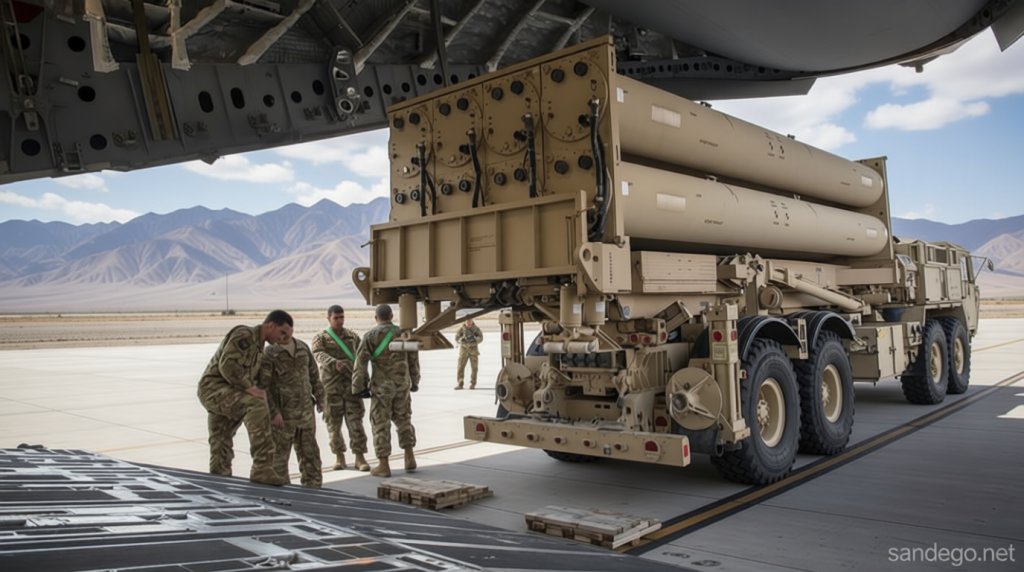
One such expert is Fu Qianshao, a former colonel in China’s Air Force. Reflecting on the conflict, Fu highlighted a crucial takeaway: the People’s Liberation Army (PLA) must not overlook its defensive capabilities. “Iran’s ability to bypass U.S. anti-missile systems like the Patriot or THAAD demonstrates that even the most advanced defenses can be outmaneuvered,” Fu explained in a recent interview. He urged China to focus on strengthening its own defensive mechanisms, ensuring resilience against future threats.
“We need to devote significant efforts to identify weaknesses in our defensive side to ensure we remain invincible in future wars,” Fu told CNN.
Meanwhile, the PLA’s offensive capabilities have been a point of pride for China’s military planners. Over the past few years, the force has expanded its arsenal of long-range precision weapons, including hypersonic glide vehicles that can evade interception. These advancements are part of a broader strategy to project power beyond its immediate borders, with the potential to reshape regional balances of power.
Analysts note that Iran’s success in penetrating U.S. air defenses with relatively low-cost technology, such as Shahed drones and ballistic missiles, has exposed the limitations of even the most sophisticated systems. The U.S., in contrast, has deployed advanced platforms like the F-35 and B-2 stealth bombers, combined with a mix of cost-effective guided munitions. This hybrid approach has allowed the American forces to dismantle critical infrastructure, from missile silos to naval assets, highlighting the versatility of modern warfare.
The Role of Taiwan
Taiwan remains a central focus in discussions about potential U.S.-China conflicts, with its strategic location and economic significance making it a likely flashpoint. Chinese leadership has repeatedly emphasized its commitment to “reunifying” the island, despite its current status as a self-governing democracy. President Xi Jinping’s administration has not ruled out the use of military force to achieve this goal, raising questions about the balance of power in the region.
Experts in Taiwan acknowledge that the island’s military is preparing for a scenario where it must defend against both high-tech precision strikes and large-scale drone assaults. “China’s military is now capable of countering U.S. forces in high-tech combat and outmaneuvering Iran in drone warfare,” said Chieh Chung, an associate research fellow at Taiwan’s Institute for National Defense and Security Research. This dual capability, Chung argued, could position China as a formidable power in any conflict across the strait.
“Long-range rockets and drone swarms will definitely play a key role in China’s joint military operations against Taiwan,” Chieh Chung told CNN.
However, the question remains whether this advantage will be enough to secure a decisive victory. China’s dominance in drone manufacturing, as noted by analysts, gives it a unique edge in terms of volume and variety. A 2025 report by the analytical platform War on the Rocks suggested that civilian producers in China could retool within a year to manufacture one billion weaponized drones annually. Such numbers, if realized, could overwhelm Taiwanese defenses and create a strategic imbalance.
Despite these challenges, Taiwan is not standing still. Officials and industry leaders are pushing for increased investment in drone countermeasures and mass production capabilities. Gene Su, managing director of Thunder Tiger, the island’s leading drone manufacturer, stressed the need for continuous innovation. “We need to produce continuously, day and night, to counter our enemies,” Su said. His comments reflect a growing recognition that Taiwan’s survival in a potential conflict may hinge on its ability to match China’s technological and numerical superiority.
Adapting to a Shifting Battlefield
The conflict in Iran has also prompted the U.S. to reassess its own military posture, particularly in the Pacific. Adm. Samuel Paparo, head of the U.S. Indo-Pacific Command, testified in April that drones have fundamentally altered the cost dynamics of warfare, favoring the offensive side. This insight has led to a renewed focus on integrating drone technology into U.S. strategies, while also preparing for scenarios where it might have to defend against Chinese incursions.
Chinese military displays have reinforced the perception that the country is well-equipped to support Xi Jinping’s vision of a global order reshaped by its influence. The ability to deploy advanced weapons systems, coupled with the lessons learned from the Iran conflict, has positioned China as a key player in any regional or global confrontation. Yet, the effectiveness of these strategies depends on how well China can adapt to the evolving nature of modern warfare.
As the situation in the Persian Gulf continues to unfold, the implications for China’s military doctrine and regional strategy are becoming clearer. The balance of power is shifting, and the lessons from this conflict are likely to influence future operations. Whether China can maintain its advantage or faces unforeseen challenges remains to be seen, but one thing is certain: the adversary’s actions will play a pivotal role in determining the outcome of any battle.
In the end, the Iran conflict serves as a valuable case study, demonstrating that even the most powerful militaries must remain vigilant. For China, the experience highlights both the potential and the pitfalls of modern warfare. As the PLA continues to build its capabilities, the lessons from the Persian Gulf will shape how it prepares for the next phase of its ambitions on the global stage.
