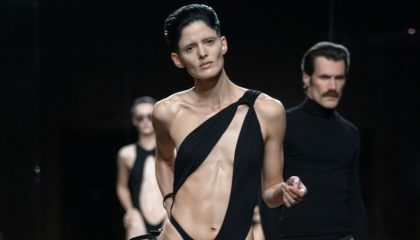
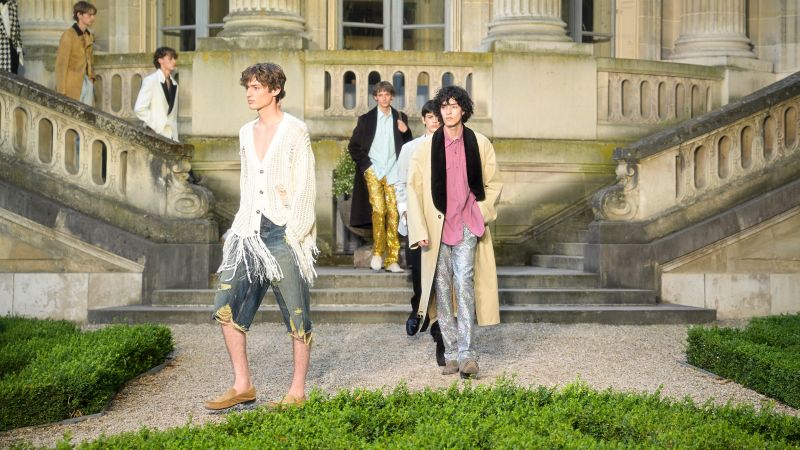
Paris Men’s Fashion Week Faces a Heatwave That Challenges Tradition
Sandego.net – As the world grapples with escalating climate challenges, the recent Paris Men’s Fashion Week encountered an unexpected obstacle: a relentless heatwave that gripped much of Europe. Temperatures soared to dangerous levels, causing disruptions across the region, from halting iconic landmarks to delaying train services and contributing to a surge in heat-related illnesses. Yet, amid the sweltering conditions, fashion enthusiasts, models, and industry professionals showed up for the bi-annual event in attire that defied the weather—layered ensembles, thick fabrics, and even fur accessories that seemed more suited for winter than the searing summer air.
The Fashionable Heatwave: A Test of Resilience
Despite the oppressive heat, the fashion world seemed undeterred. Attendees arrived in outfits that combined elements of seasonal contrast, such as funnel-neck jackets paired with jeans or fur shawls draped over bare shoulders. This sartorial defiance was evident even in the most extravagant presentations, like the Saint Laurent show where model Connor Storrie wore a pair of tight latex stockings beneath a trench coat. Meanwhile, waiters at a garden party at the Palais Royal were clad in full horse costumes, their discomfort a silent commentary on the disconnect between fashion’s vision and real-world conditions.
Behind the scenes, the heatwave forced logistical adjustments. Shows by Dior and Rick Owens were moved to earlier hours to avoid the midday sun, while PR teams took on the role of wellness coordinators, distributing hand fans, cooling packs, and even sun-shade umbrellas to combat the rising temperatures. One publicist, working the doors at a Saturday event, described the ordeal as a battle against heatstroke, highlighting the physical toll on those keeping the event afloat.
Runway Imaginations: A Climate Contradiction
The collections unveiled on the runway offered a glimpse into a future that may feel distant. Designers leaned into bold, insulating fabrics, with Dior showcasing suede suits and coats, Kenzo presenting thick bomber jackets, and Louis Vuitton incorporating fur-trimmed padded coats and parkas into their menswear lines. At Sarah Burton’s debut for Givenchy, leather dominated the aesthetic, with trousers and rugby shirts crafted from the material, while a room filled with leather tracksuits in vivid colors—black, red, orange, yellow, green, and blue—echoed the playful yet intense energy of the week.
These choices sparked a conversation about the role of fashion in a warming world. While the industry is known for its ability to create vivid, imaginative scenarios, the heatwave raised questions about the practicality of such visions. As the weather pushed attendees to the edge, the fantasy of layered, protective clothing became a metaphor for the broader climate crisis, with some suggesting that the industry’s reliance on theatricality might be at odds with the realities of extreme heat.
Quotes from the Runway: Fashion as a Metaphor
“I feel hotter and hotter as I’m watching,” said French actor Antoine, who opted for a tall Stetson hat to stay cool during the Dries Van Noten show on Friday. “It’s like the world is melting in front of me, but the clothes are still pretending to be functional.”
Achtung Magazine’s editor-in-chief, Markus Ebner, offered a more philosophical take on the situation. “I think it’s legitimate for designers to not have commercial stuff on the runway,” he remarked. “That’s where the dream meets reality—showrooms are for practicality, while the catwalk is for imagination.” His words underscored the tension between the industry’s aspirational nature and the immediate challenges posed by the climate.
“I think a bunch of people sweating into oblivion, watching clothes on the runway get trotted out, it’s a perfect metaphor for what our world is facing right now,” said Thom Bettridge, editor-in-chief of i-D, at the Issey Miyake show. He wore a blue New York Yankees baseball cap and a babushka-style floral headscarf, a technique he learned from older women to shield himself from the sun. “Fashion has always been a way to escape reality, but this year it feels like we’re trapped in it.”
The heatwave also prompted a reevaluation of the industry’s environmental impact. With Europe heating up at twice the global average, the urgency to adapt to a hotter future has never been greater. “Should designers, who are among the largest contributors to greenhouse gas emissions, at least be creating clothes that people can wear in the summers ahead?” asked Davey Sutton, a fashion editor for Hero Magazine, while viewing Rick Owens’ collection. “Or should we just embrace the heat-induced reverie?”
Sutton’s question was met with a mix of perspectives. On one hand, the eccentricity of the collections provided a welcome escape from the grim reality of climate change. For instance, Rick Owens’ show featured an inflatable jumpsuit with a built-in fan, a collaboration with Adidas that resurrected a design from the brand’s archives. “The coolest offering was this futuristic piece,” Sutton noted. “It’s a reminder that fashion can still be fun, even in a world on fire.”
Climate Reality vs. Fashion Fantasy
While some saw the event as a necessary break from the chaos of the present, others criticized its lack of urgency. At a Sunday show, a fellow attendee called the week’s vibe “tone deaf,” arguing that the focus on aesthetic over function seemed out of touch with the climate emergency. “We’re talking about record temperatures and rising seas,” they said. “Yet the designers are still talking about fur-trimmed parkas and suede trousers. It feels like we’re ignoring the real issues.”
Andreas Murkudis, the founder of a Berlin-based concept store that curates over 200 brands, echoed this sentiment. “Climate change has all but eliminated transitional seasons,” he explained. “That means the window for retailers to sell their wares is shrinking, and the industry’s traditional approach to fashion may no longer be viable.” Murkudis’s comments added weight to the argument that the fashion world needs to align its visions with the practical demands of a hotter, more unpredictable future.
Yet, the debate remains unresolved. While some designers and editors cling to the idea that fashion is inherently a form of escapism, others believe it must evolve to reflect the realities of climate change. “If we’re going to dress for the future, we need to start thinking about what’s actually going to work in the heat,” said one critic at the Acne Papers garden party. “Not just for the runway, but for the everyday lives of people who can’t afford to be wrapped in fur or sweating through their jackets.”
The Road Ahead: Balancing Imagination and Adaptation
As the Paris Men’s Fashion Week concludes, the event leaves behind more than just high-fashion looks—it sparks a reflection on the industry’s role in the climate crisis. With the UN forecasting that the next five years will see even more record-breaking temperatures, the question lingers: can designers balance their creative ambitions with the need for practical, climate-conscious solutions? For now, the runway remains a place of fantasy, but the heatwave has forced a conversation that may shape the future of fashion in a changing world.