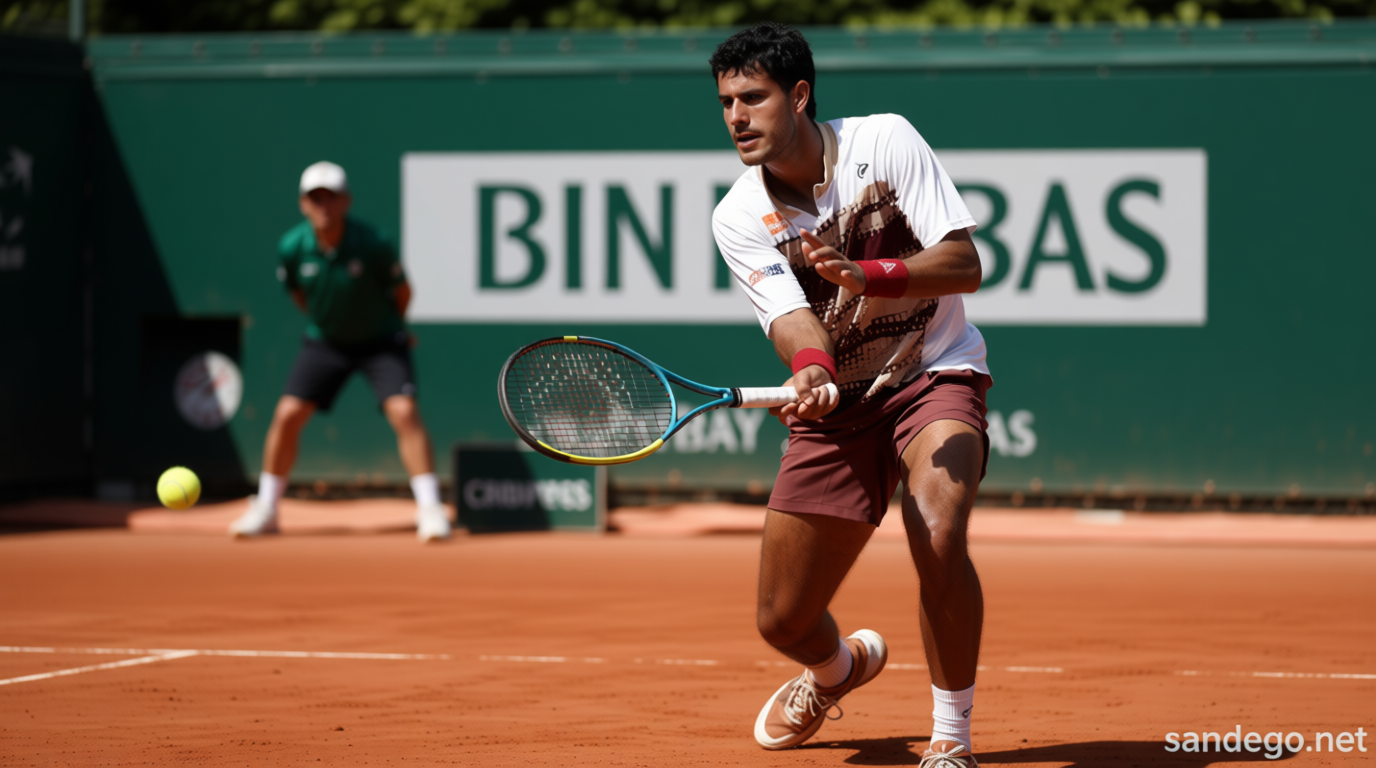
Roland Garros Fines Paraguayan Player for Sexist Remark on Chair Umpire
Sandego.net – A significant penalty has been imposed on Paraguayan player Adolfo Daniel Vallejo by Roland Garros after he made a controversial comment during a post-match interview. The tournament announced that Vallejo will be fined for his remarks, which were directed at the female chair umpire during a tense second-round match against French talent Moise Kouame. This incident has ignited discussions about gender equality in sports officiating, as Roland Garros seeks to enforce a more inclusive standard within its ranks.
“Matches like this have to be umpired by a man; it’s very difficult for a woman to do it,” Vallejo told Clay Magazine after the encounter. He continued, “It has to be refereed by a man because it’s a very demanding crowd, and you need a lot of strength to go against it.”
The Paraguayan athlete’s comments came under immediate scrutiny, with some fans criticizing his remarks as sexist, while others viewed them as a reflection of his personal perspective. Despite his post-match analysis of the crowd’s influence, the fine by Roland Garros underscores the tournament’s emphasis on maintaining respectful and equitable treatment of all officials, regardless of gender. The incident serves as a reminder of the growing importance of gender sensitivity in sports commentary and performance.
Roland Garros Condemns Sexist Comments in Official Statement
Roland Garros has clearly stated its position on sexist remarks, declaring that Vallejo’s comments are “unacceptable” and aligning itself with the broader movement for gender equality. The tournament’s statement highlighted that an umpire’s effectiveness is rooted in their professionalism, not their gender, and that such remarks could detract from the integrity of the competition. “The outcome of a sporting event, whether positive or negative, can never justify or excuse such remarks,” the declaration emphasized, setting a strong tone for future conduct.
“The competence of an umpire is not determined by their gender, but by their professionalism and ability to officiate at the highest level. Roland Garros strongly condemns all sexist remarks, regardless of who makes them, and stands in solidarity with the match officials,” the statement read. This approach reflects the tournament’s commitment to fostering a respectful and inclusive environment for all participants.
Vallejo’s manager attempted to justify the remarks, asserting that the player’s comments were a matter of personal opinion rather than an intentional insult. “Dani has shared his thoughts publicly and holds great respect for the umpire, Roland Garros, and the entire sport,” the manager said, aiming to contextualize Vallejo’s statements within the broader cultural landscape of tennis. However, the fine remains a clear message that sexist language will not be tolerated in the high-profile setting of the Roland Garros tournament.
Context of the Match and Audience Impact
The match in question was a hard-fought contest that lasted over three hours, showcasing the resilience of both players. Vallejo, who was trailing in the early stages, acknowledged the challenge posed by the energetic and supportive crowd. In his post-match analysis, he argued that the audience’s presence influenced the result, with the home support giving Kouame a significant edge. “I think if we were playing in another city, he would have lost,” Vallejo noted, adding that the pressure of the environment shaped the match’s dynamics.
“The crowd started to go crazy, and every point was like a Davis Cup match. … Thanks to that, he started to play unbelievable,” Vallejo remarked, highlighting how the psychological impact of the crowd can affect performance. His comments not only reflect the pressure of playing in a major tournament but also raise questions about the role of spectators in shaping player behavior and outcomes.
Roland Garros, known for its prestigious reputation and rich tennis history, has now taken a firm stance on gender equality. The fine serves as a symbolic gesture to reinforce the tournament’s dedication to upholding standards of professionalism and respect. By addressing the issue directly, Roland Garros aims to set an example for other competitions and players, ensuring that the spotlight remains on skill and sportsmanship rather than stereotypes or biased remarks.