Vice President JD Vance Predicts Alexandria Ocasio-Cortez as 2028 Democratic Nominee
Sandego.net – On June 30, 2028, Vice President JD Vance made a bold prediction during an interview on “The Michael Knowles Show,” asserting that he believes Rep. Alexandria Ocasio-Cortez will lead the Democratic Party’s presidential campaign in the upcoming election. The interview, released Tuesday, sparked immediate debate as Vance positioned Ocasio-Cortez as the likely frontrunner, despite prevailing expectations that other figures might take the lead.
Political Commentary and Criticism of Newsom
Vance’s remarks came after the show’s host challenged his assertion, suggesting that California Gov. Gavin Newsom might be the more probable Democratic candidate. In response, Vance firmly rejected this notion, citing Newsom’s recent remarks at a book promotion event in Atlanta as a key reason. “No, no,” he insisted, before elaborating, “I don’t buy that. I think it’s because of the comment he made to an audience full of black Americans, where he claimed I’m low IQ, just like you.”
“I think it’s got to be AOC. I know that’s probably conventional wisdom,” Vance said, emphasizing his confidence in Ocasio-Cortez’s candidacy.
The governor’s remark, according to Vance, exposed a disconnect with his audience. Newsom had stated, “I’m not trying to impress you. I’m just trying to impress upon you. I’m like you. I’m no better than you, you know, I’m a 960 SAT guy … you’ve never seen me read a speech, because I can’t read a speech.” Vance interpreted this as evidence of Newsom’s inability to resonate with key demographics, particularly Black voters, who might perceive his comments as dismissive of their intellectual capabilities.
Trump’s Strategic Focus on the Democratic Left
While Vance focused on Ocasio-Cortez, the broader political landscape also reflected former President Donald Trump’s growing emphasis on the Democratic Party’s left wing. Trump has increasingly highlighted the electoral successes of democratic socialist candidates, framing the party as being dominated by “godless Communists” who threaten the nation’s stability. This strategy aims to galvanize his base by painting the Democrats as ideologically extreme and out of touch with mainstream voters.
Recent weeks have seen Trump pivot his rhetoric toward the Democratic left, leveraging the rising influence of figures like Ocasio-Cortez to argue that the party is losing its moderate appeal. He has openly speculated about whether his vice president or Secretary of State Marco Rubio could follow him as the next Republican presidential nominee, though his current focus remains on undermining the Democratic establishment.
Internal Party Dynamics and Candidate Considerations
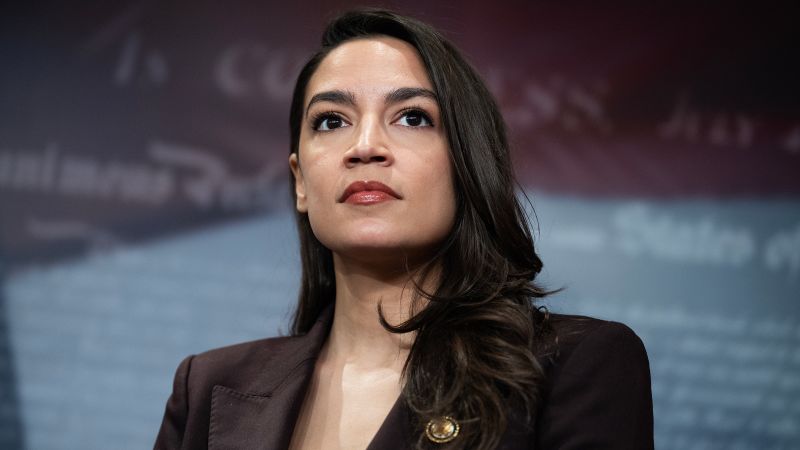
When asked by CNN about Vance’s assertion, Ocasio-Cortez responded with a mixture of confidence and humor, smiling and saying, “I hope he is” the nominee. Her response underscored the uncertainty surrounding the 2028 race, even as Vance’s comments lent her a prominent position in the Democratic field.
“Asked by CNN about Vance’s comments, Ocasio-Cortez smiled and said, ‘I hope he is’ the nominee.”
Vance further elaborated on the Democratic Party’s internal divisions, suggesting that the nominee’s identity would hinge on who holds the most influence within the party. He noted that the outcome could depend on whether power is concentrated in the business community or among academic and activist circles. “I guess the question would be, ‘Who do you think really has the power in the Democratic Party?’ And if you think the answer is like Wall Street and the left of center business community, then it would be Ossoff, and if you think it’s the universities, it would be AOC,” he explained.
Georgia Sen. Jon Ossoff, another potential contender, has drawn attention for his progressive platform and energizing presence. However, he faces a critical challenge in securing his Senate seat during the midterm elections, which could impact his viability as a 2028 candidate. Vance acknowledged this hurdle but maintained that Ocasio-Cortez’s appeal to younger, urban, and economically motivated voters would ultimately determine her dominance in the race.
Democrats’ Internal Struggles and Economic Populism
Vance’s comments also highlighted his view of the Democratic Party as being “just so dominated by the crazy people.” He argued that the party’s inability to balance economic populism with progressive ideals has left it vulnerable to criticism. “It’s like they can’t figure out the part where they get the economic populism, which actually is very popular, and I think Republicans should be more worried about that,” he remarked.
This critique aligns with a growing sentiment among some Republicans that the Democratic Party’s focus on social issues has overshadowed its economic messaging. Vance, who has long positioned himself as a centrist voice, suggested that the Democrats’ reliance on radical rhetoric could alienate swing voters and create a rift between the party’s base and its broader appeal.
As the 2028 presidential race gains momentum, the tension between progressive and moderate factions within the Democratic Party is expected to intensify. Vance’s endorsement of Ocasio-Cortez signals a shift in political strategy, with potential implications for the party’s future direction. Meanwhile, Newsom’s comments continue to fuel debates about the role of intellectual capital in political success and the importance of messaging in shaping public perception.
CNN’s Arlette Saenz contributed to this report, providing insights into the evolving dynamics of the 2028 election. The story underscores how individual statements by political figures can influence broader narratives, even as the party grapples with internal competition and external threats. With the Democratic race still open, Vance’s prediction adds a layer of intrigue, suggesting that the party’s next leader may emerge from an unexpected corner of its ideological spectrum.
As the nation turns its attention to the 2028 presidential campaign, the stakes have never been higher. The Democratic Party’s ability to unify its diverse factions and craft a cohesive message will be critical in determining its success against a Republican field that includes both seasoned leaders and fresh faces. Vance’s comments, though speculative, reflect a growing confidence in Ocasio-Cortez’s potential to lead the party into a new era of political strategy and public engagement.