Trump’s Red Card Call Stirs Political Storm Around World Cup
Trump s red card call stirs – For the first 24 days of the 2026 World Cup, the tournament seemed to operate independently of Donald Trump’s influence, a rare occurrence in a nation where his presence dominates political discourse. But that illusion shattered when the president intervened, prompting FIFA to reverse a suspension and allow star U.S. forward Folarin Balogun to take part in the critical knockout clash against Belgium. The decision, which came after a last-minute appeal from Trump, has reignited debates about the intersection of politics and soccer governance, casting a shadow over the global spectacle.
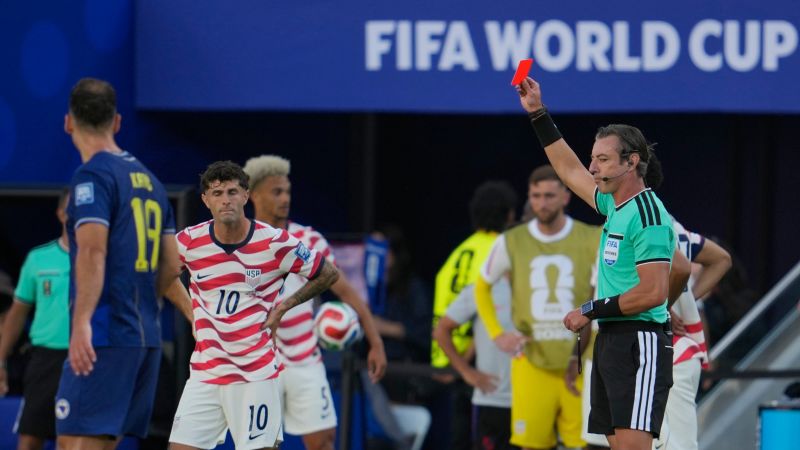
Balogun, who had been shown a red card during the U.S. team’s match against Bosnia and Herzegovina, was banned from playing in the next game. However, FIFA’s disciplinary committee overturned the penalty, citing Article 27 of its code, which permits the suspension of a disciplinary measure during a probationary period. This move has sparked accusations that Trump’s political pressure may have tipped the scales, raising concerns about fairness in high-stakes matches. The United States’ national team, which relies heavily on Balogun’s goal-scoring prowess, now faces an uncertain path to the semifinals.
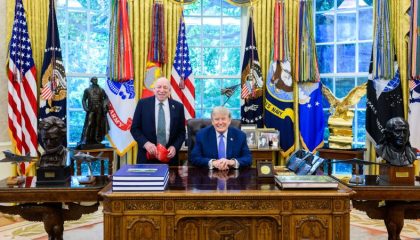
“Thank you to FIFA for doing what was right, and reversing a great injustice! President DONALD J. TRUMP,” the president posted Sunday, celebrating his intervention on Truth Social. His message underscored the significance of the decision, framing it as a victory for American soccer despite the controversial nature of the reversal.
The political maneuvering has drawn sharp criticism from soccer purists, who argue that the World Cup should remain a platform for athletic excellence rather than a stage for political influence. For many, the episode highlights the growing entanglement between FIFA and U.S. politics, particularly with the backing of Trump’s campaign. Gianni Infantino, FIFA’s president, has been at the center of this scrutiny, as his administration’s swift response to the president’s call appears to have prioritized U.S. interests over strict adherence to the rules.
While the specifics of Balogun’s red card remain contested, the incident has become a symbol of the broader debate about the role of technology in modern refereeing. The challenge, which occurred during the U.S. team’s dominant win over Bosnia, was initially deemed fair by the on-field referee. However, a video assistant referee (VAR) review later ruled it a serious foul, leading to the player’s suspension. Critics argue that the slow-motion replay exaggerated the severity of the tackle, while others insist it was a necessary correction to ensure justice.
The Royal Belgian Football Federation condemned the situation, stating that the pregame discussions between Trump and Infantino violated FIFA’s regulations and undermined the principles of fair play. “This action prejudices the integrity of the game and sets a dangerous precedent,” the federation’s officials said in a statement. The Belgian team, which had hoped to eliminate Balogun from the competition, now faces the prospect of a rematch against a potentially revitalized U.S. squad.
The controversy has also sparked comparisons to historic moments in World Cup history, such as Diego Maradona’s infamous “hand of God” goal in 1986 or Zinedine Zidane’s headbutt in the 2006 final. While those incidents were celebrated as part of the game’s drama, Balogun’s case has taken on a more political dimension. The U.S. team’s coach, speaking after the suspension reversal, emphasized that the federation’s actions were not just about national pride but about preserving the sport’s ethical standards. “We are defending football in general. It defends its integrity. It defends its ethics,” the coach reiterated.
Despite the lack of clear evidence that Trump’s involvement directly influenced the outcome, the perception of political interference has taken root. Many fans outside the U.S. are now questioning whether the decision was made in Balogun’s favor or to ensure the host nation’s success. “An American win would come with an asterisk,” noted one international observer, highlighting the symbolic weight of the incident. The question remains: was Balogun’s reprieve a result of fair judgment, or did it reflect a political compromise?
Balogun’s case is emblematic of the challenges faced by players in high-pressure environments. The tackle, which occurred at full speed, initially looked like a routine challenge. But when analyzed in slow motion, it revealed a deliberate act of fouling, with Balogun’s foot seemingly raking down the back of the Bosnian defender and twisting his ankle. This has led to accusations that the VAR system, while intended to improve accuracy, can also be manipulated for strategic purposes. Similar incidents in European leagues often result in red cards, yet Balogun’s case has drawn special attention due to its political context.
FIFA’s decision to reverse the suspension has left fans questioning the transparency of its disciplinary process. The organization provided minimal explanation for its reversal, fueling speculation that the ruling was influenced by external pressures. “This feels like a political move rather than a sporting one,” said a journalist covering the tournament. The lack of clarity has only heightened the controversy, as the World Cup is expected to maintain a balance between competition and celebration.
The episode underscores the growing influence of U.S. politics on international sports. Trump’s call to Infantino, which followed the initial suspension, demonstrates how political leaders can leverage their connections to shape outcomes. While such interventions may not always be decisive, their impact on public perception is undeniable. “Even if the ban was technically correct, the message is clear: politics can sway decisions in the most important games,” added a sports analyst.
As the World Cup progresses, the focus will likely shift back to the soccer on the field. But for now, Balogun’s return to the pitch has become a flashpoint in the ongoing debate about fairness, transparency, and the role of leadership in global sports. Whether this marks the beginning of a trend or a one-off incident, the episode has already altered the narrative surrounding the tournament, ensuring that the U.S. team’s journey is watched with a mix of hope and skepticism.
The World Cup, which has traditionally been a unifying event, now faces the challenge of maintaining its credibility in the face of political influence. While controversies are inevitable in such a high-profile competition, the way this one unfolded has left a lasting imprint. As the final stages approach, the question remains: will the game’s integrity hold firm, or will it continue to be shaped by the hand of politics?