Trump Intensifies Attacks on Democrats Ahead of Midterms
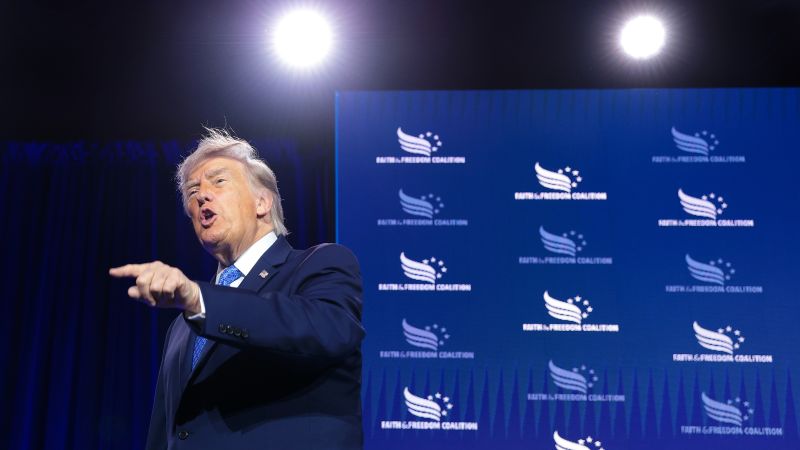
Sandego.net – As Trump ramps up attacks on Democrats, the former president has intensified his campaign against the Democratic Party, labeling its progressive wing as “godless Communists” in a bid to frame them as ideological threats. This escalation comes amid heightened political tensions as November’s midterms approach, with Trump positioning himself as the guardian of traditional American values against what he describes as a radical shift in the nation’s political direction. His rhetoric, delivered during a rally for social conservatives, has focused on the perceived dangers of democratic socialism, drawing sharp criticism from opponents who argue the term is being weaponized for political gain.
The Rise of Democratic Socialism and Trump’s Response
Recent gains by democratic socialist candidates in key battlegrounds have prompted Trump to double down on his attacks. In New York, voters in three historically Democratic districts elected progressive figures, signaling a potential realignment of the party’s platform. These victories followed the mayoral win of Zohran Mamdani, a democratic socialist, which has fueled Trump’s narrative of a growing “Communist” influence. In a speech to the Faith & Freedom Coalition, he warned that the party’s policies could lead to societal collapse, accusing its leaders of undermining American traditions and religious freedoms.
“Democrats are turning the country into a Communist state,” — President Donald Trump, speaking at the Faith & Freedom Coalition’s 2026 Policy Conference
Trump’s strategy hinges on equating democratic socialism with communism, a tactic he has employed to galvanize his base. By emphasizing the “godless” nature of the Democratic Party, he aims to create a stark contrast between his own vision and that of his opponents. While democratic socialism advocates for government-led reforms to address inequality, Trump portrays these policies as a direct path to Marxism, claiming they threaten individual liberties and religious institutions. His message has resonated with voters who fear a progressive agenda, despite the nuanced differences between the two ideologies.
Political Implications and Voter Perceptions
The surge in democratic socialist support has become a focal point of Trump’s messaging. He has framed these candidates as a radical faction, suggesting their rise signals a broader movement to replace American capitalism with a communist system. This narrative has been reinforced by his emphasis on closing churches and persecuting Christians, linking democratic socialism to global communist movements. While some Democrats acknowledge the term’s appeal to certain voters, they argue that Trump’s attacks oversimplify the policy debates and distract from critical issues like healthcare and climate change.
Analysts note that Trump’s focus on labeling Democrats as “Communists” serves a dual purpose. It not only stirs fear among conservative voters but also shifts the conversation away from specific policy proposals. By painting the party as an existential threat, he aims to solidify his base’s loyalty and rally support for his re-election bid. This approach has proven effective in energizing social conservatives, who view democratic socialism as a challenge to their values. However, the Democratic Party has begun countering by highlighting its commitment to both progressive reforms and religious freedom.
Despite the controversy, Trump’s rhetoric remains a key tool in his political strategy. His repeated use of the phrase “godless Communists” has become a defining element of his campaign, appearing in speeches, social media posts, and political ads. The term has been strategically deployed to cast doubt on Democratic leaders and their policies, even as the party continues to expand its base among younger, urban voters. As the midterms draw near, the battle over ideological labels is expected to intensify, with both sides leveraging language to shape public perception.