Trump Predicted an Oil Catastrophe: Is the Clock Running Out?
Sandego.net – A version of this story appeared in CNN’s What Matters newsletter. To get it in your inbox, sign up for free here. Back in June, President Donald Trump justified the signing of a memorandum of understanding with Iran by making some alarming predictions about global energy markets.
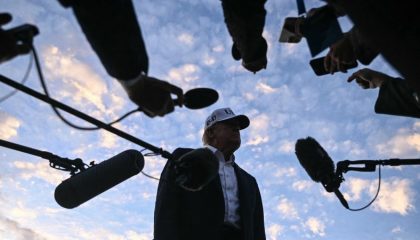
“We run out of reserves at about four weeks,” Trump said during a press conference in France at the Group of Seven summit. Running out of oil reserves would cause “bedlam,” he predicted, saying he feared being compared to Herbert Hoover, the Republican president who presided over a market crash that led to the Great Depression. Trump does not want to be compared to Herbert Hoover.
What’s Happening Now?
But he also abandoned the memorandum of understanding and is again attacking Iran. The Strait of Hormuz is again closed. So how far off is the “bedlam” Trump predicted in June?
I spoke with David Goldman, a senior reporter for CNN Business who has focused on oil and oil markets during the war with Iran. He told me the strategic reserve of oil maintained by the US in case of emergencies is dwindling. So are commercial reserves kept in a small town in Oklahoma.
But markets are not freaking out because the answer, which Trump won’t like, may be staring him in the face. Our conversation, edited for length, is below.
WOLF: The MOU is off. The ceasefire is off. Is bedlam coming? GOLDMAN: The question is when.
There are two things that are happening that have staved off the bedlam. The first is that we had a three-week reopening of the Strait of Hormuz, and just about all the oil that had been locked in the Strait of Hormuz, to the tune of over 200 million barrels, got out. Do the math and you’re at around 17 weeks of supply.
That bought Trump some time. The other thing that has staved off economic catastrophe, I think, and Trump also said, was China. China has surprised everyone by how much oil it had in reserve before the war.
Whether it was prescient or good luck, China had more than a billion barrels of oil sitting in stockpiles, and it’s been drawing down those stockpiles to fuel its oil needs more than you would think. How much longer can China hold out? The best estimates are like three to four months, but we don’t really have a clear insight.
WOLF: How much longer can the United States hold out? GOLDMAN: The US is the largest oil producer in the world by far. In a vacuum, the United States can support its own oil needs.
It is producing something like 21 or 22 million barrels of oil a day, and we consume somewhere around 13 or 14 million barrels a day in this country. We have millions of barrels a day more that we produce than we consume, and so the United States has become an exporter of oil. The problem is that there are two kinds of oil, broadly speaking.
We produce what is called light sweet crude oil, and that’s really good for making gasoline and not much else. So if you want to make other stuff — asphalt, or even to an extent, diesel and jet fuel — we need to bring in oil from the Middle East. The other place to get heavy sour crude, which is the second kind of oil, is from Venezuela.
You know what’s going on there. And then the third is Russia. You know what’s going on there.
The next thing that we need to understand is that because the Middle East isn’t producing all this oil, the biggest customers of the Middle East, namely Asia and Europe and Australia, are demanding oil from the United States. A lot of our diesel is going to Asia. A lot of our jet fuel is going to Europe, and that has reduced the amount of fuel and oil that we are able to provide our own country.
WOLF: The Strait of Hormuz is closed again. Is the oil backing up in such a way that another ceasefire can buy more time? GOLDMAN: One thing is that there’s less oil inside the Strait of Hormuz right now than there was before.
We don’t have hundreds of millions of barrels right now; we have tens of millions of barrels that are stuck inside. So there’s not a massive amount of oil that’s ready to come out of the Persian Gulf this time around. The second thing is that there is now also a blockade happening in the Red Sea.
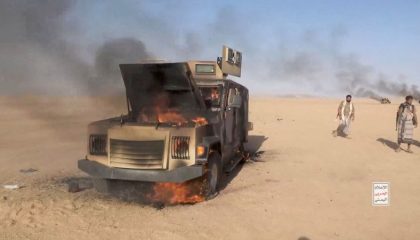
Saudi Arabia was really effective in piping oil that normally would have gone out through the Persian Gulf westward through its pipelines to the Red Sea, and then exiting the Red Sea for its customers in India and Asia via the Bab-el Mandeb Strait. The Houthis (Iran-backed rebels in Yemen) have now blockaded that Strait as well.
GOLDMAN: The other thing is that we’re in a refining crisis now that hadn’t really existed before. Part of the reason is that Iran has either decimated or significantly impaired 30 refineries around the Middle East during the course of the war. It will either take years or weeks or months, depending on the destruction, to get those back online. Russia has also been bombarded with drone strikes fr
Frequently Asked Questions
How long can the US oil reserves last?
After the recent three-week reopening of the Strait of Hormuz, approximately 200 million barrels of oil were released, bringing supply to around 17 weeks. The US Strategic Petroleum Reserve is currently dwindling, while commercial reserves in Oklahoma are also being drawn down.
What role is China playing in the oil crisis?
China surprised markets by having more than a billion barrels of oil in stockpiles before the war began. These reserves are being actively drawn down to meet domestic needs, with estimates suggesting China can maintain this level for three to four months.
Why is the US still importing oil despite being the world’s largest producer?
The US produces 21-22 million barrels daily but consumes 13-14 million barrels. However, the US primarily produces light sweet crude suitable for gasoline, while heavy sour crude needed for diesel, jet fuel, and asphalt must be imported from the Middle East, Venezuela, and Russia.
How is the Strait of Hormuz closure different this time?
Unlike the previous closure, only tens of millions of barrels are currently trapped in the Strait rather than hundreds of millions. Additionally, a parallel blockade in the Red Sea via the Bab-el Mandeb Strait has further complicated oil distribution to Asian and Indian markets.