Trump downplays Chinese election interference five: Trump Softens Stance on Chinese Election Data Breach Following Initial Alarm From Historic Breach to
Trump Softens Stance on Chinese Election Data Breach Following Initial Alarm
From Historic Breach to Diplomatic Reassurance
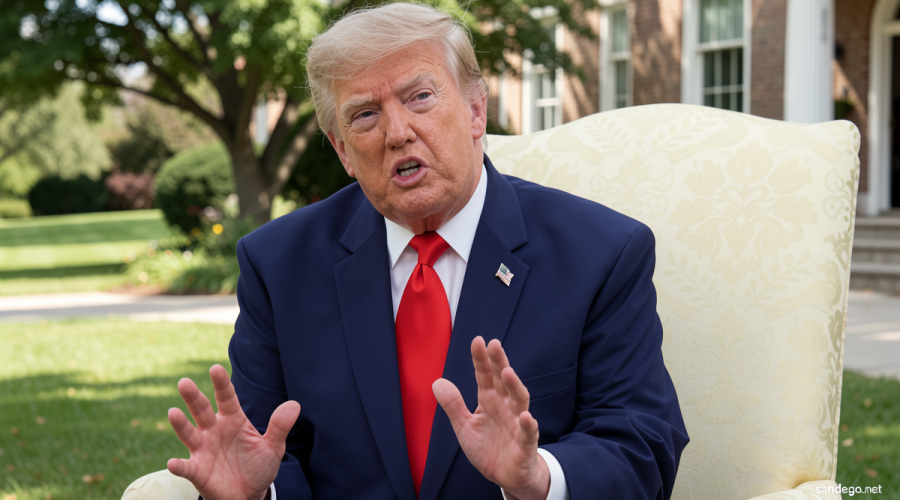
Sandego.net – Just five days after characterizing China’s acquisition of American voter information as “the largest compromise of election data in history,” President Donald Trump appeared to minimize the significance of the incident. During a Tuesday press interaction, the president suggested that the United States was engaging in comparable activities toward Beijing, effectively framing the situation as a mutual exchange rather than a unilateral violation.
Trump offered a somewhat vague statement regarding future diplomatic engagement, noting that American officials would discuss the matter with their Chinese counterparts. However, he provided no concrete indication of potential punitive measures. Instead, the president characterized the alleged breach as something that had already passed into history. “It took place a long time ago. I think China is maybe a little bit different today than it was then,” he remarked, despite having issued a stark warning just days prior.
“It took place a long time ago. I think China is maybe a little bit different today than it was then.”
The Scale of the Alleged Breach
The context of Trump’s shifting position becomes particularly notable when considering the magnitude of his original accusation. During a primetime address last week, the president asserted that Chinese entities had illicitly obtained approximately 220 million American voter records beginning in 2020. At that time, he described the situation as “the largest compromise of election data in history” and warned that the “data loss presents an unprecedented election security nightmare.”
The contrast between these two statements—one emphasizing historic severity and the other suggesting the matter was already resolved—has drawn attention from political observers and diplomatic analysts alike. The president’s Tuesday comments appeared to signal a deliberate effort to prevent the issue from escalating into a broader international dispute.
“They do things and we do things to them. I’ll be honest, we do things to them too. It’s not a one-way street.”
Diplomatic Considerations and Future Relations
The timing of Trump’s comments proved particularly significant given ongoing preparations for high-level diplomatic engagement. A White House official confirmed just one day after the president’s primetime speech that planning for President Xi Jinping’s state visit to the United States in September was proceeding according to schedule. This visit represents one of the most important diplomatic events in recent US-China relations.
When reporters inquired whether Trump was contemplating any form of retaliation for the alleged data breach—including the possibility of imposing sanctions—the White House declined to provide a substantive response. This silence left many questions unanswered regarding the administration’s potential course of action.
Broader Implications for US-China Relations
Trump’s characterization of the situation as a reciprocal relationship between the two nations reflects a broader diplomatic philosophy. By suggesting that the United States engages in similar activities toward China, the president appeared to be positioning the voter file incident within a larger framework of international competition. His comments about the matter being “not a one-way street” suggested that American actions toward Chinese interests were equally significant and perhaps justified.
The president’s decision to downplay the breach so quickly after initially highlighting its historic nature may reflect several considerations. First, there appears to be a desire to maintain positive momentum for Xi’s upcoming visit. Second, Trump may be attempting to avoid appearing overly confrontational on an issue that, while significant, does not necessarily warrant immediate punitive action. Third, the president’s comments about China being “different today” suggest a belief that the situation has evolved or been addressed in some manner since the original breach occurred.
As the United States moves forward with discussions with Chinese officials, the question remains whether these conversations will result in any meaningful resolution or simply serve as a diplomatic mechanism for acknowledging the issue without taking concrete action. The administration’s approach thus far suggests a preference for measured engagement over immediate confrontation, even as the full implications of the voter file breach continue to be assessed by security experts and political leaders alike.
Related SEO Topics
- Home
- Artikel terkait Trump downplays Chinese election interference five
- Trump adviser loses appeal of January 6-related contempt of Congress conviction
- Speaker Johnson wants to ban members of Congress from dating staffers full stop
- US attorney who Trump fired minutes after he got the job sues to get it back
- France becomes the first EU country to ban social media for children
Frequently Asked Questions
What is Trump downplays Chinese election interference five?
Trump downplays Chinese election interference five is the main topic covered in this article, with practical context to help readers understand the subject clearly.
Why does Trump downplays Chinese election interference five matter?
Trump downplays Chinese election interference five matters because it helps readers compare options, avoid common mistakes, and make a more informed decision.
How should readers use this Trump downplays Chinese election interference five guide?
Use the key points, examples, and related links in this page as a starting point, then review the latest details before making a final decision.