The Iran MOU: A Fragile Agreement in a Turbulent Time
Sandego.net – Brett McGurk, a CNN global affairs analyst with experience in national security roles across four U.S. presidential administrations, has highlighted the peculiar nature of the 14-point “Memorandum of Understanding” (MOU) between the United States and Iran. This document, spanning just two pages, has sparked debate for its lack of clarity and the significant American concessions it outlines. Critics argue that its brevity makes it one of the most enigmatic international agreements in recent history, while supporters claim it provides a practical framework to address ongoing tensions.
A Framework for Ceasefire and Economic Relief
At its core, the MOU aims to establish a ceasefire in Lebanon and secure Iran’s agreement to maintain the Strait of Hormuz open to international shipping. The U.S. framed this as a win, citing the agreement’s promise of releasing frozen funds to Iran and lifting sanctions in exchange for Iran’s actions. However, the document’s vagueness has led to confusion, with Iran interpreting its terms to allow for limited access to the strait rather than full unimpeded passage. This discrepancy has already resulted in clashes, as Iran launched drone strikes against commercial vessels it deemed in violation of the deal, prompting U.S. military retaliation.
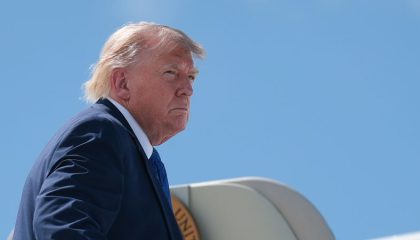
Despite the agreement’s ambiguity, both sides have agreed to its terms, with the U.S. emphasizing its role in averting a global economic crisis. President Trump warned that without the MOU, the world could face a “global depression,” a stark contrast to the initial military standoff that had left Iran’s economy under pressure. Iran, meanwhile, has pointed to the economic benefits it gains, though the long-term implications remain uncertain. The MOU’s success, in part, hinges on its ability to create breathing room in the region, allowing both nations to step back from immediate confrontation.
Interpretative Disputes and Political Divides
The MOU has been a lightning rod for criticism, with Republicans condemning it as a weak compromise and Democrats framing it as a necessary step to avoid further conflict. While the nuclear deal under President Obama was a 159-page agreement with detailed provisions, this new pact is seen as a stark departure in its simplicity. Yet, its brevity has also led to disputes over its scope. For example, the first paragraph mentions a ceasefire in Lebanon, but it leaves critical details unresolved. Iran has taken this to mean that Israel must withdraw from southern Lebanon, where it has been stationed since 2024 under a prior agreement. Israel, however, has resisted this interpretation, citing its own strategic interests.
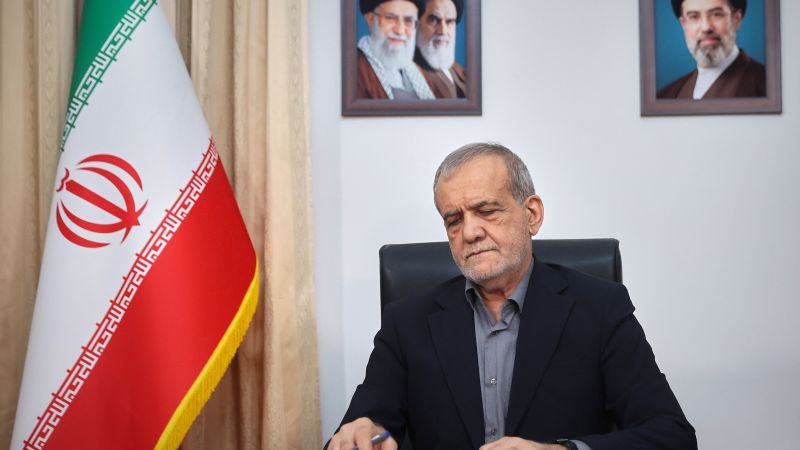
This ambiguity has been exacerbated by the U.S. and Iran’s conflicting views on the deal’s binding nature. Vice President JD Vance, the lead negotiator, has dismissed the importance of precise wording, stating that the “words don’t matter” as long as the agreement’s goals are met. Iran, on the other hand, treats the MOU as a legally binding treaty, which has led to accusations of the U.S. failing to uphold its commitments. The conflict over interpretation has even spilled into separate agreements, such as the recent deal between Israel and Lebanon, which Iran claims violates the MOU’s terms. The U.S. counters that the new arrangement is consistent with the original document.
Economic Concessions and Strategic Trade-offs
One of the MOU’s key provisions is the release of U.S. funds frozen during the Trump administration’s sanctions campaign. While this has been presented as a major win for Iran, the deal’s conditions have raised questions about the extent of these concessions. The U.S. insists that sanctions relief is contingent on Iran’s actions, such as keeping the Strait of Hormuz open and not enriching uranium. However, Iran has argued that the MOU allows for greater flexibility, including the use of frozen funds for purposes beyond the original agreement’s scope. This has led to accusations that the U.S. is trading away strategic advantages for economic benefits.
The economic impact of the MOU is a central point of contention. The U.S. military’s blockade of Iranian ports had severely strained Iran’s economy, while Iran’s threats to commercial shipping had created uncertainty in global markets. By securing the strait’s access, the MOU has eased these tensions, but its effectiveness depends on Iran’s adherence to the terms. The agreement also includes provisions for nuclear restrictions, requiring Iran to halt uranium enrichment. This has been hailed as a critical step in preventing the development of a nuclear weapon, though experts remain divided on whether it’s sufficient.
Clarifying Expectations in Doha
This week in Doha, the U.S. and Iranian teams were expected to meet and outline mutual expectations, potentially leading to renewed nuclear talks. However, the negotiations have been mired in confusion, with Trump’s representatives engaging primarily with Qatari mediators rather than Iranian officials. There is now a question mark over whether lower-level discussions are even taking place, complicating efforts to move forward. Analysts suggest that the MOU’s lack of clarity has left both sides with diverging priorities, making it difficult to align on shared goals.
Despite these challenges, the MOU has demonstrated some practical value. The prolonged standoff over the strait had caused economic harm for both the U.S. and Iran, with the former suffocating Iran’s trade and the latter holding global supply chains hostage. By reducing tensions, the MOU has allowed time for diplomacy to take hold. Henry Kissinger once remarked,
“When statesmen want to buy time, they offer to talk.”
This sentiment seems to resonate in the current context, as both nations seek to avoid further conflict while exploring broader agreements.
The Path Forward: Uncertainty and Opportunity
While the MOU has been criticized for its lack of detail, it also offers a platform for future negotiations. The agreement’s flexibility may serve as a starting point for more comprehensive talks, particularly on the nuclear front. However, the current stalemate highlights the need for clearer language and mutual trust. The U.S. has positioned the MOU as a pragmatic solution, while Iran has framed it as a strategic victory. Whether this balance will hold depends on the parties’ ability to reconcile their interpretations.
Some analysts argue that the MOU has already delivered tangible results. For instance, Iran’s uranium enrichment activities have remained suspended, and the strait’s status has stabilized. These factors are seen as advantages for the U.S., as they reduce the immediate threat of nuclear proliferation and economic disruption. Yet, the agreement’s future remains uncertain, with both sides navigating a complex web of expectations and priorities. As the negotiations continue, the MOU’s success will be measured not just by its immediate outcomes but by its ability to lay the groundwork for lasting peace in the region.
Ultimately, the MOU represents a unique blend of diplomacy and concession, with its effectiveness hinging on the evolving dynamics between the U.S. and Iran. While it may not resolve all issues, it has provided a temporary reprieve, allowing both nations to reassess their strategies. As the situation unfolds, the MOU’s role in shaping the future of U.S.-Iran relations will become clearer, though for now, its meaning remains as contested as its terms.