Takeaways from a Divisive Supreme Court Term That Expanded Trump’s Power
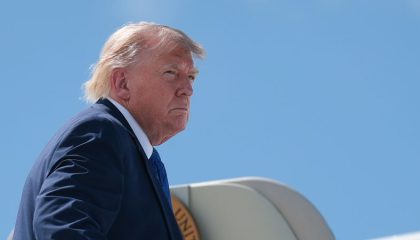
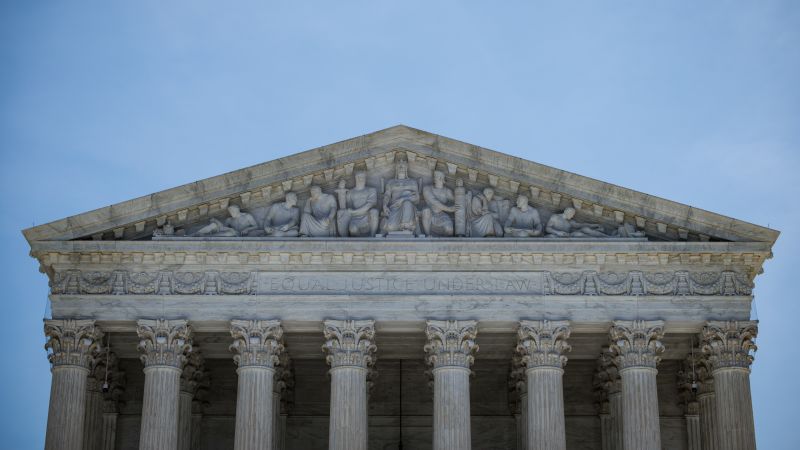
Sandego.net – As the 2026 Supreme Court term drew to a close, President Donald Trump’s reflection on the judiciary’s performance revealed a surprising pivot from his usual sharp criticism. In a social media post, he described the court as having treated the Republican Party “very fairly,” a stark contrast to his earlier condemnations. Just four months prior, Trump had denounced the justices who ruled against his emergency global tariffs as an “embarrassment to their families.” This shift in tone, if it persists, underscores a term defined by both significant setbacks and strategic victories for the administration.
Legal Landmarks and Policy Wins
The Supreme Court’s 6-3 conservative majority, which has long been a focal point of political debate, delivered a series of rulings that reshaped the boundaries of executive authority. Among the most notable decisions was the expansion of presidential power to dismiss leaders of independent agencies. This ruling, which overturned a key precedent from 1935, allowed the White House to remove officials deemed politically inconvenient, effectively reinforcing the executive’s ability to control federal operations with greater ease.
Immigration remained a central theme of the term, with the court striking down a long-standing legal principle that granted birthright citizenship to children of undocumented immigrants. This decision aligned with Trump’s broader agenda to tighten border controls and reduce the number of legal residents entering the country. Similarly, the court’s ruling on the nation’s redistricting battle gave states more leeway to draw electoral maps favoring their preferred political outcomes, a move critics argue could entrench partisan advantages.
While the justices handed the administration several losses, including the rejection of his emergency tariffs and the erosion of birthright citizenship, they also provided substantial victories. The court’s decision in Trump v. Slaughter was particularly significant, enabling the president to unilaterally remove officials from federal agencies without needing congressional approval. “The biggest and most consequential decision issued by the court, by far, is the Slaughter case,” Trump stated in a social media post. “This decision gives tremendous additional power back to the presidency, where it belongs.” The ruling marked a pivotal moment in reshaping the balance of power between the executive and legislative branches.
The Ideological Divide
Despite the court’s decisions, the term exposed a deep ideological chasm among the justices. Out of 58 merits cases, the justices issued 6-3 rulings in 13 of them, more than doubling the number from the previous year. These decisions, ranging from transgender sports bans to the dismantling of the Voting Rights Act, revealed a judiciary increasingly split along partisan lines. The court’s willingness to overturn longstanding precedents, such as the Humphrey’s Executor Rule, suggested a movement toward prioritizing policy outcomes over judicial restraint.
Chief Justice John Roberts, often portrayed as a moderate voice, acknowledged this trend during a May conference. “People think we’re making policy decisions,” he said. “I think they view us as truly political actors,” he added, “which I don’t think is an accurate understanding of what we do.” Roberts’ comments hint at the growing perception that the Supreme Court, while claiming to be apolitical, is increasingly shaped by ideological divisions. This perception has been amplified by the court’s decisions on issues like the Voting Rights Act, which eliminated key protections for voters in historically marginalized communities, and the expansion of campaign finance limits, allowing political parties to spend unlimited funds in coordination with candidates.
The court’s handling of transgender student policies also reflected this ideological divide. In a 6-3 decision, the justices allowed states to ban transgender athletes from competing in girls’ sports, a ruling that echoed Trump’s rhetoric on gender identity and school standards. Although Trump was not directly involved in this case, the outcome clearly supported his broader vision of policy-making. This pattern of alignment between the court and the administration has raised questions about the justices’ independence and the role of partisanship in shaping legal interpretations.
A Charm Offensive and Strategic Resilience
Trump’s approach to the Supreme Court during the term appeared to blend criticism with conciliation. In April, he hosted a banquet featuring King Charles III, an event designed to showcase goodwill toward the court’s conservative justices. The gesture, paired with public praise for several of the justices who visited the White House for the swearing-in of Federal Reserve Chair Kevin Warsh, signaled a calculated effort to improve the administration’s image. Yet, this charm offensive did not erase the president’s past accusations, including his March claim that the court was “little more than a weaponized and unjust political organization.”
Despite these contradictions, the term demonstrated Trump’s ability to adapt to legal challenges. While he faced losses on major issues like tariffs and birthright citizenship, the court’s support for his other priorities—such as reducing humanitarian relief for immigrants and expanding executive authority—allowed him to maintain influence over key policy areas. The administration’s success in these cases highlighted the justices’ receptiveness to Trump’s ideological framework, even as they grappled with broader questions about judicial impartiality.
For many observers, the term’s legacy lies in its confirmation of a Supreme Court that is less insulated from political forces than ever before. The justices’ willingness to overturn longstanding rules and embrace policies that favor the executive branch has sparked debates about the role of the judiciary in American democracy. As the court moves into its next session, its reputation as an apolitical body may continue to be tested, with Trump’s influence shaping the direction of its decisions in ways that reflect the administration’s priorities.
“The biggest and most consequential decision issued by the court, by far, is the Slaughter case, which overturned the very famous Humphrey’s Executor Rule.”
— Donald Trump, social media post
With the term’s conclusions, Trump seemed to recognize the court’s role in advancing his agenda. While he remains a vocal critic of the judiciary, the outcomes of key cases have provided him with a renewed sense of power. The balance of authority, once a point of contention, now appears to have tilted in his favor, at least in the short term. As the political landscape evolves, the Supreme Court’s decisions will likely continue to serve as a battleground for ideological battles, with Trump’s policies at the center of the discourse.