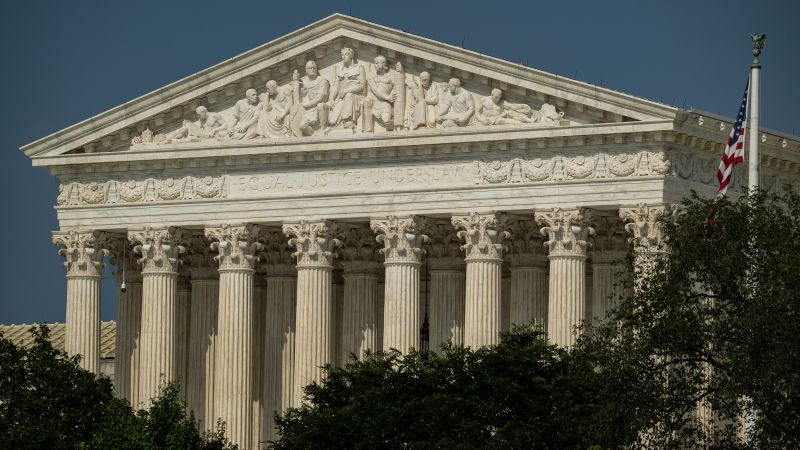
Supreme Court Hears Boulder Climate Case Against Oil Companies
Sandego.net – The Supreme Court hearing arguments in one major climate case could determine whether Boulder, Colorado, may continue pursuing state-law claims against ExxonMobil and Suncor Energy’s US subsidiary. Boulder and Boulder County say the companies should help cover local costs associated with climate-related damage.
The local governments filed their lawsuit in 2018, citing expenses tied to fires, flooding, infrastructure repairs and public-health services. They contend that fossil-fuel emissions contributed to climate change and that the companies misled the public about the relationship between their products and global warming.
What the Boulder lawsuit asks the court to decide
Boulder says its case is not an effort to establish national climate policy through the courts. Instead, it argues that Colorado law can be used to seek compensation for specific local harms and costs that it attributes in part to the companies’ conduct.
“This litigation is not an attempt to solve climate change,” Boulder told the court. “It merely asks that petitioners bear their fair share of local costs incurred in part because of their tortious conduct.”
The Supreme Court hearing arguments in one dispute has implications beyond Boulder. Cities and states around the country have brought related lawsuits under consumer-protection, nuisance and other state tort-law theories. Those governments argue that states have long had authority to protect public health and safety.
Boulder has pointed to tobacco litigation from the 1990s as an example of governments seeking damages from companies accused of deceptive conduct. The climate lawsuit is not the same as those tobacco cases, but Boulder maintains that corporations may still face claims for alleged local harm even when the underlying issue extends across jurisdictions.
Oil companies warn of conflicting state standards
Exxon and Suncor argue that greenhouse-gas emissions are an interstate issue that cannot be resolved through one state’s tort law. They say separate lawsuits could impose inconsistent standards on companies whose operations and products affect markets throughout the country and the world.
“As this court has consistently recognized, resorting to a single state’s law to resolve an inherently interstate dispute contradicts the basic scheme of the Constitution,” the energy companies said.
The companies and other industry voices have warned that climate litigation could resemble a carbon tax created through court decisions. Boulder rejects that characterization, saying it seeks recovery for particular local expenses rather than a court-ordered nationwide emissions policy.
Colorado’s highest court ruled for Boulder before Exxon and Suncor appealed to the Supreme Court. If the justices allow the lawsuit to proceed, Boulder would still need to prove its allegations in state court; the ruling would not itself require the companies to pay damages.
Alito’s recusal could affect the outcome
Justice Samuel Alito recused himself from the case after saying it was prudent to do so because he owns energy stocks. With eight justices participating, a 4-4 split would leave the Colorado ruling in place for this case without creating a nationwide Supreme Court precedent.
The Supreme Court hearing arguments in one of its most consequential climate disputes could also produce a narrower decision. Whatever the outcome, the case is a significant test of whether state-law claims remain available to communities seeking climate-related damages from major oil companies.
FAQ for Boulder and Colorado residents
Would a ruling for Boulder mean Exxon or Suncor must immediately pay? No. A decision allowing the case to continue would keep it alive in state court, where Boulder and Boulder County would still have to prove their claims and damages.
Could the ruling affect other Colorado communities? It could influence the legal path available to other communities with similar state-law claims, though each lawsuit would depend on its own facts and state law.
What happens if the court splits 4-4? The Colorado Supreme Court’s decision would remain in effect for Boulder’s case, but the evenly divided Supreme Court would not establish a binding national precedent.