U.S. Labels Chinese Scholar’s Detention as Wrongful Ahead of Xi-Trump Summit
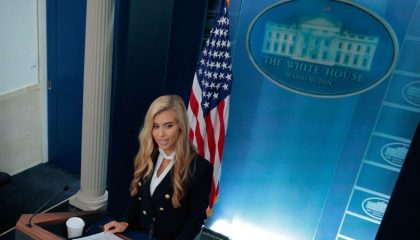
Sandego.net – The State Department on Thursday formally declared that American academic Min Zin has been wrongfully detained in China, a move that lands just weeks before President Donald Trump is expected to sit down with Chinese leader Xi Jinping for a bilateral meeting on U.S. soil. The designation, announced by Assistant Secretary of State Dylan Johnson following what the department described as an “extensive review of the circumstances,” signals that Washington intends to elevate the case to the highest diplomatic level before the two leaders convene next month.
Min Zin, a Myanmar-born scholar who earned his doctorate at UC Berkeley, has been held in Chinese custody since early June. His brother, Aung Maw Zin, reacted with visible emotion to the news.
“When I heard the news, I teared up a little bit,” Aung Maw Zin said, explaining that the designation sends a clear signal to Beijing that his older brother’s case now sits at the top of the American diplomatic agenda.
A Scholar’s Path from Myanmar to Berkeley
Min Zin’s story stretches back decades. In his youth in Myanmar — a country he and his family also refer to by its older name, Burma — he was an active participant in the pro-democracy movement. That activism carried a steep price: he spent seven years in hiding before eventually securing passage to the United States. Once here, he enrolled in a doctoral program at UC Berkeley, where he met his future wife. The couple now share a teenage daughter.
The year 2012 proved transformative on two fronts simultaneously. Min Zin completed his naturalization as a U.S. citizen and welcomed his first child into the world.
“2012 was an incredibly important year in Min Zin’s life. He became both a naturalized US citizen and a father. That moment carried deep meaning for him. America had given him asylum when there was no safe space for him in his home country, Burma,” Aung Maw Zin recalled.
After completing his studies, Min Zin returned to Myanmar in 2016 and founded the Institute for Strategy and Policy-Myanmar, a think tank focused on domestic governance and regional affairs. When the military seized power in a 2021 coup, he and his family relocated to Thailand, where they have remained ever since. His academic work, his brother emphasized, has been “solely” focused on Myanmar — not on China.
“He’s not anti-China. He wants China to help resolve the crisis in Burma,” Aung Maw Zin added.
Detained at the Border of a Conference
This summer, Min Zin accepted an invitation from a professor he had known since 2018 to attend an academic conference at Kunming University in Yunnan province. He had traveled to China before without complication, including for another conference in 2025. Yet this time, authorities detained him immediately upon his arrival in the country.
Beijing’s stated rationale is that Min Zin is “suspected of spying and endangering Chinese national security.” No further public details about the evidence or charges have been released. More than two months into his confinement, U.S. diplomatic personnel have been granted visits, but his wife, teenage daughter, and brother have not been permitted to speak with him. According to Aung Maw Zin, his brother has been kept in solitary confinement throughout the period.
A Narrow Club of Designated Cases
Min Zin now joins a small group of Americans formally labeled as wrongfully detained in China. The other is Youlin Chen, a seismologist who has been held since early November 2024. The State Department’s announcement underscored that citizen safety remains its foremost operational priority.
“The safety and security of U.S. citizens is the State Department’s top priority,” Johnson stated. “We will continue to advocate for Mr. Zin and call for the release of all US citizens who are arbitrarily detained or exit banned in China.”
The designation carries particular weight given its timing. With a Trump-Xi meeting anticipated next month on American territory, Washington appears to be using the diplomatic leverage of a face-to-face summit to press for concrete outcomes on individual cases. Analysts of U.S.-China relations have long noted that high-level summits create narrow windows in which bilateral grievances can be traded or resolved, and the State Department’s choice to act before that window opens suggests an intention to make Min Zin’s case a standing item on the agenda.
Beijing Pushes Back
The Chinese embassy in Washington responded with a terse rebuttal. A spokesperson told reporters that China operates under the rule of law, that its judicial authorities adjudicate cases according to statute, and that “there is no such thing as so-called wrongful detention.” The phrasing — particularly the insertion of “so-called” — mirrors language Beijing has deployed in previous disputes over detained Americans, framing the U.S. designation as an external imposition rather than a factual finding.
A Family’s Plea and a Lifelong Practice
Despite the diplomatic friction, Aung Maw Zin expressed gratitude for the speed with which the administration moved.
“We are deeply grateful to President Trump and Secretary Rubio for moving swiftly to designate Min Zin as wrongfully detained. We know how seriously the President takes bringing Americans home, and I am confident in his ability to help secure my brother’s release,” he said.
He also noted a quieter, personal benefit of the designation: it allows Min Zin’s teenage daughter to understand that her father is not a criminal, but a scholar caught in a political process. Asked what he would say to his brother if given the chance to speak, Aung Maw Zin pointed to a practice Min Zin has maintained throughout his adult life — meditation.
“Please stay strong,” he added. “We are doing everything we can to bring you back home with the family.”
For now, the family waits in Thailand, separated from Min Zin by an ocean, a border, and a legal system that has not yet granted them a single conversation. The next several weeks, culminating in the anticipated Trump-Xi encounter, will determine whether the designation translates into tangible movement or remains a diplomatic statement without consequence.
Related Reading
Frequently Asked Questions
What is Please stay strong?
Please stay strong is the main topic of this guide. The article explains the context, practical details, and next steps readers should understand.
Why does Please stay strong matter?
Please stay strong matters because readers are looking for a useful answer, not just a short summary. Good content should match search intent and help them decide what to do next.