Epstein’s Former Assistant Claims He Was a Skilled Manipulator and Says She Was Not Aware of His Crimes
Testimony Before Congress Sparks Debate Over Role in Sexual Abuse Scandal
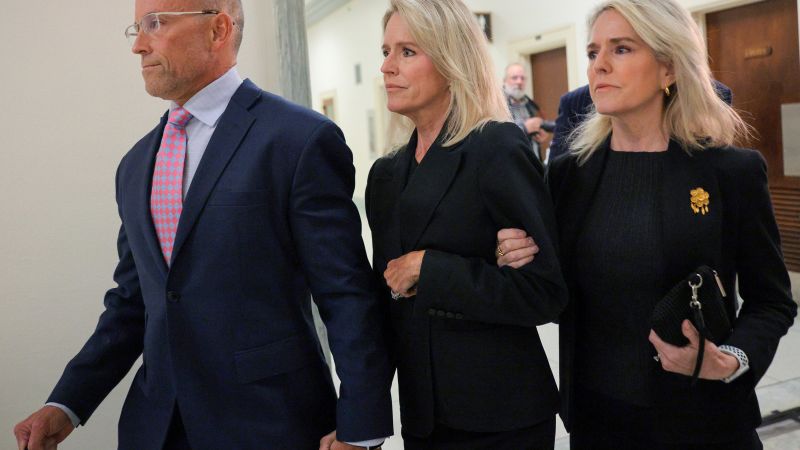
Sandego.net – Lesley Groff, a former executive assistant to the late financier Jeffrey Epstein, testified before the House Oversight Committee on Tuesday, stating she had no prior knowledge of his criminal activities. According to two sources close to the hearing, Groff described Epstein as a highly adept manipulator who intentionally concealed his misconduct from her. The testimony marks Groff as one of the key figures in Epstein’s inner circle to address Congress during the ongoing investigation into his alleged sexual abuses.
Groff, who has long remained in the background, emphasized her belief that the massage appointments she arranged for Epstein were routine business dealings. She claimed these sessions were with licensed massage therapists, not young women or girls. This perspective has drawn scrutiny from survivors, who argue that Epstein’s methods of control were designed to keep his victims and accomplices in the dark. Her testimony, however, highlights the complexity of understanding the full scope of his operations without direct evidence.
Epstein’s criminal empire, as detailed in the Justice Department’s millions of documents, was managed by Groff and others who oversaw everything from personal schedules to high-profile meetings. Her role extended to organizing travel for both Epstein and numerous women, including arranging domestic and international trips. This position granted her access to a wide network of individuals, from politicians to celebrities, which she described as part of her professional duties.
“One of the hardest parts for survivors is hearing the people who were closest to Epstein claim they saw nothing,” Sharlene Rochard, a survivor, told CNN. “That doesn’t match my experience. Survivors deserve answers, not claims of ignorance.”
Groff’s account of her involvement with Epstein was met with immediate skepticism from those who had suffered under his influence. She asserted that Epstein and his associate Ghislaine Maxwell never expected her to be involved in their affairs, telling lawmakers that they insisted their activities were unrelated to her responsibilities. She added that she had no need for her job and that Epstein had instructed her to avoid close contact with his friends and colleagues.
Despite her claims, Groff’s testimony raised questions about the extent of her awareness. The FBI has previously noted that multiple victims identified her as the primary contact for scheduling Epstein’s massage sessions. These sessions, they claimed, were central to Epstein’s pattern of abuse, during which he allegedly exploited his connections to groom and control young women. In a 2021 FBI interview, Groff described these appointments as “another task she had to perform for Epstein,” underscoring her perception of them as ordinary administrative work.
House Oversight Committee Chair James Comer highlighted Groff’s potential value to the investigation, stating beforehand that she holds critical information. “We look forward to asking her questions,” Comer remarked, suggesting her testimony could illuminate hidden aspects of Epstein’s operations. However, survivors have questioned whether her access to his network made it easier for her to remain unaware of his crimes.
Epstein’s career spanned nearly two decades, with Groff serving him since 2001, as confirmed by a 2010 payroll record. Her role was not limited to administrative tasks—she also acted as a liaison between Epstein and influential figures, facilitating meetings that likely involved his illicit activities. During the 2008 non-prosecution agreement in Florida, prosecutors listed Groff as a potential co-conspirator, indicating her role in his schemes was significant enough to warrant legal consideration.
Groff’s legal team has since clarified her position, asserting that she had never witnessed “anything improper or illegal” during her tenure. In a previous statement to CNN, her attorney described her as part of a “professional staff” that included attorneys, accountants, and other administrative personnel. They emphasized that her duties were focused on scheduling, communication, and coordinating meetings, without any direct involvement in Epstein’s sexual misconduct.
The testimony has also touched on the personal toll of Epstein’s influence. Groff reported being ostracized by friends and family since his arrest, with her relatives facing harassment. She expressed a desire to be cooperative with investigators, stating that her goal was to provide clarity on the events she was involved in. However, this willingness to speak has not resolved the controversies surrounding her role in the case.
Epstein’s manipulation tactics, as described by Groff, appear to have included psychological control over those around him. She suggested that his ability to keep secrets was a key part of his charm, and that his position as a wealthy financier allowed him to exert power over both staff and victims. This dynamic, she argued, made it easier for him to maintain a facade of normalcy while engaging in criminal behavior.
While Groff’s testimony provides insight into Epstein’s daily operations, it also underscores the challenges of proving guilt in such cases. Survivors, like Rochard, have criticized the lack of accountability from those who worked closely with Epstein, arguing that their claims of ignorance are difficult to believe. “How could someone so deeply embedded in his world not know what was happening?” Rochard asked, reflecting the broader frustration of victims and advocates.
The House Oversight Committee’s investigation into Epstein’s crimes has thus far included 14 interviews, with Groff’s appearance adding a new layer of complexity. Her accounts, combined with the evidence in the Justice Department’s files, may help piece together the timeline of Epstein’s manipulations. Yet, the debate over her awareness continues, with some suggesting that her position as an assistant made her both a target and a tool in his system of control.
Groff’s story, like many others tied to Epstein, highlights the intricate web of relationships he cultivated to sustain his crimes. As she described her role, the emphasis on routine tasks and professional boundaries suggests a deliberate effort to distance herself from the allegations. However, the testimonies of victims and the legal records paint a more detailed picture of her involvement, challenging her assertions of innocence.
With the investigation ongoing, Groff’s testimony will likely be scrutinized alongside other evidence. The committee’s focus on uncovering the full extent of Epstein’s operations means that her perspective, while valuable, will be weighed against the accounts of those who directly experienced his abuse. As the probe continues, the question remains: how much did Groff truly know, and how much did she choose to ignore?