Clinton’s Former Aide Retracts Statement About Presumed Island Visit
Rep. Nancy Mace and Sources Highlight Contradictions in Testimony
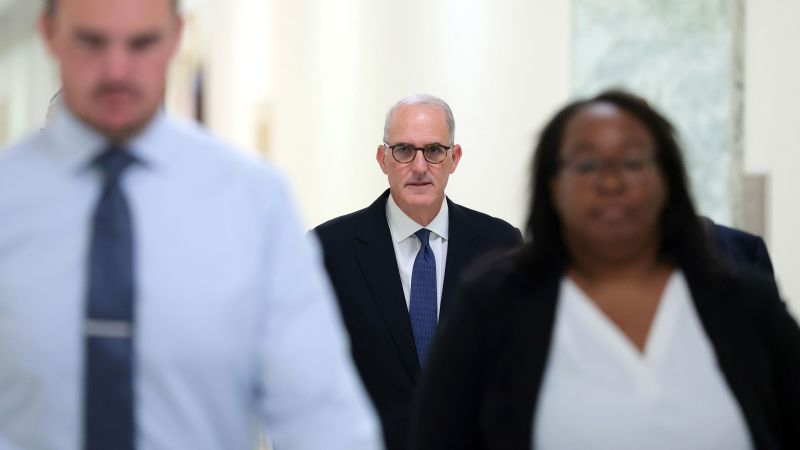
Sandego.net – Republican representative Nancy Mace, a prominent member of the House Oversight Committee, recently reported that Doug Band, a longtime aide to Bill Clinton, revised his earlier claim regarding the former president’s alleged visit to Jeffrey Epstein’s private island. This retraction followed closed-door questioning of Band and came after two independent sources confirmed the aide’s admission during his testimony. Band, who is the 17th individual to appear before the committee as part of its expansive investigation into Epstein’s network and the handling of prior probes, initially stated in 2020 that Clinton had traveled to Epstein’s island in 2003. However, during his recent interview, he clarified that he no longer recalled the specific details of the visit, casting doubt on his previous assertion.
The House Oversight Committee’s inquiry into Epstein’s activities has drawn scrutiny over the connections between the former president, his aides, and the late sex offender’s associates. Band’s testimony was prompted after Clinton himself appeared before the committee in February. During that session, the former president described Band as a longtime collaborator who had known both Epstein and Ghislaine Maxwell, his alleged accomplice. Now, with Band’s testimony, the committee is probing deeper into the extent of his involvement and the accuracy of his statements.
“He turned out to clearly not know the difference between the truth and a lie,” Mace stated to CNN. “He contradicted his Vanity Fair interview from a couple of years ago. He testified today that he had no knowledge of Clinton going to Epstein’s island, but he used some very vague language in how he did it. It was all very obtuse and obstructive language when he did answer.”
Band’s recollection of events has been inconsistent. According to one source, he admitted to being uncertain about the reason he previously claimed Clinton had visited Epstein’s island. “He was the worst witness we’ve ever had,” Mace added. “He just said, ‘I do not recall’ on damn near every answer and he contradicted himself multiple times.” This pattern of uncertainty has raised questions about the reliability of his testimony and the motivations behind his initial statement.
As part of the committee’s investigation, Band’s account has been compared to the evidence released earlier this year by the Justice Department. These documents included emails between Band and Ghislaine Maxwell, which provided insight into their communications. In one such email, Band appeared to indicate that he shared an email account with Clinton, suggesting a close working relationship. However, during his testimony, Band denied that he had ever used a Blackberry with Clinton, a detail that Mace emphasized as a point of confusion.
Band’s role in the Epstein case has also been scrutinized for his efforts to distance Clinton from Maxwell. According to sources, he took steps to reduce their interactions with the former president once allegations surfaced. “He did say that he took Maxwell and Epstein out of Clinton’s circle, like they weren’t allowed to be communicated with when that information came out and came to light publicly,” Mace explained. This suggests Band may have been actively managing the narrative surrounding Clinton’s associations with Epstein and Maxwell.
Clinton’s own testimony has added another layer to the investigation. The former president stated he had only sent two emails in his lifetime, contradicting Band’s claim that Clinton had shared an email account with him. “I did not know nor did I need to know that they had a personal relationship for a while,” Clinton said, referring to his connection with Band. This admission highlights a potential disconnect between the former president and his aide, even as the committee seeks to uncover the full extent of their collaboration.
Some of the emails released by the Justice Department have sparked further debate. In one exchange, Maxwell sends a message to a redacted email address with the initials “WJC,” which Band later acknowledged as his own. The message includes a personal remark about Clinton’s physical attributes, suggesting a flirtatious or affectionate relationship. Clinton, during his deposition, indicated he believed the message was directed to Band, though he was unaware of the nature of their personal connection at the time.
House Oversight Committee chair James Comer had already flagged Band’s earlier statements to Vanity Fair as a key point of inquiry. “We know that Mr. Band set up several meetings between Clinton and Epstein. We know that Mr. Band accompanied Mr. Clinton on several flights on Epstein’s private jet,” Comer said. “We know that Mr. Band had a lot of communication with Ms. Maxwell. So that’ll be a topic of several questions.” These comments underscore the committee’s focus on Band’s role in facilitating Clinton’s interactions with Epstein and his potential influence on the former president’s actions.
Band’s testimony has also revealed inconsistencies in his memory of specific events. One source noted that he could not recall sending individual emails to Maxwell, despite the existence of documents that appear to link them. This has led to questions about whether Band’s account of his actions was incomplete or deliberately vague. The committee’s inquiry continues to build a clearer picture of how the Epstein case was handled, with Band’s statements serving as both a confirmation and a challenge to prior narratives.
As the investigation progresses, the committee is relying on Band’s testimony to piece together the timeline of Clinton’s involvement with Epstein. His retraction of the island visit claim, combined with the email evidence, has created a complex web of information that requires further analysis. The Justice Department’s release of the case files has been pivotal, offering new details that contrast with Band’s evolving statements. With additional questions expected, the panel aims to determine whether Band’s accounts align with the documented evidence or if his testimony remains a subject of debate.
CNN has reached out to Band’s legal representative for comment and to a Clinton spokesperson for further clarification. The ongoing discussion around Band’s testimony reflects the broader public interest in understanding the full scope of Clinton’s ties to Epstein and the implications of those connections. As the committee continues its work, the case remains a focal point of political scrutiny, with Band’s evolving statements highlighting the challenges of piecing together a cohesive narrative from fragmented testimonies.