Johnson Gains Slight Edge in Tenuous House Majority
Partisan Balance Shifts with Vacancies and Special Elections
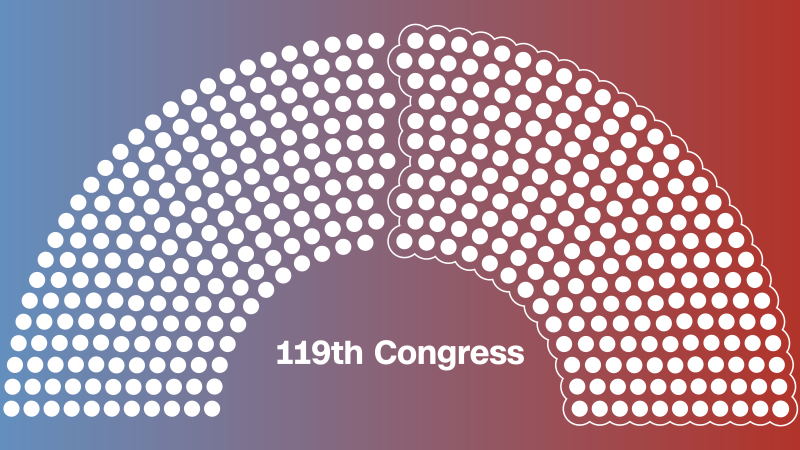
Sandego.net – The House composition has been rapidly evolving, providing Speaker Mike Johnson with slightly more flexibility within his tenuous majority. While the current partisan split stands at 218 Republicans, 212 Democrats, one independent, and four vacant seats, Johnson now holds a margin that allows him to withstand three Republican defections on party-line votes. This adjustment follows recent developments, including the swearing-in of Republican Rep. James Gallagher of California, who replaces the late Rep. Doug LaMalfa.
Although the overall structure remains closely contested, the addition of Gallagher has temporarily bolstered the Republican majority. However, this respite may be fleeting. A special election in California is scheduled for June 16 to determine the next occupant of one remaining vacant seat, with Democrats expected to secure the win. If this occurs, the balance could shift again, potentially reducing the GOP’s lead to 217 to 215. Such volatility underscores the fragility of the current majority, which has been shaped by a series of unexpected events.
A Historic Narrow Majority
Johnson’s leadership is unfolding in a context that echoes the most divided House in nearly a century. The 119th Congress began with a margin of 219 Republicans to 215 Democrats, a figure that mirrors the closest split in American history. The 65th Congress, which convened in the early 1930s, also saw an extremely tight division, with Republicans securing 215 seats and Democrats 214. This rare scenario forced third-party lawmakers to play a pivotal role in determining the speaker, a situation that contrasts sharply with today’s majority.
Yet, the current breakdown is not as historically unique as it initially appears. The 72nd Congress, which started in March 1931, faced a similar challenge. At the official beginning of that term, Republicans held 217 seats to Democrats’ 216, with one independent and one vacant seat. However, by the time the chamber convened for legislative business in December 1931, the balance had shifted due to additional deaths and special elections. This shift, which flipped control to Democrats, marked the last time a minority in the House held 215 or more seats.
The dynamics of the House have always been influenced by temporary vacancies. In the 119th Congress, the death of Florida Rep. Matt Gaetz reduced the Republican count to 219, while Democrats held 215. This loss of a single seat created a critical threshold for passing legislation, as the magic number for a majority is 218 when all 435 seats are filled. With four vacancies, the required number for a majority drops to 218, but the margin remains precarious.
The magic number is 218 if every member shows up to vote and all 435 seats are filled, but that can change if there are vacancies or absences.
Legislative Challenges Amid Tight Margins
Despite the slight advantage, congressional Republicans face significant hurdles in advancing their agenda. The narrow majority has left little room for error, particularly in the wake of recent partisan tensions. For instance, the passage of Trump’s sweeping tax and spending cuts package in July required a delicate coalition. While the GOP secured the necessary votes, two key members—Kentucky’s Rep. Thomas Massie and Pennsylvania’s Rep. Brian Fitzpatrick—defected to the Democratic side, casting doubt on the party’s unity.
These challenges highlight the tension within the Republican ranks. Even with a majority, the party must navigate internal disagreements and external pressures. The current landscape is reminiscent of the 1930s, when the House’s partisan divide forced frequent recalibrations in leadership. Johnson’s ability to maintain control will depend on his capacity to manage both the existing structure and the unpredictable nature of vacancies.
The Role of the Independent Rep. Kevin Kiley
Kevin Kiley, the lone independent, adds an unusual layer to the current dynamics. Though he officially left the Republican Party earlier this year, he continues to caucus with the GOP, effectively functioning as a swing vote. This alignment has provided Johnson with an extra seat, enabling him to weather defections without jeopardizing key legislative efforts.
However, Kiley’s situation is not without complications. His departure from the party was a strategic move, yet his continued support for Republican policies has stabilized the majority. The presence of such a figure underscores the importance of individual lawmakers in shaping the House’s trajectory. If Kiley were to shift allegiance, the balance could tilt further toward the Democrats, potentially altering the course of legislative outcomes.
Historical Comparisons and Modern Implications
The current House majority mirrors historical precedents, yet the challenges are distinctly modern. In the 1930s, the Farmer-Labor Party played a crucial role in breaking ties, but today’s politics are dominated by a two-party system. The 119th Congress, however, has seen a similar need for decisive action, as the narrow margin forces lawmakers to prioritize consensus.
While the 65th Congress had the closest split in American history, the 119th Congress presents a different scenario. The modern House is more polarized, with ideological divisions intensifying the stakes of each vote. Johnson’s leadership is now a test of resilience, as he navigates a chamber where every defection can impact the final result.
Implications for Future Legislation
With the House’s margins so tight, the success of major initiatives hinges on every vote. The recent tax and spending cuts package, for example, required a narrow coalition to pass, despite internal GOP fractures. This pattern suggests that future legislation may also face similar hurdles.
Republicans must also contend with the potential for further vacancies. The death of a member or a resignation could create another opening, shifting the balance once more. Such scenarios are not uncommon, as the House has historically adapted to changing circumstances. The upcoming special election in California exemplifies this trend, offering a glimpse into how the majority might evolve in the coming months.
Conclusion: A Crucible for Congressional Leadership
The House’s current configuration serves as a crucible for congressional leadership, testing the ability of Speaker Johnson to maintain control amid uncertainty. While the narrow majority provides some breathing room, it also demands vigilance. The historical parallels to the 1930s emphasize that the House’s fate is often determined by the interplay of vacancies, special elections, and internal party cohesion.
As the 119th Congress progresses, the focus will remain on how the GOP can leverage its slim majority to enact priorities. The recent struggles with Trump’s agenda suggest that unity is not guaranteed, and the specter of a Democratic shift looms. In this environment, every vote carries weight, and the House’s ability to function will be closely watched.
This story and headline have been updated with additional developments. CNN’s Veronica Stracqualursi and Zach Wolf contributed to this report.