Trump Challenges FIFA’s Red Card Decision for Balogun, Calls for Review
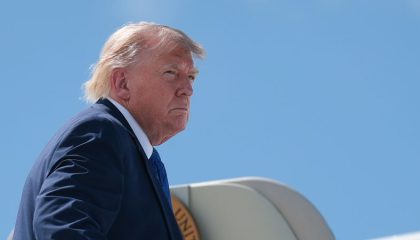
Sandego.net – President Donald Trump sparked a fresh wave of debate over the controversial red card issued to U.S. soccer star Folarin Balogun during the World Cup, asserting that he personally requested FIFA president Gianni Infantino to reassess the decision. The incident, which occurred in a high-stakes match against Belgium, has raised questions about the fairness of disciplinary actions in international football. Trump’s intervention highlights the tension between political influence and sports officiating, with his remarks underscoring a broader effort by U.S. officials to shape the outcome of the case.
Controversy Over Balogun’s Suspension
FIFA announced on Sunday that Balogun would be eligible to return for the Round of 16 game against Belgium, a decision that immediately drew scrutiny. The move prompted critics to question whether the tournament’s integrity was compromised. Balogun, a key player for the U.S. team, was sent off after a collision during a critical moment in the match, which many viewed as a pivotal point in the game. The incident was reviewed by a video assistant referee, who flagged the play for further analysis. Despite the referee’s initial ruling, the decision to issue a red card and one-game ban was made by FIFA’s independent Disciplinary Committee.
“
All I did was ask for a review. I didn’t say, ‘You have to do this,’
”
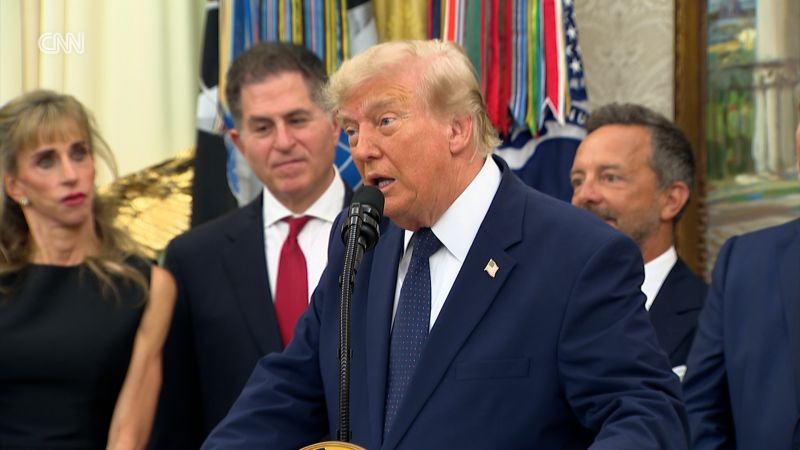
Trump emphasized that his role was limited to seeking clarification, not directing FIFA’s actions. “I didn’t think it was a foul,” he stated from the Oval Office, describing the collision as a “chance encounter between two players running full speed.” According to the president, the incident was a “fair coming together” of athletes, with no clear foul committed by Balogun. “He didn’t do anything wrong,” Trump added, suggesting the decision was made without sufficient evidence.
Political Push to Influence the Decision
The White House’s World Cup task force, led by Andrew Giuliani, was involved in efforts to sway FIFA’s ruling, a source familiar with the matter told CNN. Commerce Secretary Howard Lutnick and other U.S. officials reportedly joined in a coordinated campaign to argue for Balogun’s reinstatement. Giuliani confirmed that discussions about the appeal began immediately after the red card was given, with the goal of “correcting an injustice.” However, he stressed that the U.S. team’s focus was on the specific case, not on altering FIFA’s procedural standards.
Infantino, who has maintained a close relationship with Trump, acknowledged the call but reaffirmed that the decision was made independently. “During our conversation, I explained that there was an ongoing legal process involving FIFA’s independent judicial bodies,” he said in a statement posted on X. “The case would be decided in due course by the competent bodies. That is how FIFA’s system works, and it is a principle I will always uphold.”
Referee’s Integrity Under Scrutiny
Trump’s comments extended to questioning the referee’s credibility, labeling him as “a little bit suspect.” He urged reporters to investigate the official’s past decisions, implying that the red card might have been influenced by bias or external pressures. “If there’s any doubt about the call, we should look into it,” Trump said, adding that the referee’s judgment appeared to be “on the line” during the incident. This critique has fueled discussions about whether the red card was a fair punishment or an overreach in the heat of the moment.
While the referee initially ruled the play as a fair challenge, the video assistant referee’s intervention revealed new evidence. Slow-motion replays, which are uncommon in World Cup matches, showed that Balogun’s spike had caught the ankle of the Bosnian opponent. The decision to send him off was based on the interpretation of “serious foul play,” a charge that has divided opinions among fans and analysts. The incident has become a focal point for debates over the rigor of disciplinary procedures in high-profile games.
Reactions from U.S. Officials and Critics
Trump’s remarks have been met with mixed reactions. While some U.S. officials, like Giuliani, framed the effort as a way to “better understand the reason for the red card,” others have criticized the level of political involvement. The president’s claim that he “understands sports really well” has been seen as a bid to bolster his credibility in the dispute. Meanwhile, the controversy has drawn attention from figures beyond the White House, including New York Mayor Zohran Mamdani.
Mamdaani, known for his vocal opinions on sports and politics, took to his “Morning Pitch” video stream to express his frustration with the decision. “Cruelly sent off,” he lamented, calling the red card “unfair” and highlighting the potential impact on Team USA’s World Cup prospects. When a reporter pointed out that Mamdani had not commented on FIFA’s reversal of the suspension, he responded with a meme of European manager Jose Mourinho, captioned: “
I prefer really not to speak. If I speak — big trouble. Big trouble. I don’t want to be in big trouble.
” The meme, widely shared on social media, underscored Mamdani’s alignment with Trump’s stance on the issue.
The incident has also raised broader questions about the balance between political influence and football’s governing bodies. FIFA’s process, which involves an independent disciplinary committee, is designed to ensure impartiality. However, Trump’s direct engagement with Infantino has led to speculation that the decision might have been swayed by external pressures. “I didn’t tell him what to do, I can’t tell him what to do,” Trump reiterated, emphasizing that the final call rested with FIFA’s judicial bodies.
Impact on the Tournament and Future Matches
Despite the controversy, FIFA’s decision to reinstate Balogun for the Round of 16 has allowed the U.S. team to continue their campaign. Trump, however, warned that the red card could leave a “big stain” on the tournament if the suspension had stood. The president’s comments are expected to further intensify the debate, with critics arguing that the case demonstrates a lack of transparency in FIFA’s disciplinary process. Meanwhile, supporters of the decision maintain that the independent committee’s ruling was justified, pointing to the evidence provided by the video review.
The incident has also highlighted the role of technology in modern football, as the video assistant referee’s intervention revealed details that were not immediately apparent. While such tools are meant to enhance accuracy, their use in this case has sparked discussions about the speed and thoroughness of the review. Trump’s insistence on scrutinizing the referee’s past decisions reflects a growing trend of leveraging media and public opinion to pressure sports governing bodies. This approach has been both praised and criticized, with some viewing it as a necessary step to ensure fairness, while others see it as an overreach of presidential authority into sports governance.
As the World Cup progresses, the Balogun controversy serves as a reminder of the high stakes involved in international competitions. The interaction between Trump and Infantino underscores the potential for political figures to influence decisions, even in contexts where impartiality is paramount. For now, the red card remains a flashpoint, with debates over its fairness likely to continue as the tournament moves forward. Whether the decision was the result of a rigorous process or external influence will be a topic of discussion for fans, analysts, and officials alike in the days ahead.