Supreme Court’s Evolving Stance on Transgender Rights Since 2020
How the Supreme Court has changed – Over the past few years, the Supreme Court has increasingly positioned itself as a pivotal arbiter in the debate over transgender rights, with its rulings reflecting a complex interplay of legal reasoning, political ideology, and societal values. A notable shift occurred in 2020, when the Court’s decision in Bostock v. Clayton County redefined the scope of federal anti-discrimination protections for transgender individuals. The case, which centered on the interpretation of Title VII of the 1964 Civil Rights Act, marked a turning point by extending workplace equality to include gender identity, a development that surprised many observers. Justice Neil Gorsuch, whose textualist approach to the law was instrumental in the ruling, wrote that the phrase “because of … sex” in the Act inherently encompasses transgender employees. This conclusion, though rooted in legal analysis, sparked both celebration and resistance, illustrating the polarizing nature of the issue.
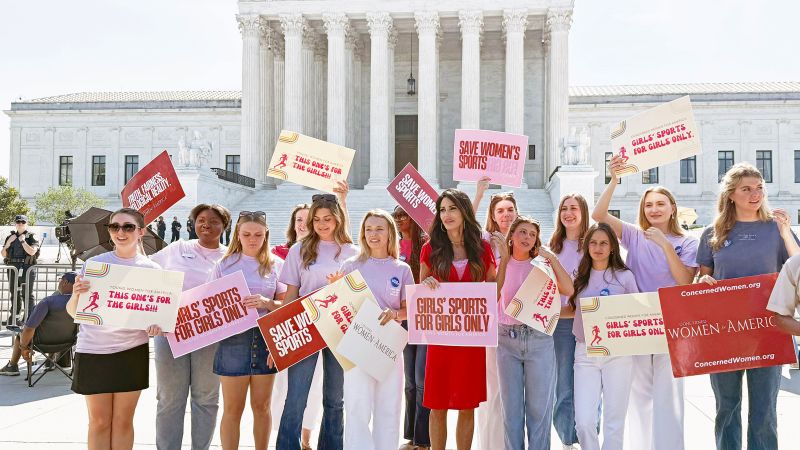
Yet, the Court’s subsequent decisions have revealed a more nuanced and contentious trajectory. Last week’s 6-3 ruling in West Virginia v. Bostock upheld state laws that prohibit trans women from competing in female sports teams, reinforcing a trend of judicial support for restrictions on transgender participation in athletics. The majority opinion, authored by Justice Brett Kavanaugh, emphasized concerns about fairness and safety, citing biological differences between genders as a justification for such bans. Kavanaugh’s argument drew on the idea that male athletes generally possess inherent physical advantages, which he claimed could undermine the integrity of women’s sports. This reasoning has been echoed by conservative advocates, including First Lady Melania Trump, who recently posted on X: “As many of you know, I fully support the LGBTQIA+ community. But we must also ensure that our female athletes are protected and respected.”
From Legal Breakthrough to Polarized Jurisprudence
While the 2020 Bostock decision was hailed as a victory for LGBTQ rights, it has since become a focal point for debates about the Court’s ideological balance. The ruling, which relied on a narrow interpretation of Title VII, was unexpected given the composition of the Court at the time. Gorsuch’s majority opinion was joined by four liberal justices—Kagan, Sotomayor, Kagan, and Roberts—alongside conservative Justice John Roberts. This unusual alignment underscored the broader implications of the case, as it suggested that even within the conservative bloc, there was room for progressive interpretations of the law. However, the decision did not solidify a sweeping endorsement of transgender rights across all legal domains.
Since then, the Court has taken steps to roll back protections in other areas. In recent months, it has allowed states to limit access to certain medical care for trans youth, permitting the Trump administration to exclude transgender individuals from military service, and requiring passports to reflect an individual’s biological sex. These rulings have created a legal landscape where transgender people are increasingly subjected to scrutiny, with their rights often framed as a matter of public policy rather than constitutional entitlement. As Columbia University law professor Suzanne Goldberg noted, “Law is being used to scapegoat transgender people. We can see it in restrictions that cordon off transgender individuals from almost every area of civic life, in schools, in getting a passport, from serving in the military, in getting healthcare.”
The expansion of anti-trans legislation has been particularly pronounced in states with conservative leadership. Over the past six years, 27 states have enacted laws that bar transgender women from participating in women’s sports teams, a number that has grown alongside the Court’s willingness to uphold such measures. This legislative surge, combined with the Court’s active role in shaping legal interpretations, has contributed to a national trend of tightening restrictions on transgender rights. The recent West Virginia case exemplifies this pattern, as it not only validated state laws but also solidified the Court’s position as a defender of traditional gender roles in public life.
Political Dynamics and Judicial Philosophy
The Court’s evolving stance on transgender rights is deeply intertwined with broader political shifts. The appointment of Amy Coney Barrett to replace Justice Ruth Bader Ginsburg in October 2020 altered the ideological balance of the Court, shifting its composition toward a more conservative alignment. This change has been reflected in the majority’s decisions, which increasingly prioritize individual rights based on biological sex over protections for gender identity. For instance, in the West Virginia ruling, the Court dismissed lower court decisions that had favored trans athletes, arguing that the bans violated neither Title IX nor the Constitution’s equality guarantee.
Political campaigns have also played a role in shaping this trajectory. In his 2024 bid for the presidency, Donald Trump targeted trans and LGBTQ communities, framing them as obstacles to conservative values. Republican campaign ads highlighted Vice President Kamala Harris’s support for LGBTQ rights, closing with the slogan, “Kamala is for they/them. President Trump is for you.” This rhetoric has resonated with voters, contributing to a climate where transgender issues are often politicized. Meanwhile, public opinion has shifted, with Pew Research reporting a growing divide over trans rights. While support for gender identity remains strong in certain demographics, others have grown more skeptical, aligning with the Court’s decisions to limit legal protections.
The Court’s decisions have also deepened divisions among its justices. In recent cases, the majority has repeatedly overturned rulings that extended equality to transgender individuals, while dissenting justices have argued for broader interpretations. For example, in West Virginia v. Bostock, Justice Sonia Sotomayor expressed concern over the impact of the bans on trans girls, noting that they “deny a similar competitive experience” to cisgender athletes. Conversely, the majority has framed the issue as one of preserving the essence of sports, with Kavanaugh asserting that separate teams for biological males and females are “reasonable” and necessary to ensure fairness.
Transgender individuals, who constitute approximately 1% of the U.S. population, have thus become a lightning rod for political and legal controversy. Their visibility in public spaces—such as schools, military bases, and sports arenas—has amplified the stakes of these debates. While the 2020 Bostock ruling was a landmark moment, its legacy has been tempered by the Court’s subsequent actions, which have created a legal environment where transgender rights are both celebrated and contested. As the nation continues to grapple with these issues, the Supreme Court remains at the center of the discourse, its decisions shaping the future of equality for transgender people.
Ultimately, the Court’s journey from Bostock to the recent sports decision highlights the dynamic nature of legal interpretation in a politically charged climate. While the 2020 ruling expanded protections, the latest decisions reflect a growing emphasis on traditional definitions of gender and the prioritization of state authority over federal mandates. This evolution underscores the ongoing tension between individual rights and collective identity, with transgender individuals at the heart of the debate. As the Court continues to navigate these complex issues, its rulings will likely remain a defining feature of the nation’s legal and social landscape.