How the Supreme Court Became a Political Force Reshaping America
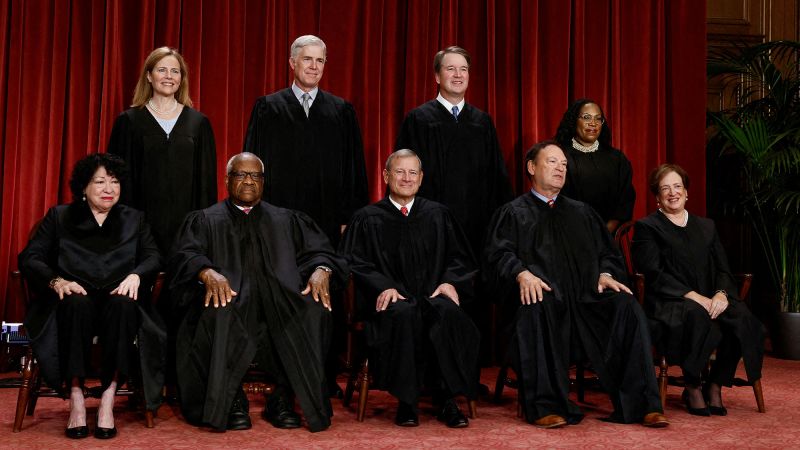
Sandego.net – Over the past few years, the Supreme Court has emerged as a central player in American politics, often viewed as a mechanism that transcends traditional legislative boundaries. The nine justices, once seen as neutral arbiters of the law, now find themselves at the heart of heated debates over societal norms, electoral procedures, and the balance of power between branches of government. This shift has been particularly pronounced under the leadership of President Donald Trump, whose administration has consistently sought to leverage the judiciary to advance its agenda. As the court’s rulings increasingly reflect the ideological priorities of the current administration, its role in shaping the nation’s trajectory has become more contentious than ever.
The Court’s Judicial Overreach in a Polarized Era
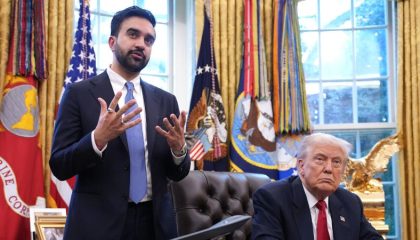
With the political landscape divided into stark ideological factions, the Supreme Court has taken on the responsibility of resolving disputes that other institutions have failed to address. From social issues to electoral systems, its decisions have often become symbolic of broader cultural and political battles. Trump, in particular, has been a driving force behind this trend, using the court as a tool to challenge established norms and push the boundaries of executive authority. Even when his cases were lost, he frequently framed them as victories, amplifying their political impact through strategic rhetoric and public narratives.
“The court’s decisive voice on the country’s most intractable questions has often made it seem like a governing force itself, rather than the modest branch that Chief Justice John Roberts has said simply calls legal and constitutional balls and strikes.”
Roberts, who has long emphasized the court’s role as a referee, has found his position contested by both parties. The court’s ideological polarization has intensified, with its rulings frequently mirroring the partisan divisions that dominate the public sphere. This dynamic has led to a perception that the court is not merely interpreting the law but actively reshaping the political landscape. The recent surge in rulings that align with Trump’s vision of power has further cemented this view, prompting critics to question whether the judiciary has become a branch of the executive in disguise.
Key Decisions and Their Political Implications
One of the most significant developments in this shift has been the court’s handling of social and cultural issues. From overturning abortion rights to redefining citizenship, its decisions have had far-reaching consequences. The 2022 ruling on abortion rights, for instance, marked a pivotal moment for conservative activists, who saw it as a decades-long triumph. Similarly, the court’s approach to transgender rights and other identity-based controversies has positioned it as a key actor in shaping the nation’s values. These rulings often reflect a broader alignment with the administration’s goals, blurring the line between judicial interpretation and political strategy.
In addition to social issues, the court has also influenced the electoral system. Recent decisions have redefined the rules of campaign finance, voting rights, and the role of independent agencies. Notably, a landmark ruling in 2024, stemming from Trump’s criminal cases, granted former presidents broad immunity for official actions. This decision has been interpreted as a shield against accountability, reinforcing Trump’s belief in the limitless reach of executive power. The court’s willingness to extend this protection has further underscored its role in enabling the administration’s agenda, even as it remains a symbol of judicial independence.
Historical Context and Ideological Shifts
While the current era of judicial politicization may feel unprecedented, it is not the first time the Supreme Court has been entangled in the nation’s political struggles. Throughout history, its rulings have often reflected the prevailing ideological currents of the time. For example, during the era of slavery, the court played a critical role in upholding the institution, while its intervention during the New Deal era temporarily curbed President Franklin D. Roosevelt’s ambitions. Even in more recent times, the court’s 2015 legalization of same-sex marriage was seen as a harbinger of a more progressive age.
However, the current situation is distinct in its scale and the level of public scrutiny. The court’s decisions are now framed as battlegrounds for ideological dominance, with each ruling carrying symbolic weight. The appointment of Amy Coney Barrett to the court in 2020, following the death of Justice Ruth Bader Ginsburg, has been particularly contentious. Democrats argued that the process was rushed and politically motivated, while Republicans defended it as a necessary action to secure a conservative majority. This episode highlighted the court’s role in shaping the nation’s political future, with its composition directly influencing the outcomes of high-stakes cases.
Trump’s influence on the court has been both direct and indirect. His repeated efforts to appoint judges who align with his vision have transformed the judiciary into a key component of his political strategy. The justices’ growing skepticism toward corporate regulation, for instance, aligns with his goal of reducing the power of large entities in shaping policy. This has led to a perception that the court is not only interpreting the law but also advancing a broader agenda that seeks to limit the reach of federal oversight.
The Broader Impact on American Governance
The court’s increasing political role has sparked debates about its legitimacy and the separation of powers. Critics argue that the current conservative majority has prioritized ideology over impartiality, leading to a judiciary that is more responsive to partisan interests. This has been exacerbated by the justices’ public exchanges and dissents, which have become focal points for political discourse. The recent confrontation between Justices Samuel Alito and Sonia Sotomayor, for example, has underscored the intensity of ideological divides within the court.
Despite these challenges, the court’s decisions continue to shape American society in profound ways. From redefining rights and responsibilities to altering the rules of governance, its influence extends beyond the courtroom. As the second Trump term progresses, the court’s role in political realignment is likely to grow, with its rulings serving as both a reflection of and a catalyst for the nation’s evolving political dynamics. Whether this marks a new era of judicial activism or a temporary shift in the balance of power remains a subject of debate, but one thing is clear: the Supreme Court is no longer just a constitutional body—it is a central force in the American political system.
In conclusion, the court’s transformation into a political actor has been driven by a combination of factors, including Trump’s strategic appointments, the public’s heightened awareness of judicial tensions, and the expansion of executive authority. While its role as a guardian of the Constitution remains intact, its decisions increasingly carry the weight of ideological conviction. As the nation moves forward, the Supreme Court will likely continue to play a defining role in the shaping of American politics, ensuring that its influence remains as significant as ever.