
Frustration Grows as Houthis Widen Conflict
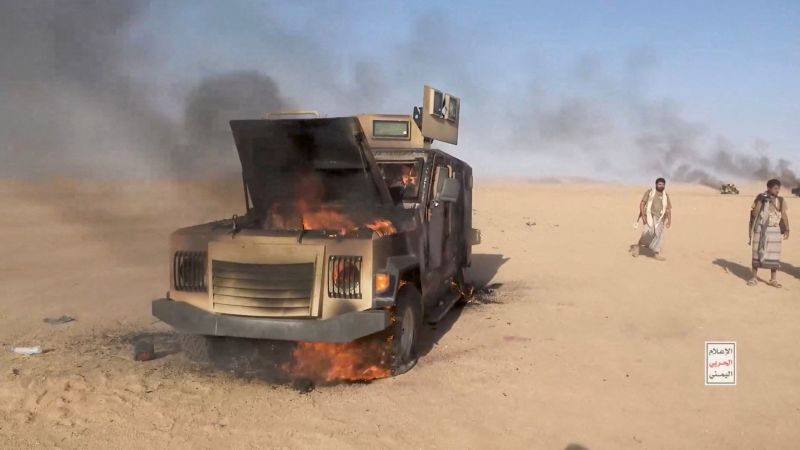
Sandego.net – Frustration grows as Houthis widen their campaign in Yemen and the Red Sea region, increasing pressure on Saudi Arabia and raising fears over a crucial international shipping route. The Iran-backed movement’s seizure of a strategically important Red Sea island and advances along Yemen’s coast have added to concern during the US war with Iran and a global energy crisis.
The Bab al Mandeb Strait is central to those concerns. The narrow passage connects the Red Sea and the Gulf of Aden, carrying commercial traffic between Asia, Europe and the Mediterranean through the Suez Canal. US officials believe the Houthis may be seeking longer-term leverage over the waterway.
US intelligence assessments had warned for months that the group could try to restrict another major commercial route after Iran’s actions earlier this year. Washington, however, has shown limited willingness to launch direct military action, leaving Saudi Arabia and its Yemeni allies to carry much of the response.
Saudi-backed forces face a renewed test
Saudi-backed Yemeni government forces have been fighting the Houthis for more than a decade, since the start of Yemen’s devastating civil war. Iran’s Islamic Revolutionary Guard Corps has provided the Houthis with support and training, while Saudi Arabia has backed Yemen’s internationally recognized government.
A United Nations-brokered truce in 2022 reduced violence for a time, but fighting has escalated sharply in recent weeks. Saudi Arabia has trained Yemen’s government military for roughly a decade and had assured US officials that those forces could respond effectively.
That assessment is being tested. Despite expanded US intelligence sharing and targeting assistance, Saudi Arabia has not stopped the Houthis from capturing key coastal towns. Regional officials and former diplomats have questioned whether Saudi-backed forces can halt the advance without more direct American support.
The challenge extends beyond weapons and intelligence. A prolonged operation against an entrenched armed movement requires capable local forces, reliable supply routes and a clear political and military objective.
Missiles and drones increase the pressure
The conflict has moved closer to Saudi population centers. Saudi authorities accused the Houthis of attempting to strike Mecca, while the Houthis said they had shot down a Saudi F-15 fighter jet.
Alerts sounded across Riyadh, marking the first direct threat to the Saudi capital since the latest escalation began in July. The Houthis said they used missiles and drones against what they called sensitive sites in Riyadh and an Aramco facility in Yanbu.
Video showed black smoke near Riyadh’s main airport, although the cause was unclear. Saudi Arabia later said its air defenses destroyed a ballistic missile aimed at Riyadh at dawn and intercepted other attempted attacks elsewhere in the kingdom.
Frustration grows as Houthis widen both their territorial operations and their long-range attacks. Their ability to combine coastal gains with missile and drone strikes has made the group a significant regional force affecting Saudi security, energy concerns and international shipping.
Why the US role remains limited
President Donald Trump has ruled out direct US participation in offensive military action against the Houthis. American support has been limited to intelligence and targeting information used in Saudi operations.
US officials say Saudi Arabia has the support it needs. But the lack of US military action has fueled doubts among Gulf partners, who see Washington’s stance as a sign of reluctance to intervene on behalf of regional allies.
FAQ: Houthi Escalation and Saudi Arabia
Why does the Bab al Mandeb Strait matter?
The strait is a major route for ships traveling between Asia, Europe and the Mediterranean via the Suez Canal. Disruption there can affect commercial shipping, energy supplies and trade routes.
What support is the United States providing?
The United States is providing intelligence and targeting assistance for Saudi operations, but has not committed to offensive strikes against the Houthis.
Why is Saudi Arabia under pressure?
Saudi Arabia is confronting Houthi gains in Yemen while also defending against missile and drone attacks. Its Yemeni allies are expected to play a major role in resisting the group’s advance.