Former US Archivists Warn on Records Law
Sandego.net – Former US archivists warn that the Trump administration’s attempt to sidestep the Presidential Records Act jeopardizes national security and government continuity. A coalition of seven former heads of the National Archives filed a brief with a federal appeals court on Wednesday, asking judges to strike down the executive branch’s bid to ignore Congress’s decades-old mandate to retain every official record generated during a presidential tenure.
The signatories represent an unprecedented breadth of institutional memory. Together, Trudy Huskamp Peterson, John W. Carlin, David S. Ferriero, Debra Steidel Wall, Colleen Shogan, and William J. Bosanko — along with Gary M. Stern, a former agency general counsel — account for every individual still living who has previously occupied the archivist position. Their collective service spans administrations of both parties, lending the filing a bipartisan weight that critics say is difficult to dismiss as partisan maneuvering.
The Law at Issue and Its Origins
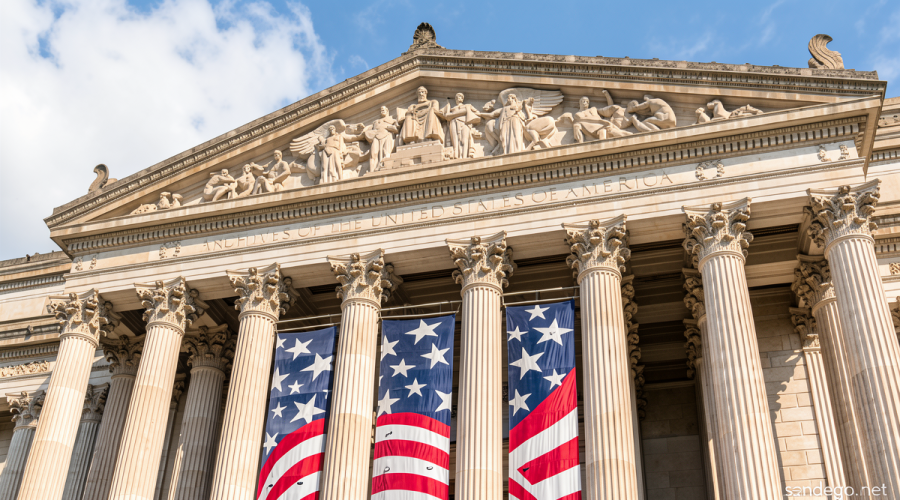
The Presidential Records Act, enacted by Congress in the aftermath of the Watergate scandal, obliges presidents and their White House staff to preserve all official records and transfer them to the National Archives upon leaving office. Its purpose is straightforward: to ensure that future presidents, members of Congress, federal courts, and the general public retain the ability to examine how an administration arrived at major policy decisions.
The current dispute traces back to a memo issued by the Office of Legal Counsel, a Justice Department unit that advises the executive branch. That memo concluded the PRA is unconstitutional — a position the former archivists describe as an audacious departure from Supreme Court precedent affirming Congress’s authority to regulate presidential record preservation. The memo’s scope addressed only email and text messages rather than the full universe of electronic records the statute covers, a narrowness the brief’s authors flag as another reason the guidance cannot stand.
What the Archivists Argue
Former US archivists warn that the stakes extend far beyond paperwork. In their filing, the former leaders frame the statute not as bureaucratic ritual but as a mechanism of statecraft. They write that the PRA
“helps to bridge the gap between the outgoing and incoming administrations.”
They press the point with urgency, noting that
“Geopolitical tensions do not pause for an inauguration.”
The brief details what is at stake in the files: the complete holdings of the National Security Council, including sensitive intelligence assessments, treaty negotiations, and operational contingency plans. Preserving those documents, the archivists argue, allows incoming national security advisors and cabinet officials to evaluate active threats, maintain diplomatic momentum, and make informed decisions during unexpected global crises.
They also draw on practical experience. In their years at the helm of the agency, the most common request for preserved presidential records came not from journalists or academics but from the incoming president’s national security advisors.
“Preserving presidential records ensures that new leaders can have immediate and ongoing access to the data, strategy, and rationale behind past policy decisions.”
The Litigation Path
The underlying lawsuit was filed swiftly by the American Historical Association and the government-transparency organization American Oversight, which warned that presidential records intended for research
“will be irretrievably lost”
if the courts did not intervene. In May, US District Judge John Bates in Washington concluded that the PRA was likely constitutional, rebuking the Justice Department’s earlier stance. He ordered White House staff to continue preserving their official records while the litigation proceeds, though he declined to impose direct restrictions on the president, the vice president, the National Archives, or the archivist personally.
Former US archivists warn that the October 16 oral-argument session before the US DC Circuit Court of Appeals will be a defining test of executive-branch claims over congressional record-keeping authority. The Justice Department has appealed Judge Bates’s ruling, and the former archivists’ brief lands squarely in the middle of that appeal.
FAQ
What is the Presidential Records Act? Enacted after Watergate, the PRA requires every president and White House staff member to preserve official records and transfer them to the National Archives at the end of a term.
Related Reading