
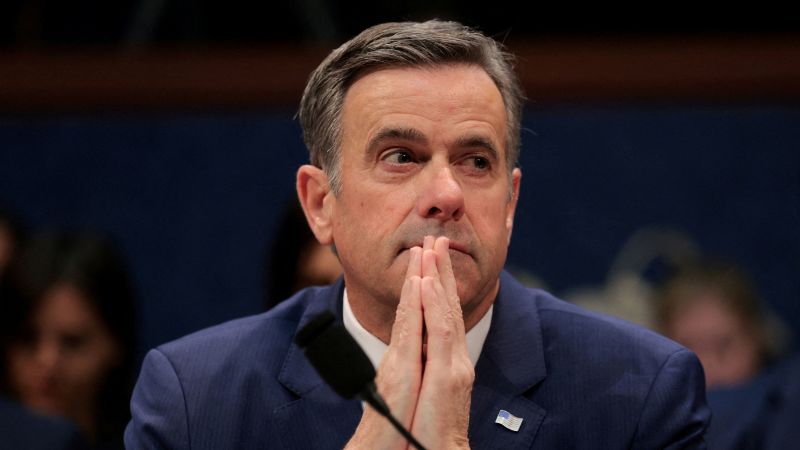
CIA Chief Was in Moscow: NATO Warning, Iran Pressure
Sandego.net – CIA chief was in Moscow this week on a quiet, unannounced mission with two clear objectives: deliver a direct caution to the Kremlin against any military incursion into NATO territory, and push Moscow to tighten its economic and military grip on Iran. Two sources familiar with the operation confirmed the scope of the trip, which represented the first known visit by a senior Trump administration official to the Russian capital in several months.
A Historical Parallel That Cannot Be Ignored
The NATO element of the trip lands in deeply charged historical context. The last time a CIA director crossed into Moscow to deliver a cautionary message to the Kremlin was in 2021, when William Burns, then serving under the Biden administration, warned Vladimir Putin against launching a full-scale invasion of Ukraine. Russia crossed into Ukraine roughly three months after that meeting. American and European officials have grown increasingly alarmed by signals suggesting Putin may probe NATO’s collective defenses with a limited strike — potentially aimed at one of Moscow’s smaller neighbors while the grinding war in Ukraine continues without resolution.
Recent Western intelligence assessments, as previously detailed in reporting, outline several escalation scenarios Putin could pursue within the coming years. These range from a coordinated cyberattack to a small-scale ground incursion designed to test NATO’s unity and its commitment to Article 5 — the treaty provision stipulating that an armed attack on one member constitutes an attack on all — without necessarily crossing the threshold that would trigger a full allied military response. Sources familiar with the assessments indicate the Baltic states of Estonia, Latvia, and Lithuania, or Poland, represent the most probable flashpoints for such a move, though the precise timing and method remain uncertain.
Recent Incursions and the Kremlin’s Response
The concern is not purely theoretical. Over the past several years, Russian forces have repeatedly brushed against NATO airspace and territory. In May, a drone carrying explosives struck an apartment building in Romania while Russian forces were attacking a nearby Ukrainian port, injuring two civilians. Last September, NATO fighter jets downed multiple Russian drones that had violated Polish airspace during a broader strike on Ukraine. Earlier this month, American authorities assessed that an explosive-laden drone discovered at a German airport belonged to a Russian intelligence service. Each incident, individually contained, collectively erodes the margin of safety that has kept the alliance’s eastern flank from sliding into direct confrontation.
Kremlin spokesperson Dmitry Peskov addressed the visit on Wednesday, confirming that Ratcliffe did not meet with Putin during his time in Moscow. He described the encounter as a working-level discussion rather than a summit-level meeting, reinforcing the discreet, back-channel character of the trip.
Trump Downplays the Threat
President Trump, however, has been quick to minimize the prospect of a Russian strike on NATO soil. Speaking in the Oval Office to a journalist, he said:
“I’ve had good talks with him. He’s not going to be attacking a NATO territory.”
When pressed specifically on whether Ratcliffe had delivered such a warning to Putin, Trump offered a vaguer answer:
“I don’t want to comment on that, but they’re not going to attack.”
Earlier in the week, during a radio interview with Glenn Beck, the president characterized the Moscow trip as routine:
“He’s there, you know, very sort of semi-routine. I hate to disappoint people. We would like to see the war with Ukraine end.”
Asked whether the visit was intended to raise concerns about Russian designs on NATO territory or to seek Moscow’s cooperation in reopening the Strait of Hormuz, Trump dismissed both framings:
“John Ratcliffe is a fantastic guy. He’s the head of the CIA, and he is not in there for any of the things that you said.”
The Iran Dimension
Beyond the NATO question, the trip served a second strategic purpose: pressuring Russia to reduce its economic and military lifeline to Iran. The administration’s broader campaign to choke off Tehran financially gains leverage when Moscow, a longtime Iranian ally, is asked to tighten its own support. Encouraging Russia to pull back on arms shipments, energy deals, or financial channels to Iran would compound the pressure of existing sanctions and trade restrictions, narrowing Tehran’s options as the administration pursues its objectives in the region.
Frequently Asked Questions
Why did the CIA chief travel to Moscow without public announcement? The unannounced nature of the trip allowed Ratcliffe to deliver a direct, back-channel message to Kremlin officials without the amplification and political pressure that a publicized visit would generate. It also preserved flexibility for both sides to shape the narrative afterward.
Did Ratcliffe meet with President Putin? No. Kremlin spokesperson Dmitry Peskov confirmed on Wednesday that no meeting with Putin took place during the visit. The discussions were conducted at a working level.
What is Article 5 and why does it matter here? Article 5 of the North Atlantic Treaty states that an armed attack against one NATO member is considered an attack against all members, obligating collective defense. A limited Russian incursion into a Baltic state or Poland would test whether the alliance treats such a strike as an Article 5 trigger or as a contained incident.
How does the Iran element connect to the NATO warning? The two objectives are linked by the administration’s broader strategy of isolating both Moscow and Tehran economically. By asking Russia to curtail its support for Iran, Washington compounds existing sanctions pressure on Tehran while simultaneously signaling to Moscow that continued entanglement with Iran carries diplomatic costs.