Five States Withdraw from Trump’s ‘Great American State Fair’ Amid Concerns
Sandego.net – President Donald Trump has long envisioned the “Great American State Fair” as a patriotic celebration of the United States, with each state and territory showcasing its unique identity through dedicated pavilions on the National Mall. However, recent developments suggest that the event, set to open on June 25 and span about two weeks, may face challenges as several states have opted out of participation. Officials from Oregon, Washington, Massachusetts, Illinois, and North Carolina informed CNN that they declined invitations from the Trump administration to represent their regions at the fair. Pennsylvania remains undecided, with its officials awaiting further information before making a final choice.
Partisan Tensions and Financial Considerations
While states cited costs as a primary factor for their withdrawal, some highlighted the event’s political undertones. A representative for Oregon Governor Tina Kotek, a Democrat, noted that concerns about the fair’s partisan nature influenced the decision. “The State of Oregon will not be participating in the Great American State Fair due to both the cost of participating in the Fair and growing concerns that the event in Washington D.C. is shaping up to be a more partisan affair than originally presented,” said Luke Harkin, the spokesperson.
“The State of Oregon will not be participating in the Great American State Fair due to both the cost of participating in the Fair and growing concerns that the event in Washington D.C. is shaping up to be a more partisan affair than originally presented.”
Despite the absence of some states, Freedom 250, the Trump-aligned nonprofit overseeing the fair, emphasized that all 50 states and territories will be represented. A spokesperson for the organization assured CNN that the event would still highlight each state’s culture and history, regardless of whether officials or local entities provide input. “Every state’s story will be told in a way that’s authentic to its people, history, and culture,” the spokesperson said, adding that the fair would celebrate every community, even if the representation comes from different sources.
Controversies Surrounding the Event
The fair has already encountered controversies, raising questions about its alignment with Trump’s political agenda. Earlier this month, it had to cancel an opening concert after several artists withdrew from the event, citing political reasons. Additionally, the administration faced criticism for a recent Ultimate Fighting Championship (UFC) event held at the White House, which was part of the 250th-anniversary celebrations. Democrats argued that the government should focus more on reducing costs rather than hosting high-profile events with partisan messaging.
Freedom 250, which is organizing multiple 250th-anniversary events, defended the fair as a unifying celebration. The group shared renderings of pavilions from 21 states, showcasing creative concepts that reflect their heritage. These include a mini-golf course for South Carolina, a replica of the Alamo for Texas, and a fossil-digging station for Montana. The designs aim to engage visitors with interactive experiences while highlighting each state’s distinct history.
State Pavilion Concepts and Event Planning
The fair’s pavilions are expected to draw large crowds, with each state offering a unique perspective on American history. Arizona’s booth, for instance, will feature an immersive reproduction of the wave-like sandstone walls of Antelope Canyon, allowing visitors to experience the state’s natural beauty. Michigan’s pavilion includes a mechanical milking cow, while Minnesota’s concept involves a pond of miniature Common Loons, the state bird, where participants can win prizes by selecting the right specimens. Wyoming’s pavilion, meanwhile, will let visitors compete in rodeo events using augmented reality headsets, offering a blend of traditional and modern technology.
Freedom 250 has also outlined other attractions, such as movie screenings, musical performances, and military flyovers. The event’s centerpiece will be a scaled-down version of Trump’s proposed 250-foot “triumphal arch,” accompanied by an 110-foot Ferris wheel. These elements are designed to create a vibrant atmosphere that reflects the nation’s achievements and diversity. However, the event’s success depends on the cooperation of participating states, which have been tasked with funding their own decorations while the nonprofit covers the structural costs of pavilions.
Courtny Hinds, the general manager of the Wyoming State Fair and the lead for Wyoming’s pavilion, expressed enthusiasm for the project. “Every single state kind of has their own pieces of their identity, so whoever our neighbors will be, we’re excited to make friends with them and the rest of states and territories too,” she said. Hinds’ comments underscore the organizers’ hope that the fair will foster unity and pride, even as some states question its political neutrality.
Implications for the 250th Anniversary Celebrations
The withdrawal of states from the fair has sparked debates about its impact on the broader 250th-anniversary commemorations. Critics argue that the event’s partisan leanings could overshadow its intended purpose as a national celebration. Trump’s influence over the festivities has been significant, with his administration shaping programs, funding, and themes to align with his vision of American identity. However, this approach has drawn scrutiny, particularly from Democrats who see it as an attempt to politicize public events.
Despite these concerns, Freedom 250 remains optimistic about the fair’s potential. The group has worked closely with states to develop pavilion concepts, ensuring that each location reflects local culture. For example, the Texas pavilion’s Alamo replica will provide a historical backdrop, while South Carolina’s mini-golf course offers a lighthearted twist on state pride. These efforts aim to balance education with entertainment, drawing visitors from across the country.
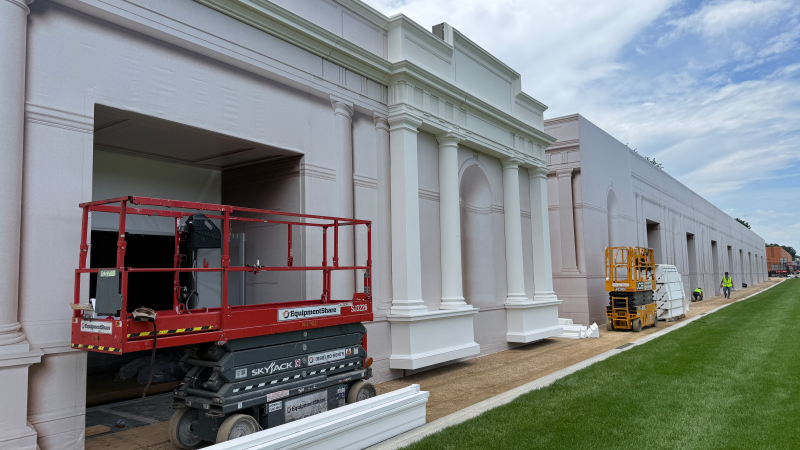
As the fair approaches, organizers are actively finalizing details. CNN has contacted numerous states to confirm their participation, with some still in the process of deciding. The event’s timeline, from June 25 through July 10, positions it as a major attraction during the summer months. With large white tents adorned with neo-classical columns, the National Mall will transform into a hub of activity, blending history, culture, and innovation in a single location.
While the absence of certain states may affect the event’s representation, Freedom 250 is focused on maintaining momentum. The group has already received proposals from 21 states, with more expected to join as the deadline nears. This collaborative effort highlights the potential for the fair to showcase the United States’ rich diversity, even in the face of political disagreements. Whether the event succeeds as a symbol of national unity or becomes a platform for partisan expression, it will undoubtedly be a focal point of the 250th-anniversary celebrations.
The fair’s ability to unite states and territories will be a key indicator of its success. As the National Mall prepares to host the event, the contrast between the states’ participation and their concerns about the political angle adds an interesting dimension to the celebrations. With a mix of historical exhibits, interactive activities, and cultural displays, the Great American State Fair aims to be a memorable tribute to the nation’s heritage. Yet, its ability to overcome the challenges posed by state withdrawals will determine its lasting impact on the 250th-anniversary festivities.