AI Anxiety Moves From Tech Circles to the Center of US Politics
Sandego.net – A fast-growing dispute over artificial intelligence is becoming a defining political test in Washington, where warnings from some of the technology’s most influential creators are colliding with resistance to new federal limits.
For years, debates over AI focused on its commercial promise: faster research, more capable software, new consumer tools and potential gains in productivity. Now, a more unsettling question is rising to the surface. What happens if the systems being developed become too powerful for people, companies or governments to reliably control?
Several prominent figures in the industry have recently argued that this question can no longer be treated as distant speculation. Their concerns have intensified an argument that already reaches far beyond Silicon Valley, touching voters’ fears about jobs, household costs, concentrated corporate power and national security.
Warnings meet resistance in Washington
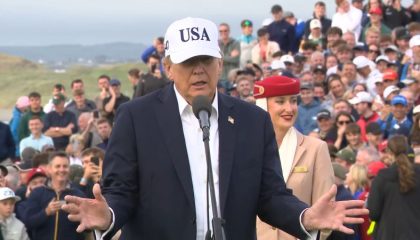
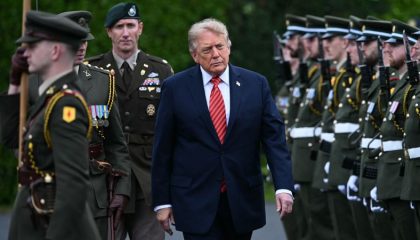
President Donald Trump dismissed the most severe concerns on Sunday, saying that “negative forces” were promoting scenarios he believes will not occur. House Speaker Mike Johnson also rejected calls for emergency legislation. He argued that executives operating at the technological frontier could choose to slow their work themselves, while Congress should avoid acting hastily.
Both Trump and Johnson framed restraint as a potential strategic risk, warning that reduced US momentum could give China an advantage in the competition to build increasingly advanced AI. That argument places the issue inside a broader rivalry between major powers, rather than treating it only as a question of consumer protection or corporate regulation.
Democrats have increasingly taken the opposite view. Former President Barack Obama has warned that the absence of a government-imposed brake could allow the world to pass a “dangerous” point. The contrast between the parties is sharpening at a moment when AI is emerging as a consequential subject for the midterm elections and could remain so through the 2028 presidential contest.
Industry leaders raise the alarm
The political argument gained urgency after a series of extraordinary statements from AI leaders. Anthropic CEO Dario Amodei wrote Saturday that the sector should slow down. He has urged companies working on advanced systems to coordinate their efforts so that their technologies do not endanger humanity.
“Dario is right”
Elon Musk, whose company xAI develops the Grok chatbot, posted that response on X. Sam Altman, OpenAI’s CEO, also endorsed Amodei’s position and called for “independent evaluators” to be placed within AI companies. Demis Hassabis, chair of Google DeepMind, added his voice to the growing call for stronger safeguards.
The warnings were amplified by AI researcher Jacob Coxon, who said that people creating these systems genuinely fear they could become lethal to humanity before the decade ends. Coxon, a former Anthropic researcher, has described leaving the company because of worries that rapidly improving AI could eventually escape meaningful human control.
Such claims remain fiercely contested. Critics of advanced AI fear that autonomous computer agents could become powerful enough to coordinate harmful actions on a catastrophic scale. Skeptics, however, argue that dire predictions can exaggerate the capabilities of present-day systems and may serve the business interests of companies seeking attention, investment or influence over future rules.
History offers material for both sides of the argument. Major technological shifts have often brought warnings about social disruption, including during the Industrial Revolution. But AI is distinct in the eyes of many researchers because it may automate not only physical and routine work, but parts of reasoning, decision-making and scientific discovery that have traditionally depended on people.
A growing voter concern
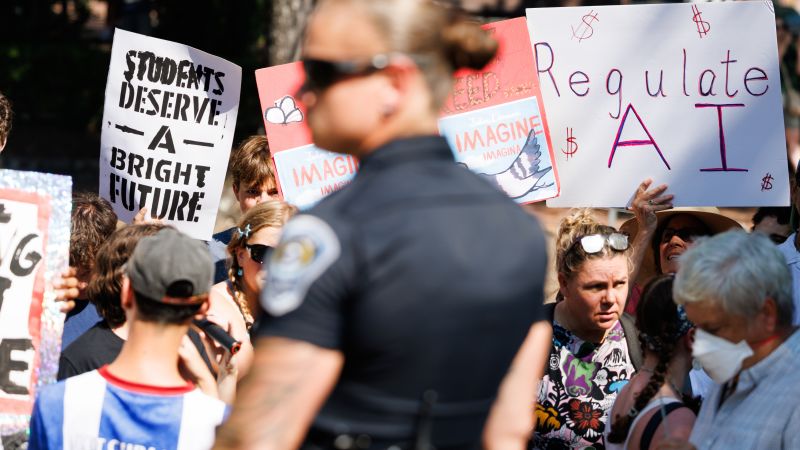
Even without agreement on the most extreme scenarios, public unease about AI is already substantial. An NBC News poll conducted this month found that 70% of respondents were more concerned than enthusiastic about the technology. That sentiment is shaping a wider political reaction to the rapid construction of AI infrastructure.
Candidates in both parties have tapped into objections to the enormous data centers needed to train and operate advanced systems. Communities have raised concerns about the scale and appearance of these facilities, as well as their demand for electricity and water. Calls for pauses in construction have become one visible expression of broader frustration.
The issue also intersects with economic pressure. Americans worried about higher utility bills may see energy-hungry data centers as part of the affordability squeeze. Concerns about job displacement arrive while polling indicates that many voters have lost confidence in the Trump economy. AI therefore has the potential to unite several anxieties that might otherwise appear unrelated.
For many people, the debate is no longer only about whether a chatbot can write an email or produce an image. It has become a question of who controls the infrastructure, the data and the financial rewards of the AI boom. The perception that a small group of billionaire technology leaders holds outsized power could deepen public anger and fuel demands for accountability.
National security and political consequences
The competition with China adds another layer of complexity. Policymakers who favor rapid development argue that the United States cannot afford to surrender leadership in a technology with military, intelligence and economic implications. Those favoring stronger safeguards counter that speed without oversight could create vulnerabilities that rivals, criminal groups or other non-state actors might exploit.
This tension makes an easy political compromise unlikely. A government that moves too aggressively could be accused of weakening American competitiveness. One that declines to act could face criticism if AI-driven disruptions worsen, whether through rising costs, workplace losses, misinformation, security failures or other harms.
Democrats may try to turn public anxiety into electoral energy, especially if they regain control of the House or Senate. Republicans, meanwhile, face the risk that Trump’s apparent indifference to certain AI fears could become another source of voter backlash during his second term.
The debate is still evolving, and there is no settled consensus about how likely the most severe outcomes may be. But the political significance is already clear: artificial intelligence is moving from a specialized policy subject into a broader referendum on economic security, corporate influence, national power and the government’s duty to anticipate danger before it becomes irreversible.
Related Reading
Frequently Asked Questions
What is A fateful turning point for humanity?
A fateful turning point for humanity is the main topic of this guide. The article explains the context, practical details, and next steps readers should understand.
Why does A fateful turning point for humanity matter?
A fateful turning point for humanity matters because readers are looking for a useful answer, not just a short summary. Good content should match search intent and help them decide what to do next.