Visualizing the Ebola Outbreak in Maps and Charts
Sandego.net – The World Health Organization has classified an Ebola outbreak in Central Africa as a public health emergency. This designation underscores the urgency of the situation, as the virus continues to spread rapidly within affected communities. CNN is monitoring the geographic spread of confirmed cases, alongside historical data on previous outbreaks and related fatalities. The page will be continuously updated with new information as it becomes available. While the risk to the global population remains relatively low, WHO officials have noted that the outbreak constitutes a matter of “international concern,” emphasizing its potential to escalate beyond regional boundaries.
Global Travel Measures and Regional Impact
In response to the outbreak, the United States has implemented travel restrictions targeting individuals from the Democratic Republic of Congo, Uganda, and South Sudan. These measures aim to curb the risk of the virus spreading internationally, particularly as the situation worsens in these areas. The outbreak’s concentration in Central Africa highlights a pattern that has persisted over the years, with nearly all cases and deaths historically recorded in western and central African nations. This trend has been observed even in the most recent decade, where a particularly severe outbreak marked the largest and most damaging event in the disease’s history.
WHO experts warn that the current outbreak could rival previous large-scale epidemics, given the consistent rate of new infections and the rising number of deaths. They suspect the virus may have been circulating for several months before detection, complicating early containment efforts. A key challenge has been the weak health infrastructure in the rural regions where the outbreak began, which has limited the ability to conduct timely and thorough testing. Additionally, ethnic tensions and local conflicts have hindered response coordination, while the unique strain of the virus has posed difficulties in identification and management.
“The transmission of this outbreak may have been active for months prior to its recognition,” stated WHO officials, highlighting the delayed detection as a critical factor in its progression.
Transmission Dynamics and Human Behavior
Once the virus infiltrates a community, it spreads swiftly through direct contact with bodily fluids or contaminated surfaces. Scientists believe humans initially contracted Ebola from infected wild animals, such as bats or primates, during activities like hunting, handling, or consuming them. However, human-to-human transmission has become a major driver of the outbreak, especially in areas with limited medical resources. Local funeral traditions, which often involve close contact with the deceased, have also contributed to the virus’s spread. In some cultures, mourners touch or carry bodies, increasing the likelihood of infection.
Public health officials stress that misinformation about the disease’s transmission has undermined containment strategies. Many communities remain unaware of the virus’s risk factors or how to implement preventive measures effectively. This lack of awareness, combined with the virus’s ability to spread rapidly in densely populated areas, has created a challenging environment for health workers. The interplay between cultural practices and medical knowledge is a crucial aspect of the outbreak’s trajectory, requiring targeted education and community engagement to mitigate further spread.
Historical Context and Current Challenges
Looking back at the disease’s history, the largest Ebola outbreak occurred a decade ago, resulting in thousands of cases and deaths. That epidemic, which primarily affected countries like Guinea, Liberia, and Sierra Leone, was marked by its devastating impact on healthcare systems and communities. The current situation, while less severe in terms of global reach, shares similarities in its rapid growth and the challenges posed by local conditions. WHO officials have pointed to the strain of the virus as a contributing factor, noting its increased virulence compared to earlier outbreaks.
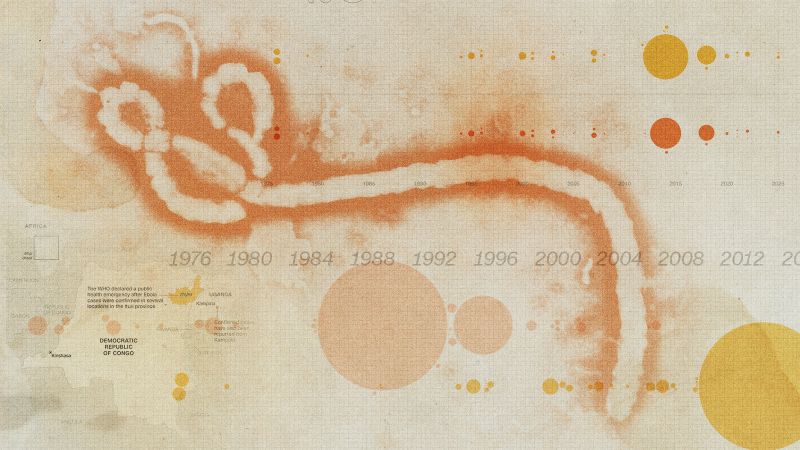
Aid workers have also highlighted the role of foreign aid funding cuts in exacerbating the outbreak’s spread. Reduced resources have limited the availability of medical equipment, personnel, and vaccines, making it harder to respond effectively. Despite these obstacles, efforts to map the outbreak and analyze its patterns have provided valuable insights into its behavior. Interactive visualizations on CNN’s platform allow users to track the evolution of the epidemic, identifying hotspots and trends that may inform future interventions. These tools are essential for both health professionals and the general public to understand the scale and movement of the outbreak.
The WHO’s warning about the potential for the current outbreak to become one of the most significant in history is based on the virus’s persistence and the speed at which it has gained traction. With more cases being reported and the death toll rising, officials are concerned about the virus’s ability to spread within and beyond the affected region. The combination of environmental, social, and economic factors has created a perfect storm, making it difficult to contain the outbreak without sustained international support. As the situation develops, the importance of accurate data and clear communication becomes even more critical in guiding both local and global responses.
Implications for Global Health Security
The Ebola outbreak serves as a reminder of the interconnectedness of health systems worldwide. While the immediate risk to other countries is low, the virus’s capacity to spread across borders remains a concern. WHO has urged increased vigilance, particularly in areas with frequent travel links to the affected regions. The outbreak also raises questions about preparedness, as it highlights the vulnerabilities in healthcare infrastructure and the need for robust contingency plans. Scientists and public health experts are working to develop better strategies for early detection and rapid response, leveraging data visualization to identify patterns and predict future hotspots.
As the outbreak progresses, the role of community cooperation and cultural awareness will be vital in curbing its spread. Local leaders and health workers are collaborating to educate populations about the importance of hygiene, quarantine measures, and safe funeral practices. These efforts are complemented by international aid and research initiatives, which are helping to strengthen response capabilities. The ongoing updates to the outbreak’s status reflect the dynamic nature of the crisis, with new developments continuously shaping the global strategy to combat the disease.
This story has been revised with additional insights, incorporating the latest data and expert analysis. CNN’s Lauren Kent and Jennifer Hansler provided key contributions to the report, ensuring that the information remains accurate and up-to-date. Through maps and charts, the outbreak’s progression is being documented in real time, offering a visual representation of the global health challenge. As the situation evolves, these tools will play an essential role in informing policy decisions and public health actions, both locally and internationally.