AI-Driven Market Turmoil: Wall Street and South Korea Face Sharp Corrections
Volatility Returns as AI-Driven Sell-Off Intensifies
Sandego.net – Global equity markets have once again been rocked by volatility, with artificial intelligence (AI) emerging as the central force behind recent sell-offs. On Tuesday, the tech-centric Nasdaq Composite shed 2.21%, while the S&P 500 also fell by 1.44%. Investors, driven by concerns over the sustainability of AI-driven gains, aggressively sold semiconductor stocks and other AI-linked equities. Meanwhile, the Dow Jones Industrial Average, which has traditionally been less sensitive to tech-sector fluctuations, dropped just 0.1%. These declines marked the worst performance for both indices in nearly two weeks, reflecting a broader shift in investor sentiment.
Asian Markets Take a Dive
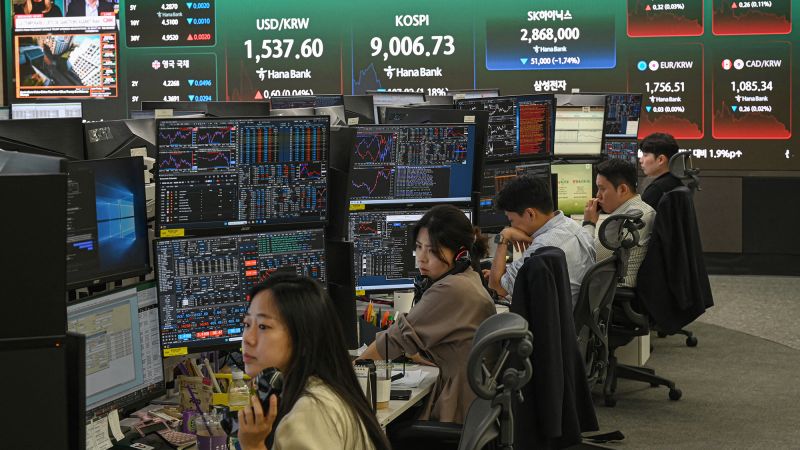
The turmoil extended beyond U.S. shores, with steep declines observed in Asian markets. In South Korea, the Kospi index plummeted 10% on Tuesday, triggering a circuit breaker that paused trading for 20 minutes. The sharp selloff was fueled by fears that the AI sector’s rapid ascent might be overstretched. Two major memory chipmakers, SK Hynix and Samsung, fell over 12% each, significantly dragging down the broader market. Given that these companies account for roughly half of the Kospi’s total market value, their performance had a disproportionate impact.
Factors Behind the Panic
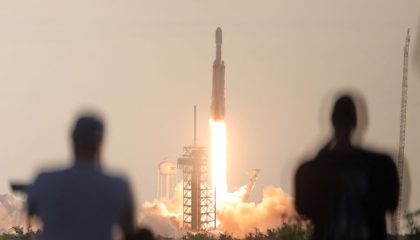
While the immediate cause of the panic remains unclear, analysts suggest a combination of factors has contributed to the sell-off. In the U.S., tech stocks faced a rough week, with the Nasdaq dropping 1.3% on Monday before further losses on Tuesday. The initial sell-off in the U.S. tech sector spilled into Asian trading hours, intensifying as the day progressed. Some investors are now locking in profits after a prolonged rally, while others are reacting to broader economic concerns. The recent decline in Google’s shares, which fell 5% on Monday, was attributed to the departure of a high-profile AI executive to Anthropic. Similarly, SpaceX’s steep 16% drop was linked to post-IPO volatility, a common phenomenon for companies experiencing rapid growth.
Market Analysts Weigh In
“Large market movements are indicative of a broader trend of heightened volatility in technology stocks,” said James Reilly, a senior markets economist at Capital Economics. “This volatility signals that investors may have become overly optimistic, raising questions about the long-term viability of the current rally.”
Reilly’s analysis highlights the growing risk of overvaluation in AI-related companies. The Nasdaq’s 2.21% decline on Tuesday, combined with the S&P 500’s 1.44% drop, underscores the fragility of tech stocks amid rising concerns. Meanwhile, the Federal Reserve’s potential rate hikes have also been cited as a catalyst. Although this possibility isn’t new, the recent statements from new Fed Chairman Kevin Warsh have reignited fears. Warsh’s first press conference last Wednesday emphasized the central bank’s commitment to curbing inflation, which markets interpreted as a promise of higher interest rates later this year.
Global Impact and Unpredictable Market Shifts
The ripple effects of the AI-driven sell-off were felt across Asia. Japan’s Nikkei 225 index dropped 3.6%, and tech giant SoftBank fell 15% as traders reacted to the sudden market correction. Most other Asian indices also declined by more than 1%, signaling a synchronized downturn. Despite these losses, the tech-heavy Nasdaq remains up 10% year-to-date, though it has retreated 5.5% from its record high set in June. This suggests that while the market is currently volatile, it has not yet fully reversed its upward trajectory.
Unraveling the Catalysts
While no single event has definitively triggered the selloff, the combination of AI’s rapid expansion and economic uncertainty has created a perfect storm. The abrupt decline in Google’s shares on Monday, though primarily due to internal leadership changes, amplified fears about the AI sector’s future. SpaceX’s post-IPO volatility further underscored the risks of rapid growth. Meanwhile, the broader market’s reliance on AI innovation has made it particularly sensitive to shifts in investor confidence. For instance, Nvidia’s 4% decline and Oracle’s 5.5% drop highlighted the sector’s exposure to AI-related uncertainties.
Looking Ahead: Earnings and Uncertainty
Traders are now closely watching Micron Technology’s quarterly earnings report, scheduled for Wednesday. The company’s performance could provide insight into the resilience of the AI-driven tech sector. However, the market’s reaction to AI valuations remains unpredictable. The Kospi, which has surged over 90% this year, is now vulnerable to sudden corrections. Investors fear that the current bull run might be nearing its peak, with the metaphor of a Jenga tower capturing the precarious balance of the market.
The Broader Implications
As markets grapple with AI’s influence, the focus has shifted from geopolitical concerns to the sustainability of tech-driven growth. Following President Donald Trump’s announcement of a ceasefire in Iran in April, the global market had largely moved on from Middle East tensions, redirecting attention to AI advancements and interest rate policy. Yet, the recent sell-off demonstrates that even in times of relative calm, AI’s allure can quickly turn into anxiety. The Nasdaq’s recent declines, though not dramatic, reflect the sector’s sensitivity to changing expectations. Analysts like Mason Mendez note that the market’s renewed interest in AI and valuations is a response to the dual pressures of inflation control and the evolving tech landscape.
With the Kospi’s sharp fall and the U.S. indices’ declines, the market is signaling a period of recalibration. While the immediate catalysts for the selloff remain elusive, the underlying theme is clear: AI’s meteoric rise has created a delicate equilibrium that investors are now questioning. The challenge moving forward will be to determine whether these corrections mark the beginning of a broader trend or a temporary setback. As trading algorithms and human investors alike adjust their strategies, the global market remains on edge, waiting to see how far the AI-driven rally can go before it meets resistance.