Polestar Announces US Sales Ban Due to Chinese Ties
Sandego.net – On Thursday, electric vehicle manufacturer Polestar disclosed that the US Commerce Department has imposed a restriction on its ability to sell cars in the American market. The decision, made by the Bureau of Industry and Security, targets the company’s operations under the Connected Vehicle Rule, which prohibits vehicles from countries with significant ties to China or Russia from using specific software. This regulation, enacted during the final months of the Biden administration and upheld under the Trump presidency, aims to address potential national security risks posed by foreign-controlled automotive technologies.
Regulatory Impact on Polestar’s Operations
The ban, effective starting with the 2027 model year, applies to all Polestar vehicles sold in the US. According to the company, the Commerce Department denied authorization for sales under the rule, which defines “connected vehicle manufacturers” as those owned by, controlled by, or subject to the jurisdiction of China or Russia. The rule also extends to vehicles utilizing software from these entities, emphasizing concerns over data access and remote control capabilities.
“Companies from these countries may be compelled to share data or allow remote access to connected vehicles in the United States,” stated the notice accompanying the rule.
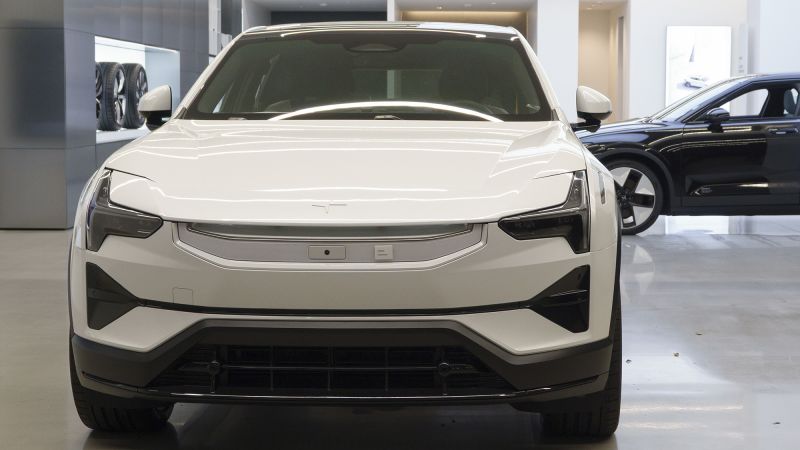
Polestar clarified that none of its vehicles currently sold in the US are produced in China. The Polestar 3, for example, is manufactured at a Volvo plant in Charleston, South Carolina, while the Polestar 4 is assembled in South Korea. However, the company’s majority ownership by Geely, a Chinese automaker, and its chairman Li Shufu, has led to this regulatory action. Geely also holds a stake in Volvo, which was granted an exception under the same rule earlier this year.
Broader Context of the Rule
While Russia’s automotive industry contributes minimally to global exports, China has emerged as the world’s leading automobile producer and a dominant force in electric vehicle (EV) manufacturing. The Connected Vehicle Rule seeks to limit the influence of Chinese and Russian firms on the US market, particularly in light of high tariffs imposed on Chinese imports. These tariffs, part of broader trade policies, have already created challenges for Chinese automakers seeking to compete in the US.
Despite the ban, Polestar emphasized that it will continue to fulfill existing orders for its Polestar 3 and Polestar 4 models. The company also assured customers of ongoing support, including access to its service network. However, the focus of future expansion will shift to Europe, where Polestar reported 80% of its sales. This strategic move underscores the company’s commitment to maintaining market presence outside the US, even as it faces hurdles domestically.
Historical Background of the Rule
The Connected Vehicle Rule was introduced in late 2023 during the Biden administration’s tenure, with its provisions extended by the Trump administration. The regulation targets vehicles equipped with software that could enable real-time data transmission or remote control, features that are critical in modern EVs. By blocking sales from companies with foreign affiliations, the rule aims to reduce vulnerabilities related to cybersecurity and data privacy.
Polestar’s case highlights the growing scrutiny of foreign ownership in the US automotive sector. While the company operates independently in some aspects, its connection to Geely—a firm deeply integrated into China’s industrial ecosystem—has raised red flags. The Bureau of Industry and Security’s rationale centers on the potential for foreign governments to exert control over vehicles through software, which could compromise national security in times of crisis.
Industry Implications and Market Reactions
The decision has sparked discussions about the impact of trade policies on global automakers. Analysts suggest that the ban could accelerate the migration of EV production and sales to regions with fewer regulatory barriers, such as Europe and Asia. For Polestar, this marks a pivotal moment in its international strategy, as it seeks to balance its Chinese heritage with opportunities in markets like the EU, where it has already established a strong foothold.
Although the Commerce Department and Geely have yet to comment on the ban, the move reflects a broader trend of geopolitical tensions shaping the automotive industry. China’s increasing influence in EV technology has prompted US policymakers to adopt stricter measures, targeting not only production but also the supply chains and software ecosystems that underpin modern vehicles. This has created a dilemma for companies like Polestar, which must navigate these regulations while maintaining their global operations.
Future Prospects and Strategic Adjustments
Polestar’s announcement comes as it prepares to launch new models in 2027. The company’s leadership has stated that it will prioritize Europe for future growth, leveraging its existing customer base and infrastructure. This shift may also involve collaborations with European partners to ensure compliance with local regulations and strengthen its market position. However, the US ban could affect its long-term plans, particularly if it aims to scale operations in North America.
Industry experts note that the Connected Vehicle Rule may not only impact Polestar but also influence other Chinese automakers. While some companies could secure waivers, others might face similar restrictions. The rule’s enforcement could reshape the EV landscape, encouraging automakers to diversify their supply chains and reduce reliance on Chinese components. This, in turn, may lead to higher production costs and slower innovation in the US market.
For now, Polestar remains focused on maintaining its customer service and fulfilling current orders. The company has not ruled out the possibility of appealing the decision, but it is clear that the ban represents a significant challenge. As the automotive industry continues to evolve, the interplay between trade policies and technological advancement will likely play a central role in shaping the future of global car sales.
Conclusion and Ongoing Debate
The Commerce Department’s action against Polestar underscores the complexities of global trade in the era of digital connectivity. While the rule aims to safeguard national interests, critics argue that it may hinder innovation and increase costs for consumers. As the EV market expands, the debate over balancing security concerns with economic opportunities will intensify, particularly for companies with international supply chains. Polestar’s experience serves as a case study in how geopolitical factors can directly influence business strategies and market dynamics.
Ultimately, the ban forces Polestar to reassess its operations in the US, which has been a key market for its growth. The company’s ability to adapt will depend on its capacity to innovate and meet regulatory standards in Europe. As the rule takes effect, its implications for the broader EV industry will become clearer, shaping the path forward for automakers navigating an increasingly fragmented global landscape.