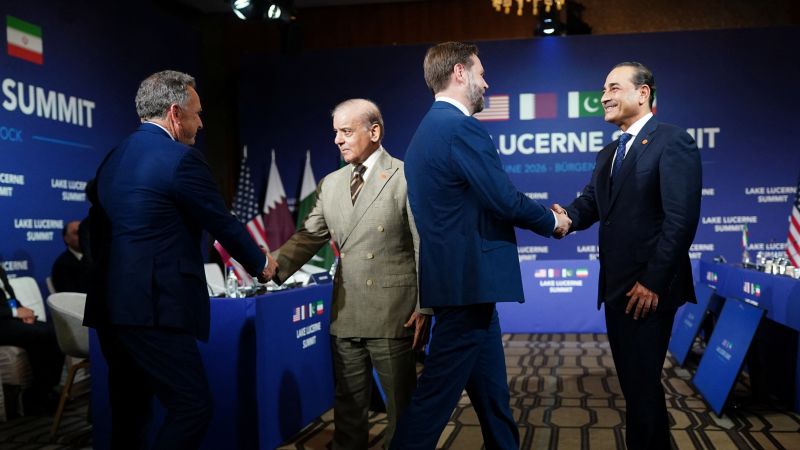
One Week In, What Exactly Are America and Iran Getting From Their Agreement?
Sandego.net – Amid escalating tensions, the United States and Iran have taken a step back from open conflict, marking a shift that could have significant implications for regional stability. This pause in hostilities, announced a week after President Donald Trump inked a memorandum of understanding (MOU) in France, has already been hailed as a critical victory. The agreement, a 14-point framework for sustainable peace, has managed to withstand skepticism from many US lawmakers who initially feared it might signal an American concession. This resilience is attributed to the rising economic stakes of renewed warfare, which have made a return to hostilities too costly for both nations.
Costs of Conflict Weigh on Both Sides
The MOU’s survival reflects the growing realization that prolonged conflict would strain resources and global markets. With a half-century of animosity between Washington and Tehran, and a history of peace deals that have crumbled, the agreement was always precarious. However, the immediate economic toll of war—such as disruptions to oil supplies and skyrocketing fuel prices—has forced a recalibration. Trump emphasized last week that the US would not bear the financial burden of further conflict, a stance that aligns with the agreement’s pragmatic approach.
Iran, too, has reasons to maintain the truce. The nation is reaping immediate benefits, including the resumption of critical maritime routes without significant concessions. While the strait remains partially restricted, vessel traffic has surged, with Kpler reporting 70 crossings on Wednesday. This marks a substantial increase from Tuesday’s figures and hints at a gradual return to normalcy. However, the strait is not fully reopened; permits are still required for the northern corridor, and mines in the central channel limit movement to a single lane near the Omani coast.
Normalization of Oil Flows Begins
The reopening of the strait is seen as a key breakthrough for global energy markets. Before the conflict, over 100 daily crossings were typical, but the war has drastically reduced this number. Now, with the channels slowly reopening, the world is witnessing a modest recovery in oil distribution. JPMorgan estimates that the strait’s closure had cost the global economy 1.6 billion barrels of supply, a figure that underscores its strategic importance.
Although the strait’s reopening is a positive sign, it is not a permanent solution. The agreement allows free passage for 60 days, after which Iran could reintroduce tolls—currently around $1 to $2 per barrel—potentially generating millions in revenue daily. This financial incentive may encourage Iran to maintain the truce, but it also raises questions about its long-term commitments. The US Treasury’s decision to lift sanctions on Iranian oil sales has further loosened restrictions, allowing the country to trade with a broader range of partners.
A US official noted last week that an Iranian drone strike on a cargo vessel in the strait disrupted efforts to evacuate stranded sailors. The incident, though isolated, highlights lingering tensions and the fragility of the current ceasefire. Yet, the increased tanker traffic is a glimmer of hope, signaling a gradual easing of the crisis that had once threatened to paralyze global oil supply chains.
Unresolved Challenges Loom
While the agreement has prevented immediate escalation, challenges remain. Iran’s insistence on accessing $100 billion in frozen assets has not been met, leaving room for future disputes. US officials told CNN that no funds will be released until Iran demonstrates tangible progress. This condition adds a layer of complexity to the peace process, as it ties the resolution of the conflict to Iran’s economic gains.
Despite these hurdles, the initial benefits are undeniable. The strait’s partial reopening has already led to a notable uptick in oil exports, with TankerTrackers noting that Iran shipped 3.8 million barrels of oil last week after the US lifted its naval blockade. This activity is expected to grow, with analysts like Jorge León of Rystad estimating Iran’s capacity to export up to 2 million barrels daily—a third more than pre-war levels. Such volumes could stabilize prices and restore consumer confidence, though they may not fully offset the earlier shock.
However, the agreement’s short-term nature has sparked concerns. With only 60 days to implement the terms, the future remains uncertain. If Iran chooses to impose tolls, it could gain substantial revenue, but this might also shift the balance of power. The initial ceasefire, while a success, may be a temporary reprieve rather than a lasting peace. Critics argue that the MOU is a classic example of Trump’s strategy to delay tough decisions, using the pause as a way to gain political breathing room.
Broader Implications for Regional Dynamics
The agreement’s success hinges on Iran’s ability to sustain its current momentum without overextending. While the country has already begun exporting oil, much of its trade appears to be directed toward China, suggesting a pragmatic approach to market access. Yet, the potential for expansion remains, especially as sanctions restrictions ease. This newfound flexibility could enable Iran to rebuild its military infrastructure and strengthen its proxy networks in regions like Yemen and Lebanon.
Analysts warn that Iran’s military resurgence may not be far off. The war has already exposed vulnerabilities, and with the truce in place, the country has the opportunity to replenish its drone and missile capabilities. The MOU, therefore, may serve as a catalyst for broader geopolitical shifts, rather than a definitive end to hostilities. As the 60-day window approaches, both sides will need to balance immediate gains with long-term goals, ensuring that the fragile peace does not unravel into renewed conflict.
The immediate ceasefire has allowed for a brief respite, but the path to durable peace remains unclear. With the US and Iran poised to negotiate further, the next steps will determine whether this truce becomes a foundation for lasting stability or merely a pause in an ongoing struggle. As the world watches, the economic and political ramifications of this agreement will continue to shape the region’s future.