
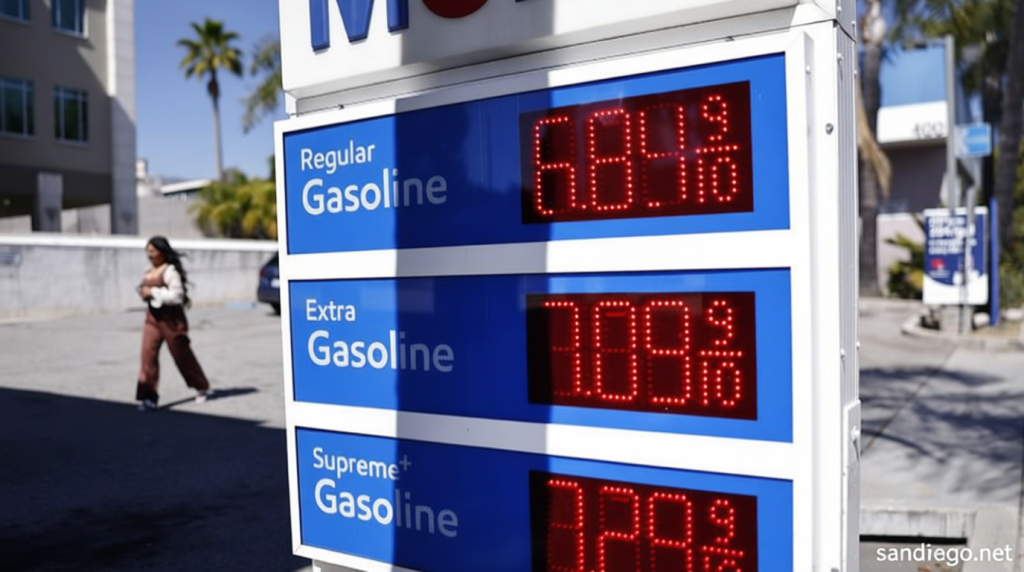
Memorial Day sticker shock: Gas prices near all-time highs
Memorial Day sticker shock: Gas prices near all-time highs
Memorial Day sticker shock – As millions of Americans prepare for road trips during the Memorial Day holiday, they are encountering fuel costs that have reached historic levels. The ongoing conflict with Iran has disrupted global oil markets, causing gas prices to climb despite measures taken by the Trump administration to ease the burden. This surge in prices has intensified financial strain for many, exacerbating concerns about the overall economic climate. The increase is particularly notable as it marks the unofficial beginning of the summer driving season, a time when travel demand typically peaks.
GasBuddy forecasts prices to hit $4.48 per gallon
According to GasBuddy, a platform that tracks fuel costs across the nation, the average price of regular gasoline is projected to reach approximately $4.48 a gallon this Memorial Day. This would represent a 42% rise compared to the previous year and place it as the second-highest price recorded for the holiday. The only instance of higher prices was in 2022, when the average hit $4.61 per gallon following Russia’s invasion of Ukraine. However, experts warn that the upward trend may continue.
“If the Strait of Hormuz remains closed, we could see the national average for gas hit $5 a gallon next month,” said Patrick De Haan, GasBuddy’s head of petroleum analysis. “This summer’s prices are likely to be more volatile than last year’s, which were relatively stable.”
The uncertainty surrounding the Middle East conflict has led to a scramble among oil producers to compensate for the supply shortage. US commercial and emergency oil reserves have seen their most dramatic decline on record, with the Strategic Petroleum Reserve losing 10% of its stock since the war began. This has driven prices to their lowest level in two years, according to recent data. De Haan emphasized that the situation is not expected to stabilize soon unless diplomatic efforts succeed in easing tensions.
Travelers brace for rising costs
Despite the financial challenges, a record 39.1 million Americans are anticipated to travel by car this weekend, according to AAA. This number is nearly identical to the previous year’s total, indicating that the demand for road trips remains strong even amid higher fuel expenses. For families with long commutes, the impact is especially acute. Chris Haenel, a Pittsburgh resident, shared how his weekly gas bill has more than doubled since the conflict began, rising from $50 to $80. “Every day, I drive past gas stations and it’s just insane,” Haenel remarked, describing the visible strain on consumers.
The rising costs have also contributed to a broader inflationary trend. April’s inflation rate reached nearly 4%, driven in part by the spike in energy prices. For the first time in three years, real wages—adjusted for inflation—are shrinking, leaving many households struggling to keep up with everyday expenses. Haenel, who works as a computer technician, highlighted the personal toll: “My wife brings home three bags of groceries, and it’s $300. I’m 60 years old, trying to save for retirement, but this is limiting how much I can set aside.”
Economic frustrations shape voter sentiment
As the summer season unfolds, the economic strain from high gas prices is expected to persist. GasBuddy predicts the national average will climb to $4.80 per gallon by Labor Day, surpassing the prior summer record of $4.43 set during President Biden’s tenure in 2022. This forecast has raised concerns about the sustainability of current energy prices and their effect on consumer spending. The White House has taken several measures to curb costs, including releasing oil from the Strategic Petroleum Reserve, waiving the Jones Act, and invoking the Defense Production Act. However, these steps may not be enough to reverse the trend.
“The administration remains committed to unleashing American energy potential and lowering costs for families,” said Taylor Rogers, a White House spokesperson. “With the ongoing blockade against Iran, we anticipate global markets stabilizing and gas prices returning to multi-year lows.”
While these efforts are underway, the public remains critical of the administration’s approach. A recent CNN poll revealed that only 21% of Americans approve of Trump’s handling of gas prices, a significant drop from his earlier support on the issue. A majority of Republicans also disapprove of his strategy, signaling growing discontent. The survey further indicated that 75% of respondents believe the Iran war has negatively impacted their finances, underscoring the widespread economic anxiety.
Broader economic implications
The financial burden of rising energy prices extends beyond individual households. According to Brown University’s Climate Solutions Lab, consumers have already faced an estimated $43 billion increase in energy costs since the war began. This figure is calculated by comparing current gasoline and diesel prices to what they might have been in the absence of the conflict. Gasoline alone accounts for nearly $24 billion of this total, averaging $200 per household. Such a spike has raised questions about the long-term viability of the Trump administration’s economic policies.
Industry analysts note that the disruption in the Strait of Hormuz has been a key factor in the price surge. This critical oil passage, located between the Arabian Peninsula and India, has become a focal point of geopolitical tensions. The continued closure of the strait has limited the supply of crude oil, forcing prices to rise despite efforts to diversify sources. “You cannot sustain this level of price increases indefinitely,” said Andy Lipow, president of Lipow Oil Associates. “There’s a tipping point, and once it’s crossed, it’s going to be difficult to bring prices back down.”
Strategic moves and lingering challenges
The Trump administration has implemented a range of emergency measures to address the crisis. These include releasing oil from the Strategic Petroleum Reserve, which has historically been used to stabilize markets during shortages, and waiving the Jones Act to allow more foreign vessels to transport fuel. The Defense Production Act was also invoked to boost domestic energy production, while Russian oil sanctions were paused to increase supply. However, these actions have only partially offset the impact of the Middle East conflict.
While these measures are aimed at short-term relief, they have not fully alleviated the pain for consumers. The economic ripple effects are evident in the data: inflation has climbed to 4% in April, and real wages are contracting. This has created a challenging environment for households, particularly those with fixed incomes. The ongoing war and its effects on global supply chains have compounded the issue, leaving many Americans questioning the effectiveness of the administration’s response.
Looking ahead
As the summer progresses, the energy market will be closely watched for signs of stabilization. GasBuddy’s projections suggest prices could remain elevated throughout the season, with the potential to reach $5 a gallon if the Strait of Hormuz remains a flashpoint. The administration’s ability to navigate this crisis will be a key factor in shaping public perception of its economic leadership. For now, the sticker shock of Memorial Day serves as a stark reminder of the challenges ahead.
