Intel’s Revival Hinges on AI Shift: CEO’s Strategy Sparks Hope
Sandego.net – As the global AI race intensifies, Intel stands at a pivotal crossroads. With the company’s fortunes in March 2025 teetering on the edge of decline, Lip-Bu Tan’s appointment as CEO brought a renewed sense of purpose. A veteran of the tech industry, Tan’s tenure at Cadence Design Systems shaped his approach to leadership, emphasizing efficiency and innovation. Now, his focus at Intel centers on reclaiming relevance in an era dominated by competitors like Nvidia, AMD, and Qualcomm. The semiconductor giant’s challenges, however, extend beyond market competition. With Taiwan Semiconductor Manufacturing Company (TSMC) dominating 90% of the world’s cutting-edge chip production, Intel’s own foundry has struggled to keep pace, leaving the company in a precarious position.
A New Dawn for CPUs in the AI Era
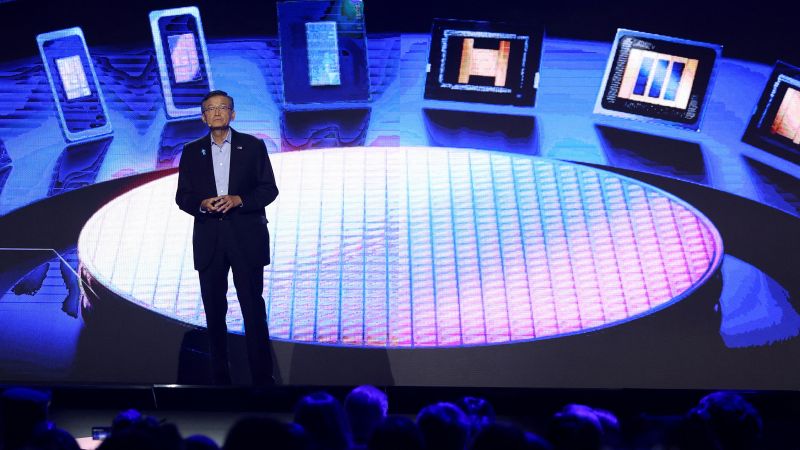
Tan’s first public remarks since taking the reins revealed a candid assessment of Intel’s struggles. “There are areas we need to improve, and there are no quick fixes,” he stated in April 2025, underscoring the depth of the company’s issues. Despite his low-key demeanor, Tan’s influence is already reshaping Intel’s trajectory. Last week, his keynote address at Computex drew a large audience, signaling a shift in focus toward Intel’s core product: the central processing unit (CPU). These chips, once the backbone of computing, are now central to the AI revolution, particularly in inference tasks. Unlike graphics processing units (GPUs), which excel at training AI models, CPUs are gaining traction for their role in deploying trained systems efficiently.
“The CPU revival could save the company,” said Dan Nystedt, vice president of the Asia-based private investment firm TriOrient. “The majority of (Intel’s) business is CPUs.”
The resurgence of CPUs in AI applications has caught the attention of analysts and industry players alike. OpenClaw, a prominent AI agent that operates apps, web browsers, and smart home devices through messaging apps like WhatsApp, exemplifies this trend. Such systems rely heavily on inference, a process that demands the precision and reliability of CPUs. This development has rekindled interest in Intel’s traditional offerings, offering a chance for the company to reclaim its former stature. In a statement to CNN, Intel acknowledged Tan’s efforts, highlighting his commitment to engineering excellence and customer-centric strategies.
Strategic Moves to Rebuild the Chip Giant
Tan’s strategy at Intel mirrors the tactics that propelled Cadence to success. He has streamlined operations, cut middle management layers, and reallocated resources toward core competencies. The CEO has also laid off approximately 34% of the workforce, a bold move to trim costs and accelerate innovation. Additionally, he has paused expansion plans for manufacturing facilities in Germany and Poland, redirecting capital toward more urgent priorities. These changes have positioned Intel to adapt to the evolving demands of the AI market, where both performance and reliability are critical.
Recent developments underscore Tan’s focus on CPU-centric growth. During Computex, Nvidia CEO Jensen Huang remarked, “The CPU is now the conductor, and the GPU is the orchestra,” emphasizing the complementary roles of the two chip types in modern AI systems. While Nvidia continues to lead in GPU innovation, its recent foray into CPUs—such as the Vera data center chip—signals a broader industry shift. Intel, meanwhile, has been bolstered by partnerships with companies like Nvidia and Softbank, and has attracted senior talent from Qualcomm and Arm to spearhead its data center and AI divisions. These moves have not gone unnoticed, with other CEOs reaching out to Tan for insights on CPU development.
“We really (got) excited” about the growing demand for CPUs, Tan told reporters at Computex. “That’s a huge opportunity for us.”
Analysts believe Tan’s strategy could yield significant results. A surge in CPU demand, driven by the proliferation of AI agents and their need for efficient inference capabilities, may propel Intel’s sales forward. However, success hinges on the company’s ability to scale production and maintain manufacturing quality. “We are very focused on supply, making sure that we can delight the customer,” Tan added, highlighting his commitment to operational excellence. Intel’s current balance sheet, strengthened by recent financial adjustments, provides the necessary foundation for this ambitious plan.
The Road to Recovery: Challenges and Opportunities
Tan’s approach is rooted in a return to Intel’s engineering heritage. “At our heart, Intel is an engineering company,” he asserted during his Computex keynote. “And that’s what I decided from Day 1 … I have all the engineering reports to me.” This emphasis on technical prowess aligns with the company’s historical strengths but also reflects the need for innovation in a rapidly changing landscape. By elevating engineers and reducing bureaucratic layers, Tan aims to foster a more agile and responsive organization.
Yet, the path to recovery is not without hurdles. Intel faces the daunting task of competing with TSMC’s advanced manufacturing capabilities and the aggressive expansion of rivals in AI-driven technologies. The company’s recent divestment of a controlling stake in a subsidiary, in exchange for liquidity, further demonstrates its commitment to prioritizing core operations. As Tan navigates this complex environment, the focus remains on delivering high-quality CPUs that can meet the demands of both enterprise and consumer markets.
Industry experts suggest that Intel’s position in the AI race is stronger than it appears. While GPUs dominate training processes, CPUs are essential for the seamless execution of AI applications in real-world scenarios. This duality ensures that both chip types will remain in demand, creating a unique opportunity for Intel to leverage its expertise. The Computex event, which has become a focal point for AI advancements, underscores the growing importance of Intel’s offerings. With Tan’s leadership, the company is positioning itself to capitalize on this demand, though the road ahead requires sustained effort and strategic execution.
In the end, Intel’s revival depends on its ability to adapt to the AI-driven market. Tan’s leadership, informed by his experience at Cadence, offers a blueprint for transformation. By streamlining operations, investing in engineering, and fostering new partnerships, the company is not only redefining its product portfolio but also reasserting its role as a key player in the semiconductor industry. As the AI boom continues to reshape technology, Intel’s journey may serve as a case study in resilience and reinvention. The question now is whether the company can translate its strategic moves into tangible results, ensuring a lasting presence in the ever-evolving world of artificial intelligence.