‘Exploding oil?!’ The Middle East is about to find out
Sandego.net – The critical juncture has arrived. After a tense period, the Strait of Hormuz has reopened, allowing oil shipments to flow once more. Countries in the region that had temporarily halted production during the recent conflict—often referred to as “shut in”—are now preparing to resume operations. This marks a pivotal moment as they reconnect their oil wells and assess the potential outcomes of the pause. While some might anticipate a dramatic surge in output, others are cautious, noting that the process could be anything but simple.
Shut In, Not Shut Off
During the conflict, several Middle Eastern nations, including Saudi Arabia, the United Arab Emirates, and Iraq, were forced to halt their oil production. This decision, though disruptive, was not made lightly. The reason? A combination of operational constraints and security concerns. When Iran closed the Strait of Hormuz to foreign tankers, local producers faced a storage crisis, as the volume of oil being generated exceeded their capacity to hold it. This situation created a domino effect, with neighboring countries also reducing output due to similar pressures.
Drone attacks, which targeted key infrastructure during the war, further complicated matters. These threats led to the temporary shutdown of vital facilities, adding to the challenge of maintaining continuous production. Even Iran, which had been a major player in the region, was not immune to the disruptions. In fact, the country was forced to shut in its own wells after the United States began blockading the strait, cutting off critical supply routes.
Trump’s Bold Claim: Explosions or a Trickle?
President Donald Trump had previously speculated about the aftermath of the shutdown, suggesting that underground explosions might reduce oil output to a mere trickle. While this idea seems far-fetched, it’s not entirely without merit. The prolonged shutdown could have led to structural changes beneath the surface, potentially affecting the reservoirs. However, industry experts argue that the damage is likely overstated.
“A key question is whether prolonged shut-ins could translate into permanent production losses,” said Natasha Kaneva, head of global commodities strategy at JPMorgan. “These risks are likely overstated.”
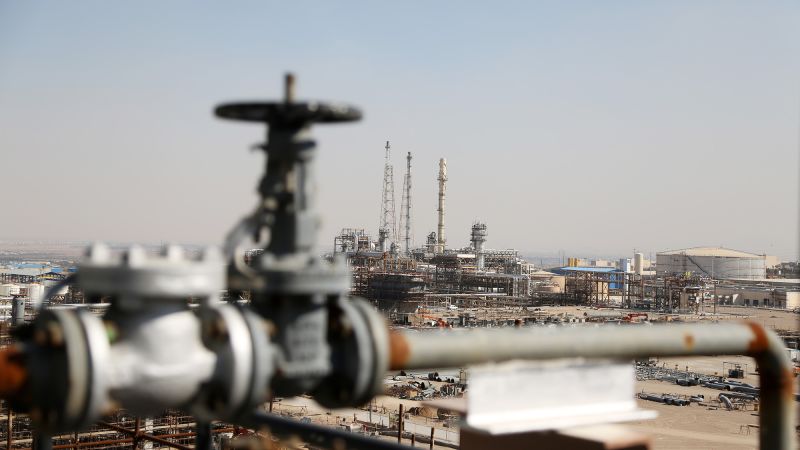
Shut-ins are not as straightforward as simply turning off a faucet. They involve a delicate balance of engineering and physics, requiring careful planning over days or weeks. When oil wells are left idle, the pressure within the subsurface can shift, leading to deformation of the geological structure. This change might not only impact the well itself but also nearby reservoirs, creating a chain reaction of challenges.
One concern is the intrusion of water into the oil reservoirs. As pressure decreases, water can seep in, reducing the well’s potential output. “The worry is what happens when you turn things back on,” explained Vikas Dwivedi, a global oil and gas strategist at Macquarie Group. “It’s like a box of chocolates: You never know what you’re gonna get.”
Extended downtime also risks damaging equipment. Pumps and lift systems, for instance, can corrode over time, while sand and debris may accumulate in the well. Concrete casing and tubing, essential for sealing and extracting oil, could lose their integrity, leading to leaks or hazardous gas releases. In rare cases, explosions might occur, though the likelihood of such an event remains low.
Historical Precedents: A Test of Resilience
While the current situation is unique, it’s not the first time oil producers have faced prolonged shutdowns. During the early days of the pandemic, global demand for fuel plummeted, leaving the industry with a storage dilemma. The world ran out of space to store oil, and prices dipped so low that producers were actually paid to take it off the market. This period saw a massive shutdown of wells worldwide, including in Iran, where the oil industry managed to navigate the crisis without significant long-term damage.
Similarly, OPEC production caps have historically led to temporary shutdowns in the Middle East. These caps, designed to stabilize prices, require producers to adjust output based on market conditions. The oil sector has shown resilience in handling such scenarios, proving that shutdowns—though disruptive—can be mitigated with proper planning. Iran, in particular, has experience managing these challenges, both during the pandemic and in past conflicts.
Restarting Production: A Delicate Process
Resuming operations is as complex as halting them. The process requires a slow and methodical approach to avoid damaging the reservoirs. Producers must carefully inject water and gas into the wells to maintain underground pressure, ensuring that the flow of oil remains steady. This balancing act is crucial, as any miscalculation could lead to cave-ins, leaks, or even catastrophic failures.
Coordination is another key factor. Given the proximity of many wells in the region, producers must work in unison to maintain consistent pressure across the entire network. This collaboration involves not just individual companies but also national governments, highlighting the interconnected nature of the industry. Without such coordination, the risk of uneven pressure distribution increases, potentially leading to more severe consequences.
Even the restart itself carries risks. Some operators might choose to maintain low flow rates, much like dripping a faucet in freezing weather to prevent pipes from freezing. This strategy helps avoid sudden pressure surges that could compromise the well’s stability. While the idea of an explosive recovery might capture headlines, the reality is more nuanced. The industry is well-prepared, having weathered similar challenges before. As a result, the fear of a dramatic collapse is likely exaggerated.
With the Strait of Hormuz now open and production poised to resume, the focus shifts to the outcome of this restart. The question remains: Will this be a smooth reactivation, or will the past months of inactivity lead to unforeseen complications? As the region’s producers take their first steps toward full capacity, the world watches closely, ready to assess the impact of this long-awaited return to normalcy.