Marine Growth Creates New Challenge for Oil Tankers in the Strait of Hormuz
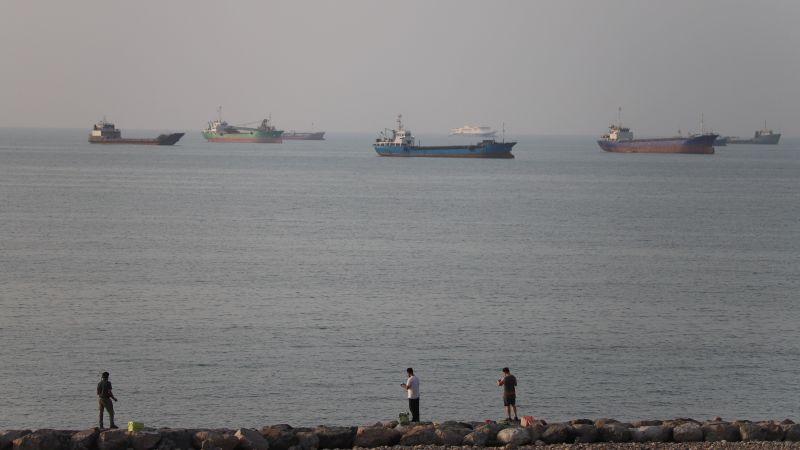
Sandego.net – For months, hundreds of massive oil tankers have been stranded in the Persian Gulf, their hulls encrusted with a thick layer of marine organisms. Derek Hamm, a diver based in Marathon, Florida, estimates that four months of inactivity could lead to an alarming buildup of debris. “Man, that’s plenty of time for a lot of gross stuff to accumulate,” he remarked, highlighting the unappealing reality of the situation. The accumulation of barnacles, mussels, clams, algae, and other creatures has turned these vessels into living ecosystems, complicating their return to service.
The Role of Bottom Cleaners in Maritime Maintenance
Clearing such a massive biofouling layer requires specialized teams known as bottom cleaners. These divers, who tackle the grim task of removing marine growth, are often described with a blunt term: “bottom cleaners.” Hamm, who works in this field, noted that while the job might sound odd to outsiders, it’s a routine part of maritime operations. Biofouling, the industry term for the accumulation of marine life on ship surfaces, poses a serious challenge for vessels stuck in the Strait of Hormuz. The process of unstickings these ships from their hulls is critical before they can resume movement.
The scale of the problem is staggering. A single supertanker can span over 1,000 feet in length, with a beam of around 150 feet. That translates to approximately 150,000 square feet of surface area to clean. To restore sailing conditions, teams of five to six divers typically spend four to five hours using hand scrapers and high-pressure washers. With 600 ships currently anchored in the strait, the demand for these services has skyrocketed, creating a significant workload for crews.
Some ships have opted to be towed out of the strait before full cleaning is completed, but this doesn’t eliminate the need for thorough maintenance. Bottom cleaners face a delicate balance: they must remove stubborn growth without damaging the ship’s protective coatings. These coatings are designed to prevent future biofouling, and any breach could lead to costly repairs or regulatory issues.
Impact on Fuel Efficiency and Cost
According to Neil Roberts, head of marine and aviation at Lloyd’s Market Association, fuel costs account for roughly half of a ship’s operational expenses. Biofouling disrupts the smooth flow of water around a vessel, increasing drag and reducing fuel efficiency. For oil tankers transporting millions of barrels across thousands of miles, this inefficiency translates into significant financial losses. “Ships are built with fluid dynamics in mind,” Roberts explained. “When biofoul builds up, it’s like adding extra weight to the journey.”
Brian McCauley, owner of McCauley Mooring and Diving, emphasized the physical demands of the job. “The work is straightforward, but those ships are just way too big for individual divers,” he said. The process involves not only scraping the hull but also inspecting and maintaining critical components like propellers. Rotors often need to be disassembled, cleaned, and reinstalled, a task that requires precision and effort. In some cases, power sanders or hydraulically driven pressure cleaners are used to tackle particularly stubborn growth.
The growing demand for bottom cleaning services has allowed professionals to raise their rates. Aron Sørensen, chief environment officer at BIMCO, noted that fees have increased by several thousand dollars per vessel. “They’re now charging upwards of five figures per ship,” he said, underscoring the economic value of this service in ensuring ships remain operational. Despite the rising costs, the investment is seen as necessary for maintaining efficiency and compliance with maritime standards.
Historical Context and Environmental Concerns
Maritime experts point out that this issue isn’t new. For centuries, ships have used copper-bottomed hulls to deter marine pests. The idea dates back to when warships were designed to resist worm infestations, which could compromise structural integrity. Today, the focus has shifted to broader ecological impacts. Marine organisms like barnacles and algae not only hinder performance but also pose risks to local ecosystems.
Critical to this problem is the presence of invasive species trapped within the biofouling layers. These organisms can disrupt native marine life, altering habitats and food chains. Derek Hamm highlighted this concern, explaining that barnacles often hide inside intake valves, damaging cooling systems. “They’re not just a nuisance,” he said. “They can cause serious operational issues if left unchecked.”
Insurance companies play a key role in ensuring compliance with biofoul regulations. Insurers include specific clauses in their contracts to protect against damage caused by marine growth. “Damaged coatings can lead to violations of ecological regulations and insurers’ biofoul clauses,” Hamm noted. This has created a regulatory pressure on ship operators to prioritize cleaning before entering ports.
Carolyn Shearlock, owner of The Boat Galley, added that propeller fouling is particularly problematic. Severe growth on these components can render them ineffective, though this is more common in vessels anchored for extended periods. The combination of environmental and mechanical challenges underscores the complexity of the task.
Global Implications of the Strait of Hormuz Crisis
The accumulation of biofouling in the Strait of Hormuz adds another layer to the energy supply crisis exacerbated by months of conflict. As the world races to restore oil flow from the Middle East to Asia and Australia, the maintenance of these ships has become a critical bottleneck. Each delay in cleaning could ripple through global markets, affecting fuel prices and energy distribution.
With the Strait of Hormuz serving as a vital artery for oil transportation, the situation highlights the interconnectedness of maritime logistics and energy security. Iran’s recent announcement that companies must register with the country to clear the strait has further intensified the urgency. Minesweepers, which are already tasked with navigating the narrow channel, now face additional responsibilities in managing biofouling.
Experts warn that the scale of the issue demands both immediate action and long-term solutions. While the current crisis is a result of recent events, the problem of biofouling has been a persistent one. “It’s an age-old problem,” Roberts said, adding that modern vessels have adopted advanced coatings and technologies to mitigate the issue. Yet, the sheer size of the ships and the prolonged anchoring time have tested these innovations.
As the industry adapts, bottom cleaners are becoming more essential than ever. Their work, though repetitive and demanding, is vital in ensuring that ships remain in top condition. With the global economy relying on uninterrupted oil supply, the tiny organisms that cling to hulls have become a major concern. The question now is whether these efforts will be enough to keep the flow of energy steady in the face of mounting challenges.
What began as a natural accumulation of marine life has evolved into a critical operational hurdle. From the financial strain on shipping companies to the environmental risks posed by invasive species, biofouling is a reminder of the intricate balance required to maintain global energy infrastructure. As the world watches the Strait of Hormuz, the work of these unsung heroes remains a crucial part of the solution.