A Rare Collection of Chinese Cheongsams Tells a Story of Personal Style and Cultural Connection in 20th-Century America
From Shanghai to Fresno: A Fusion of Tradition and Innovation
Sandego.net – In the mid-20th century, Susan Mah, a first-generation Chinese American, crafted a wardrobe that defied conventional expectations. Her cheongsams, the iconic qipao dresses, were not bound by the rich silk and intricate Chinese patterns typical of her homeland. Instead, she embraced bold, American-inspired fabrics, such as lime-green prints adorned with Mayan motifs, to create a unique blend of cultural heritage and personal flair. This creative fusion, rooted in her time in California, reveals how a woman navigating both traditional and modern worlds could reimagine her attire for a new era.
“I think, had she stayed in China… she would have had to dress very conservatively,” said Chere Lai Mah, Susan’s daughter-in-law and a scholar of textiles, reflecting on the woman’s choices in the 1940s. “But in Fresno, she wanted to be interestingly dressed, inspired by Irene Dunne and Barbara Stanwyck, so she started to design these hybrid Chinese American cheongsams.”
Lai Mah, now 78, has spent decades curating Susan’s legacy. After Susan’s passing, she meticulously studied the hundreds of garments left behind, piecing together their stories through oral histories, family anecdotes, and even the memories of the dresses themselves. “She did dozens of these dresses. They are humorous. They are dashing,” Lai Mah added, emphasizing the playful yet sophisticated nature of Susan’s designs. These pieces, crafted with a blend of Mandarin collars and Western aesthetics, became a testament to her adaptability and artistry.
A Legacy Preserved at LACMA
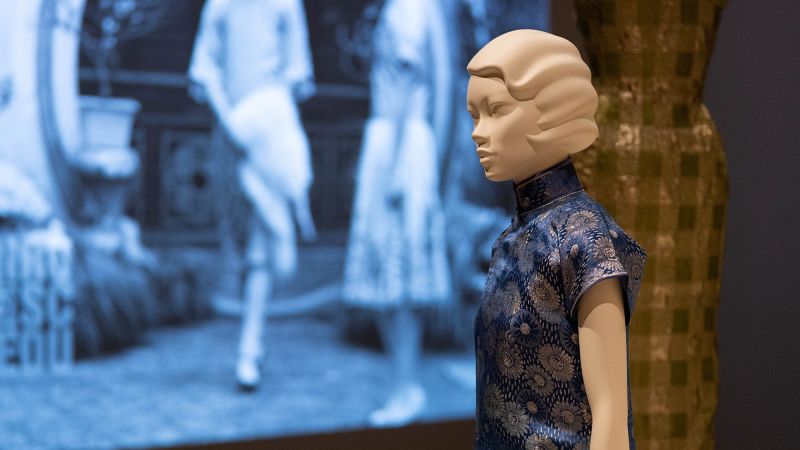
The collection, now on display at the Los Angeles County Museum of Art (LACMA), is the centerpiece of the exhibition “Fashioning Chinese Women: Empire to Modernity.” Opening on Sunday, the exhibit features over 70 stunning examples of early-to-mid-20th-century Chinese clothing, with the majority coming from Susan’s personal wardrobe. A handful of pieces also belong to Lai Mah’s own mother, Li Zhang Huifang, who was a close friend of Susan’s. Together, these garments offer a rare glimpse into the lives of women who straddled two cultures, balancing tradition with the possibilities of a new world.
“The collection documents this period of incredible change that women are experiencing,” explained guest curator Michaela Hansen, highlighting the social liberation and mobility that followed the Qing dynasty’s fall in 1912. “It’s not just about fashion—it’s about identity, resilience, and the evolving role of women in society.”
Susan’s cheongsams, in particular, stand out for their hybrid design. While they retained the classic qipao silhouette—tight-fitting, knee-length, and with a Mandarin collar—many incorporated materials and patterns that echoed American fashion trends. This was especially notable given the historical context: Susan left Hong Kong in 1938 during the Japanese invasion, carrying her clothing with her despite the challenges of migration. Her relative wealth at the time allowed her to preserve these garments, making the collection all the more remarkable. “Many other migrants would have struggled to do so,” Lai Mah noted, underscoring the rarity of such a cohesive and well-preserved set of cheongsams.
Cultural Storytelling Through Threads
Lai Mah, an artist and textile expert, has long been fascinated by how clothing can tell stories. She recalls the first cheongsam Susan gave her in 1971—a turquoise silk brocade piece with gold motifs that she described as “charming and cozy.” However, Lai Mah never wore it, instead using it as inspiration for a series of sculptures she created while studying at UC Berkeley. “She had also given one of her other daughters-in-law her fur coat,” she said, “but that daughter-in-law made it into a lap blanket, and maybe that spurred her to think that she might give her pieces to another daughter-in-law.”
These garments, tailored to Susan’s specifications, reflect her journey from a poor upbringing in Guangdong province to becoming a successful businesswoman in Fresno. “Cheongsams are custom-made—uniquely reflecting the tastes of their wearer and collaboration with tailors,” Lai Mah explained. The exhibition captures how Susan’s style evolved, from youthful experimentation to that of an established matriarch in the United States. “This collection reveals how her identity shifted,” Lai Mah added, “while still honoring her roots.”
Breaking New Ground in Fashion History
For Hansen, the exhibition fills a critical gap in American fashion narratives. “Typically, museums showcase Qing dynasty court dress, contemporary Chinese designers, or Western fashion inspired by Chinese elements,” she said. “But rarely do they feature the wardrobes of everyday women, especially in the context of their cultural journey.”
The donation of the collection by Lai Mah to LACMA in 2022 marked a significant moment in preserving this untold history. “She had provenance, and she had the stories,” Hansen remarked. “She knew who wore what, where they wore it, and that’s very unusual in fashion history.” This level of detail adds depth to the exhibition, allowing visitors to trace the cultural and personal significance of each piece. For instance, the Mayan-inspired cheongsam, with its vibrant lime green hues and ancient symbols, symbolizes Susan’s desire to merge her heritage with the modernity of American life.
Such garments were not just functional; they were a form of creative expression. Susan’s ability to incorporate unconventional materials and designs into her cheongsams highlights the ingenuity of Chinese American women in the 20th century. “These dresses were a way for her to assert her individuality,” Lai Mah said. “In a society that often demanded conformity, she found a way to celebrate both her roots and her new environment.”
A Living Archive of Cultural Adaptation
More than a display of clothing, the exhibition is a living archive. Each piece tells a story of adaptation, survival, and reinvention. Susan’s cheongsams, for example, reflect the economic and social shifts she experienced. Born into poverty, she rose to prominence in her family’s record business, becoming a mother of 12 children and a pillar of her community. Yet, she never stopped exploring her craft, using sewing as a way to connect with her past while embracing her present.
“The garments are also exceptionally well-preserved,” Lai Mah said, “luckily the weather here is perfect, in the Bay Area, without having a fancy air-conditioned storage area.” This preservation, combined with the rich narratives behind each dress, makes the collection a valuable resource for understanding Chinese women’s experiences in America. “It’s important to collect these stories,” Hansen emphasized, “because they highlight how personal style can become a bridge between cultures.”
As the exhibition opens, it invites viewers to see cheongsams not just as traditional attire but as symbols of cultural connection and individuality. Through Susan Mah’s creations, LACMA offers a window into a unique chapter of 20th-century history—one where fashion became a powerful medium for storytelling and self-expression. The blend of Mayan patterns and Mandarin collars, of American fabrics and Chinese craftsmanship, captures the essence of a woman who dared to redefine her identity through the art of dress.